
Top 10 Issues Fixed Instantly With A Remote CAM Service (Plus How It Works)

Remote CAM services are altering the ballgame for manufacturers. You need not fret over having to figure out the intricate programming code or deal with downtime; you can outsource your CAM (Computer-Aided Manufacturing) tasks to professionals who can remotely connect to your systems. They solve problems quickly in minutes, and your production is not fiddled with.

A PERSON TYPING ON A LAPTOP WITH SMILEYS AND 5 STAR REVIEWS

The blog goes deep into the top 10 most prevalent manufacturing issues that are addressed by a Remote CAM Service immediately, and provides a straightforward explanation of how the service can be used.

Top 10 Issues Fixed Instantly With A Remote CAM Service

Manufacturers are faced with continuous CAM issues that hamper production and waste time. Remote CAM services have secure remote access that will be used to tweak your software, optimise toolpaths and get machines online again.

The 10 most important problems they address immediately are as follows:

Crashed Computer-Aided Software Or Frozen Programs

In case you are doing an important job, and your CAM software suddenly goes dead. The remote expert will log in, reboot processes, delete errors, and be able to restore your setup in less than 10 minutes; you do not need to restart your whole system and waste hours of work.

Incorrect Toolpaths Causing Collisions

Some toolpaths are in error, which may cause machine crashes or scraped parts. The service emulates and fixes paths in real-time and cuts safely and efficiently, which perfectly match your CAD drawing.

Long Machining Times Slowing Production

The programming is inefficient, so the jobs are forever. Professionals remotely optimise the speeds, feeds and paths which reduce the cycle times by 20-50% without you even lifting a finger.

Poor Surface Finish On Parts

Smart appearances or chatter marks destroy quality. Distantly altered finishing plans, stepovers and tool selection provide a smooth finish on the subsequent run.

Error Codes And Machine Alarms

A regular alarm cuts off your CNC machines. The service deciphers errors, modifies parameters, and erases them remotely to have you back in a matter of moments.

Set Up Errors For New Jobs

Job changes cause the misalignment of the offsets or the fixturing. Setups are verified and programmed through remote access by experts, and hours of trial and error are saved on the shop floor.

Incompatible Post-Processors

The output of your CAM does not correspond with the controller of your machine. One of the quick remote fixes is a code that creates the correct code that avoids running tests and compatibility nightmares.

Spindles Or Tools Overheating

Poor parameters lead to the quick wearing of tools. Adjustments are made to the chiploads and coolant settings instantly in case of damage and to increase the life of the tool.

High-Volume Runs Infrastructure

Your team is overburdened with programming numerous similar parts. Automates programs, scales production without requiring personnel, and provides batches of remote services.

Emergency Rush Jobs With Tight Deadlines

A huge order is at the last minute. Professionals create entire CAM programs based on your CAD files in a single night or even in the same day and make stress a success.
The reason behind these fixes is that remote CAM providers are well versed with the popular software such as Mastercam, Fusion 360 or SolidCAM. They enter your system without any problem, they change, and they also test simulations before you execute anything.

Remote CAM Service Wins In The Real World

Firms that apply such services enjoy huge profits. After repairing tools paths remotely, one of the shops saved 40 per cent of the downtime. A second reduced the time spent on custom parts from days to hours. It has such benefits as reduced scrap rates, satisfied customers, and increased machine uptimes without recruiting additional programmers.

The Step-By-Step Guide To How Remote CAM Service Works

Wondering how it is all going on, and no one ever came to your factory? Remote CAM service is easy, safe and expeditious. The process follows the following steps:

Remote CAM service

Step 1: Quick Connection Setup

You put a secure remote access tool such as TeamViewer, AnyDesk or a VPN on your CAM workstation. Upload your CADs and machine information through a portal or email. Hardware-independent, so no changes to hardware are required.

Step 2: Expert Diagnosis

The technician of your service provider links (with your authorisation) and examines the problem. They monitor toolpaths, simulations and machine data in real-time, reporting problematic issues such as bad feeds or geometry errors.

Step 3: Real-Time Resolutions & Optimisation

They remotely reprogram toolpaths, make virtual simulations, and make changes to settings using your CAM software. Modifications are instantly transferred into your machine controller. They use the high-speed plans or the multi-axis movements in complex jobs.

Step 4: Testing And Handover

The specialist is doing all this through a dry run simulation. You receive updated files, a report of what changes have occurred and hints on how to prevent future problems. The production just continues immediately – usually when you are still on the call.

Step 5: Ongoing Support

A significant number of services are available on a 24/7 basis, have monthly retention, or are available as pay-per-fix. Monitor performance using dashboards, which are displayed in terms of uptime and efficiency improvements.
Security is first in the priority list: End-to-end encryption, two-factor authentication, and recordings of the sessions are used. Your information remains on your machines – only the experts see and make changes at all.

Why Choose Remote CAM Over In-House Or On-Site Help?

Traditional fixes imply waiting to have a specialist come to the organisation, which costs thousands of dollars in travel and time lost. Remote service provides 24/7 service around the globe, at a fraction of the cost (usually, it is $100-300/hour). It suits well in small stores that do not need a full-time professional programmer or big companies that may require an overflow programmer.
Also, it is scalable: Deal with a single one-off repair or complete production code. Most providers did not need any long-term contracts.

The Future Of Remote CAM Services

Remote CAM is developing in an Industry 4.0 environment. AI-driven optimisations, cloud-based CAM in support of real-time scaling and integration with IoT sensors to provide predictive fixes, are to be expected. The manufacturers who will remain afloat will depend on these services to maintain quality at low costs. Remote CAM services resolve your biggest manufacturing headaches in real-time, increasing efficiency and profits. They are the ingenious solution to contemporary shops, be it in the form of crashed software or hurried work. Ready to try it? A reliable provider like Keyways can be contacted today, and your production will take off. To know more about the services provided, visit our LinkedIn.

Sustainable Engineering: Doing More with Less

As the world grapples with climate change, dwindling natural resources, and rapid urbanization, the need for sustainable solutions has never been more urgent. As the foundation of the modern
civilization, engineering is central to the attainment of this sustainable future.

Engineers are the creators of the progression, they create the systems, vehicles, and infrastructure that characterizes the way we live, labor and construct. Nowadays, it is not only about performance or efficiency, it is about responsibility. Sustainable engineering is concerned with doing more with less, being innovative and growing without exploiting finite resources on the planet.

We shall discuss in this blog what sustainable engineering is, why this is so important to our future and how engineers in various industries are re-evaluating their designs, materials, and processes to create smarter, cleaner and greener solutions.

Sustainable engineering is a discipline that entails designing, developing and executing systems that have minimal adverse effects on the environment, economy and the society. It aims at establishing efficient, cost-effective and ecologically balanced solutions.

It is not about solar panels or waste recycling- it is about rethinking the whole lifecycle of things, both the materials and their disposal or their reuse. The sustainable engineering is mindful about questions such as:
1. Is it possible to produce this product using less waste or energy?
2. Are the components designed in an easier way to be fixed, reused or recycled?
3. How is this material or process affecting the environment in the long run?

An example would be the substitution of the steel parts with lighter composite materials which not only decreases the production emissions but results in better fuel efficiency in vehicles. On the same note, since packaging is biodegradable, redesigning will lead to less waste in the landfill. Sustainable engineering in a nutshell is not a different discipline, but a practice that should be incorporated in all fields, be it civil and mechanical, electrical and software engineering.


Why Is Sustainable Engineering Important?

The importance of sustainable engineering can be understood through four key perspectives: environmental, resource-based, economic, and social.

1. Environmental Protection

People, in all their production and transportation, have contributed to an enormous emission of greenhouse gases and pollution. Sustainable engineering will deal with this through waste reduction, better energy use, and new technologies that do not use fossil fuels but rather renewable energy. Industrial plants that capture carbon or biodegradable plastics are examples of such ways to reduce the damage to the environment on a long-term basis. Engineers are coming up with products that do not destroy the nature.

2. Smarter Resource Management

Some natural resources such as water, fossil fuels, and some minerals are finite. Engineers are concerned with efficiency in resources, i.e. doing more with less. This could include installing water recycling systems at the factories, ensuring that the used materials are used optimally to produce less scrap or even use different raw materials such as bio-based composites. Each drop or gram saved will make the planet more sustainable.

3. Economic Benefits

Although sustainable technologies can be very expensive in the short-term, their economic payoff is immense in the long run. Operation costs can be drastically lowered by use of energy saving machinery, waste-to-energy systems and optimization of supply chains. As an illustration, building systems that are efficient in energy, smart insulated, passive ventilated and solar powered reduce electricity bills and add value to property.

4. Social Responsibility

Sustainability can be applied to humanity since communities and the future generations can prosper. The infrastructure engineered by engineers offers clean water, clean air, and access to equitable and fair energy. Sustainable engineering can increase the quality of life whether it is the improvement of rural electrification, public transportation, or factory safety.


Innovative Sustainable Engineering Practices

The push for sustainability has inspired engineers worldwide to reimagine traditional systems. Let’s explore how different sectors are innovating to do more with less.

1. Green Building Design

Construction industry contributes close to 40% of the total CO2 emissions globally. To limit this, engineers and architects are relying on green building principles. The modern buildings are also designed more as a living system and are also designed in the best way possible to maintain natural light, temperature regulation and less wastage. Solar panels, rainwater harvesting, and smart glass that can change the transparency are technologies. Such accolades as LEED and BREEAM establish international standards of energy-efficient and eco-friendly buildings. Gardens by the bay Singapore incorporates natural ventilation and solar shading, which helps save more than 30% of cooling energy.


2. Renewable Energy Systems

One of the most important engineering revolutions is the move towards renewable energy as opposed to fossil fuels. Engineers are working on more effective solar panels, intelligent wind turbines, and micro-hydro to small localities. Renewable energy is made more dependable with advances in the field of energy storage such as in lithium-ion or even solid-state batteries. Such initiatives as floating solar farms and vertical wind turbines allow such expansion of the possibilities of renewable energy beyond the conventional landscape. In third world countries, small scale systems run on renewable energy are used to operate schools, water pumps and healthcare facilities that were previously off grid.


3. Circular Economy and Waste Reduction

A linear economy is a producer, a consumer and a disposer. The circular economy is aimed at recycling, repairing, and reusing in order to retain materials in the cycle. Products are being designed with engineers in mind so as to be disassembled and recycled overtime such as modular smartphones or vehicles with electric motors that can be replaced. The processes in the industries are changing and wastes heat is then changed into energy and materials are recycled to be used. Aerospace industry, such as that, uses carbon fibre to recycle new aircraft.

4. Sustainable Transportation

Transportation is changing to electric vehicles, hybrid systems, and hydrogen fuel cells. Sustainability also includes infrastructure: smart roads ensure efficient traffic, public transport goes electric, and urban expansion makes cities bike-friendly.

5. Sustainable Manufacturing

Sustainability in manufacturing is whereby practicality comes to meet responsibility. Additive manufacturing (3D printing) reduces wastage, factories use renewable energy, and IoT monitoring systems real-time track the use of energy. Wastes are recycled, e.g., offcuts of steel are melted into new items and plastic scraps are turned into composite.


Challenges to Sustainable Engineering

Sustainable engineering has its challenges in reality:

  • High Start-Up Costs: Sustainable technologies usually need a lot of initial investment.
  • Cultural Resistance: Cultural industries are not ready to do away with old systems.
  • Small Resources: SMEs might have either no money or no experience.
  • Barriers to Regulation: The policies can be outdated, create disincentives against renewable use or recycling.

The governments, industries, and engineers must work together to make sustainability a reality and
economically feasible.


The Future of Sustainable Engineering

The next decade will see sustainability move from an option to a necessity. Engineers will be central to this transformation, driving innovations in:

  • Smart cities that use data to manage energy, traffic, and waste efficiently.

  • Affordable renewable energy integrated into every level of infrastructure.

  • Zero-waste manufacturing systems powered by circular economy principles.

  • Greener materials, such as bio-concrete, graphene composites, and biodegradable polymers.

With AI, IoT, and advanced simulation tools, engineers will be able to predict environmental impacts even before a product is built, ensuring every design choice is informed and responsible.


Conclusion: Building a Greener Future 

Sustainable engineering isn’t a trend, it’s the foundation of future innovation. It represents a shift from linear progress to responsible progress, where efficiency, creativity, and care for the planet coexist.

At KEYWAY, we believe sustainability is not just about what we build but how we build it. Our engineering solutions are designed with efficiency, reusability, and longevity in mind, helping businesses achieve more while consuming less.

The engineers of tomorrow will not just design machines or buildings; they’ll design systems that sustain life. The sooner we embrace this responsibility, the brighter our shared future will be.

#Sustainability #Engineering #Innovation #GreenEngineering #FutureOfEngineering

Real-Life Manufacturing Production Management Strategies For Faster Production Flow

Faster production flow means getting products out the door quicker without extra costs or errors. By reducing waste and accelerating each step, practical techniques like lean manufacturing, bottleneck fixes, and smart layouts make factories run more smoothly. These proven methods come from factories worldwide and can boost output by 20-30% in months.

This blog shares some of the real-life manufacturing production management strategies for faster production flow to speed up the process, giving you high returns.


testing engineers quality testing the products after production

Assess Your Current Flow

First of all, map your whole production line to identify the slow points. Factories such as Panasonic’s start with an opportunity assessment, in which they check workflows, space utilisation, inventory levels, and what workers do. This exposes underwrite delays, such as additional steps or congested space, that hinder the flow of materials.

This plain map was used in one auto parts plant, and it saved 15 per cent of unnecessary moves, which liberated floor space and time. Record times and routes of workers each day so that you have a clear image of that before any changes.

Determine And Correct Bottlenecks

The bottlenecks will be the workplaces where something slows down. Typical ones are old machines, manual handling or poor scheduling- correct them by monitoring real-time throughput and delays. An example of a food packaging plant that identified a filler machine as its critical path is represented by a bottleneck. They introduced a second unit and re-trained employees, and reduced the wait times by 25. Use root cause analysis: ask “why” five times to dig deep, then test small fixes.


Implement The Lean Principles Of Manufacturing

Lean eliminates wastes such as overproduction, waiting or stocking, and value is maintained. The charting tools, such as Value Stream Mapping (VSM), are used to display the entire process with the identification of non-value steps to eliminate. You can get a reliable manufacturing operations management service at Keyways.

Real-world example: Just-in-Time (JIT) in a textile mill meant that it should only order fabric when it needed it, reducing inventory expenses by 40 per cent and accelerating flow. Combine it with 5S (sort, set, shine, standardise, sustain) to have tidy workstations which avoid mistakes.
● Map value streams weekly
● Educate train teams (motion, defects, overprocessing).
● Quick win team workshops that are short in duration (Kaizen).


Streamline Facility Planning And Material Flow

Bad layouts can result in additional walking or forklift movements, which are fatal to speed. Redesign in a U-shape or straight line to ensure that materials flow through the shortest paths with minimum movements.

An electronics assembler sorted lines into cells – grouping similar machines – that reduced transportation time by 30 per cent. The solution includes adding modular carts or conveyors to facilitate the smooth movement and applying inventory-related protocols (such as Kanban cards) to request to indicate reorders without overstock.


Boost Equipment And Workforce Efficiency

There needs to be synchronisation between machines and people. Prevent the maintenance to stop failures, and monitor the Overall Equipment Effectiveness (OEE) to achieve 85 per cent uptime. Cross-training workers in a metal fab shop allows the workers to change roles where there are peaks, and therefore, idle time is cut by 20 per cent. Simple robots or sensors can automate monotonous processes and leave personnel to supervise them.


Create Scheduling Data and Software

The tools, such as Manufacturing Execution Systems (MES), provide real-time flow visibility. Balance loads by setting production schedules and not guessing them, by the basis on real demand. One of the furniture manufacturers switched to cloud software to track in real-time and reduced lead-time to 5-10 days. Measure important indicators: cycle, yield, and on-time delivery- modify weekly.


Implement Six Sigma For Quality Flow

Six Sigma makes use of DMAIC (Define, Measure, Analyse, Improve, Control) to reduce defects that slow down rework. It goes hand in hand with lean in order to produce high-quality and consistent output.
Plants that used it to improve beverage filling lines cut variation by 18 per cent and improved the speed offlow by half with less rejection. Grow green belts within the organisation.

an engineer testing the production facility under management rules

Modular Testing And Scaling

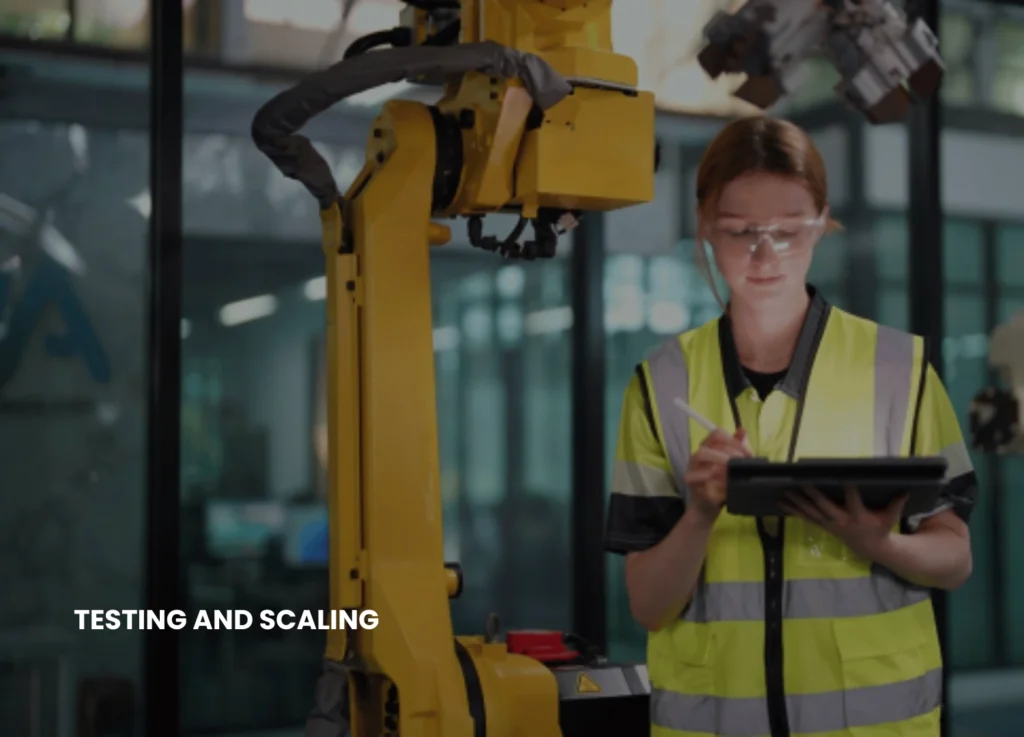
Introduction of changes in small stages to prevent havoc. Test line, measure results, then expand. A plastics factory had experimented with lean on one cell and in one cell had increased speed by 22% then extended the rollout to factory-wide, doubling the output. Control using dashboards and employee feedback.

Train And Involve Your Team

Individuals are the motivation behind the flow; train them to do something new and engage them for further improvement. Issues are shared during daily huddles. The continuous improvement teams that worked in one assembly plant resolved 50+ problems each year, increasing flow by 35 per cent. Promote ideas to continue the momentum. These plans combine to achieve sustainable profits. A builder of machinery, a combination of layout optimisation, lean, and data tools paid off with real-life performance in less than a year, demonstrating that real results of lean pay off in the short term.

Final Thoughts

Implementing effective manufacturing production management strategies is essential for achieving faster production flow and improved efficiency. By assessing current workflows, identifying and correcting bottlenecks, and adopting lean principles, manufacturers can significantly enhance their operational performance. Additionally, streamlining facility layouts, boosting equipment and workforce efficiency, and leveraging advanced software for real-time scheduling can lead to substantial gains.

Emphasising quality through Six Sigma and modular testing ensures that changes are impactful and sustainable. Ultimately, engaging and training employees fosters a culture of continuous improvement, which propels productivity and positions a company for long-term success. Embracing these strategies will not only streamline processes but also pave the way for higher returns on investment in manufacturing.

Keyways offers you services that transform your production process for maximum efficiency. To learn more about the business, visit our LinkedIn.

How CNC Laser Cutting Services Streamline Material Waste and Improve Manufacturing Efficiency

Modern manufacturing has evolved far beyond traditional cutting tools, hand templates, and manual layouts. CNC laser cutting has become very important today in providing precision, speed,
and material efficiency in several industries. With the adoption of high-quality CAD Services like smart CAM Automation and efficient Sheet Metal Design, manufacturers can transform digital concepts into extremely precise physical components with minimal scrap. This digital-first solution enables engineers and production teams to work more efficiently, compute materials more accurately, and see that all the steps of the fabrication process are predictable and efficient.

In an era of rising material costs, shorter production timelines and when global sustainability targets are becoming more stringent, the evolution into CNC laser cutting is not a choice anymore; it is a necessity. Digital workflows reduce errors, minimize lead times and open opportunities to make smart use of materials, all of which enhance the bottom line and environmental footprint.

cnc laser cutting machine cutting a metal sheet engraving a text

The Role of CNC Laser Cutting in Modern Manufacturing

CNC laser cutting is a process in which a high-intensity laser beam, guided by computer-generated toolpaths, melts, burns, or vaporizes material with unparalleled precision. Every cut is made from a detailed digital file developed through CAD drawing. For more complex shapes, 3D CAD modeling provides the necessary precision. As a result, the finished parts replicate the planned design perfectly. CNC laser cutting is very accurate and removes guess-work and human error, unlike the manual or mechanical methods of cutting, which are based on templates and physical alignment.

The digital nature of the workflow allows for rapid changes and immediate testing. Engineers can simulate assemblies, verify bend allowances, detect interference between parts, and analyze material stress all before the first sheet is cut. This proactive approach not only improves accuracy but also ensures that material consumption is minimized and downstream processes, such as bending, welding, and assembly, proceed smoothly. The aerospace industries, automotive industries, architectural fabrication, and industrial machinery have adopted this accuracy as they are able to produce faster, reduce scrap rates, and produce better quality components.

How CNC Laser Cutting Works — A Streamlined Digital Workflow

The CNC laser-cutting process starts with elaborate digital design, which must be proven before a physical material is touched. CAD drawings are generated by design engineers in-house. This
phase can also be outsourced by procuring CAD drawing services from professional engineers.

These digital models can be used as one source of truth so that teams can identify errors at an early stage, test component fit, and simulate behaviors of the material during and after cutting. When the design is complete, CAM software translates these models into accurate machine code, calculating cutting sequences, toolpaths, pierce points, and feed rates. The algorithms used are nesting algorithms to maximize the use of sheets, so that there is little waste and that only small remnants are left and can be re-used in other jobs. The close connection between CAM and CAD
makes sure that this machine reads the design in the same way it was to be read.

The sheets are positioned on the laser bed during production and aligned. The laser is directed through the programmed paths by the CNC system with assist gases being used to provide clean burr free edges. Bevel cuts, engravings, and intricate patterns on curved surfaces can also be done using multi-axis machines. Once cut, parts go directly to the bending, welding or finishing process with little or no manual intervention necessary. The outcome is a quicker, cleaner, and foreseeable production with less waste of materials.

Key steps in the workflow include:

  1. Digital modeling and validation using CAD tools to define dimensions and tolerances
    accurately.
  2. CAM processing and nesting to optimize material usage and cutting sequences.
  3. Laser cutting operation with precise alignment and assist gas control.
  4. Finishing and assembly, allowing parts to proceed directly to downstream operations.

CNC Laser Cutting + Sheet-Metal Design = Dramatically Less Waste

Materials are often the largest expense in sheet metal fabrication. Waste is easily built when the cuts are not precise, or the nesting process is not very efficient. Using a CNC laser cutting with a considerate Sheet Metal Design, manufacturers will be able to make the maximum out of sheet usage, minimize offcuts, and enhance the efficiency of the whole production process.

Accurate CAD models allow engineers to calculate exact material requirements, avoiding spending too much and minimizing scrap. The high-end nesting process facilitated by CAM Automation is used to place parts as close as possible to each other on the sheet to take advantage of the available space. Design for manufacturability (DFM) principles (e.g. consideration of bend reliefs, standard sheet sizes, and kerf allowance) lead to further reductions in waste and components that are easy to assemble. Parametric CAD libraries enable repeat use of design, eliminating trial and error processes which can result in scrap.

By thoughtfully integrating these steps, manufacturers can achieve consistent material efficiency across multiple production runs, minimizing both cost and environmental impact.

Cutting Errors and Rework — How Digital Precision Eliminates Them

One of the costliest aspects of manufacturing is rework. Misplaced holes, wrong tolerances or parts badly nesting sometimes necessitate a complete scrap or redrawing of sheets, which adds to labor and material overheads. The CNC laser cutting eliminates these errors by validating them digitally with precision.

The simulation of components by 3D CAD modeling enables engineers to identify interference problems during design. They also check details of dimensions and layout by using CAD drawings to make sure that the allowances in bends are correct, and all holes are where they should be. This minimizes the chances of having bad parts on the production floor.

Reduced errors translate to reduced emergency orders of materials, reduced wasted workforce, and production schedules. Finally, digital accuracy means that every sheet cut is devoted to the final product instead of being discarded because of mistakes that could be avoided.

Improving Collaboration

CNC laser cutting improves teamwork between the design, engineering, operating, and procurement departments. Due to the fact that all people work with the same CAD and CAM documents, the possibility of miscommunication has significantly decreased. The version control of files and their sharing on clouds enables the updates to be spread immediately across the departments so that all groups of people have access to the latest design and nesting data.

Transparency is also increased through centralized CAD repositories, standardized naming conventions and shared nesting templates. Procurement teams are able to order sheets by the precise material needs, production teams are able to make cuts without ambiguity and engineers can keep on updating designs without affecting any of the jobs being processed. This combined workflow decreases the waste due to duplicated parts or outdated sheets, or wrong cuts.

Speed, Scalability, and Automated Production

CNC laser cutting allows manufacturers to expand through quick prototyping on to mass production. Digital design data can undergo changes in real time and Automated CAM software converts the change into new toolpaths without stopping the production. Fiber lasers are fast to cut thin sheets, whereas the more powerful systems can cut thick metal effectively.

Automation facilitates scheduled manufacturing, remnant tracking and optimal nest reuse. Laser-cut components are passed reliably back to bending, welding, and finishing facilities, which facilitate lean, prefabricated processes to reduce handling and enhance throughput. Speed, repeatability and automation of CNC laser cutting make it appropriate to new manufacturing environments that require speed, repetitive cycles and automation.

Benefits of automation and scalability include:

  1. Rapid updates to design files and CAM programs for flexible production.
  2. Optimized nesting and remnant tracking to reduce scrap and waste.
  3. Efficient integration with bending, welding, and finishing processes.
  4. High-speed production without sacrificing accuracy or quality.

Design Considerations to Maximize Success

In order to maximize the advantages of CNC laser cutting, designers are advised to take into account the thickness of the material in relation to laser power, the allowance in kerf of assembling
parts, and the correct size of the hole and feature in order to eliminate distortion. The nesting strategy also plays a crucial role: combining parts on the basis of thickness and material is easy to produce, and the changeover of sheet is minimized. Reusable remnants can also be tracked and fed back into subsequent nesting calculations to even further optimize the use of materials.

When these design considerations are combined with drawing services, automation, and design services, engineers can achieve minimal material waste, consistent quality and high productivity.

Integrating CNC Laser Cutting with Broader Digital Manufacturing

The effectiveness of CNC laser cutting is enhanced when combined with other digital tools. Precise models created through CAD drawing and 3D CAD modeling pass directly into CAM Automation
to create optimized nests, minimize cycle time and scrap.

Advanced integration involves Artificial Intelligence-based nesting, automated reuse of remnants, and closed-loop quality. Linking digital design, machine control and material tracking, the manufacturers develop a wholly interconnected workflow that eradicates inefficiencies and minimizes costs and enhances predictability through the lifecycle of production.

Future Trends

The future of CNC laser cutting will be a capability that takes advantage of AI, robotics, and cloud- based collaboration to enhance precision and waste reduction. Future technologies involve self-
Adjusting sensors to adjust cutting parameters on-the-fly, hybrid machines which cut and weld simultaneously and predictive maintenance tools which reduce downtime. Remote CAD/CAM collaboration will enable working groups located in different regions of the country and AI-powered nesting schemes will constantly streamline the use of materials according to past
production data.

Manufacturers that embrace such innovations will have an edge, having improved quality, increased production rate and reduced environmental impact.

Conclusion

CNC laser cutting, when combined with disciplined CAD workflows, CAM Automation and thoughtful sheet-metal design, transforms manufacturing into a highly efficient, low-waste
process. Digital perfection removes errors, speeds up manufacturing and will guarantee predictable material usage. Companies often have their own employees to deal with such works but in modern world, the trend is shifting. Many now hire CAD Drawing Services, CAM Automation through cloud software, Sheet Metal Design Services and even 3D CAD Modelling Services through freelancers online. This saves them office space and allows them to work with the best talent from all over the world.

Companies that embrace such technologies would realize increased throughput, reduced scrap, and uniform quality that would place them in a vantage position to succeed in the current competitive manufacturing environment that is being driven by sustainability principles.

Why Do Standard Cases Break So Easily—And How Custom Road Cases Offer A Long-Term Fix

The reason behind the easy breakage of standard cases is that they are typically constructed with poor quality materials, bad hardware, and a one-size-fits-all design that is not suitable to match the specifications of the items the case holds. On the other hand, custom road cases provide customized protection, durability, and a long-lasting remedy to transporting valuable equipment without problems. That’s why custom road cases offer you a long-term fixation. This blog guides you on everything you need to know about the subject matter, highlighting the importance, and clearing all your doubts.


standard road case / suitcase for carrying clothes

Why Standard Cases Break?

Standard cases are very much in the market and may appear to be cheap at first sight, but the design and the material they are made of can hardly withstand the effects of traveling, changing loads, and hardship. Common issues include:
● Poorly made or thin panels that crack readily when pressured or struck upon.
● Flimsy latches and other hardware that loosen, break, or cease their operation after multiple uses.
● Inappropriate inside foam of inadequate custom padding, with the resultant contents shift or
damage.
● Inadequate moisture and thermal impermeability which is able to ruin materials and adhesives over
time.

As an example, plastic cases that have been molded can exclude rain, yet are not robust enough to endure the multiple shocks of transportation. Numerous generic cases with plywood or carpet-covered surfaces offer a minimal amount of shock protection and do not enclose their equipment completely, particularly fragile electronics or instruments.

The Real Price Of The Standard Cases

Although each time a broken latch is replaced or a panel, which was broken, is fixed appears to be a minor issue, cumulative costs are added to the mounts. Normal cases require regular maintenance or simply replacement because of:
➔ Bruises, cracks, or crushing damage from strikes, drops, or moving cargo.
➔ Poor seals or improper foam deteriorating with time result in water damage.
➔ Poor fit and internal movement result in lost or damaged cargo, particularly during long and rough
trips.

Every incident translates to downtime, repair expenses, or even costly replacements of what is contained in the case, not only the case itself.

How Custom Road Cases Provide A Long-Term Fix

When it comes to custom road cases, they are designed to withstand the distinct demands of being transported repeatedly without damaging their contents, regardless of the situation. They have the greatest advantages as follows:

stacked custom road cases in a road case warehouse

Tailored Fit And Protection

Your unique equipment is made into a road case design. The engineers choose the appropriate materials and foam, cut to the exact shape of your gear, and fit tightly and snugly. This decreases the internal motion and shock, and damages to delicate objects are minimized.

Superior Materials And Construction

Custom road cases are usually designed with very strong and multi-layered construction, such as ABS plastic laminate on top of good-quality plywood with reinforced aluminum edges, steel corners, and sunk in handles that cannot be easily snapped off. These plastics resist load and stacking without deformation or collapse, which is much longer lasting than typical molded or carpet cases.

Rugged Hardware And Smart Characteristics

The latches, casters, and handles are of high quality, desired not only because of cost but also due to their durability. Cases may have waterproof seals, reinforced hinges, lockable parts, and even extreme temperature climate-proof linings.

Long-Term And Low Cost Of Maintenance

Custom cases are more economical in the long run because they are more cost-effective, despite being more expensive initially. You will be making fewer replacements, and your equipment will be safer, which means fewer replacements and lower cost.

Why Is A Custom Solution Worth Investing In?

Custom road case design is a good idea in case you are shipping, transporting, or sightseeing with valuable equipment. They are ideal for:
● Artists moving musical instruments and electronics to performances.
● Firms that transport lighting, audio equipment, and displays.
● Industrial or scientific equipment that cannot be afforded to be lost or spoiled during transportation.

The cases can be customized in terms of size, weight, and even style so that protection does not always come at the cost of usability or convenience.

Conclusion

Standard cases are simple to break since they seldom obey the facts of rough, constant journeys and frequently trim corners on vital elements and materials. This is resolved by custom road cases, which provide high-quality construction, a tailor-made interior, and high-quality hardware, which eventually safeguards your gear and your investment. Although an initial expense may be greater, bespoke solutions are long-lasting and reliable for any entity that can guarantee that their equipment will be delivered safely each time. Keyways offers you comprehensive design and manufacturing data generation solutions, supported by years of experience and knowledge. To know more about our services, visit LinkedIn.

How CAD Design Services Reduce Material Waste And Improve Construction Efficiency

Construction has gone way past manual designs and blueprints nowadays. The CAD design services are essential in the fast-paced modern world, leading to accuracy, material savings, and a smooth-running project. Using the CAD tools at the design and planning phases, architects, engineers, and construction managers have a clearer understanding of projects, identify the mistakes at an earlier stage, and are able to utilize the resources most efficiently. The shift not only becomes efficient but also contributes to the reduction of material waste, which is one of the most burning problems of modern construction.

man working on a computer using CAD software. a man providing cad automation services


The Role of CAD in Construction

CAD design services involve the use of specialized software to design accurate digital representations and drawings of buildings, infrastructure, and mechanical components. They are much more than just the simple drawings; experts can simulate everything about a project, and actually do not have to touch the physical part of a project before starting to work on it. The CAD files are characterized by high degrees of accuracy, scalability, and compatibility with other digital construction procedures, such as Building Information Modeling (BIM) and 3D printing.

Since such designs are digital, changes can be easily implemented. Before spending a single dollar in procurement or labor, engineers can revise layouts, test structural integrity, analyze materials, and estimate quantities. Besides making the project more efficient, such proactive planning will help avoid unnecessary purchases and rework.

The Relationship Between CAD Design And Material Efficiency

Project costs usually constitute a large percentage of construction materials (as much as 50 percent). Poor planning or inefficient design may result in waste of materials and cost overrun, and environmental degradation. CAD design services are directly related to these problems.
Here’s how:
Proper Quantity Estimation: CAD software determines an exact volume of materials used, i.e., steel, concrete, or wiring, required in a project. This minimizes over-ordering and excess stock.

Streamlined Designs: CAD systems are used in formulating the best spatial layouts so that the materials can be cut and trimmed to fit each other.
Error Detection: Minimal mistakes in the plan or measuring may result in significant waste on-site. The accuracy of CAD design services and the validation it provides minimizes human error that contributes to such errors.
Reusability of Designs: A CAD model can be reused or modified to use later after it has been created. This enables the companies to standardize the components and conserve resources in repetitive designs.

These are the key areas that CAD pays attention to and thereby limits unnecessary consumption and encourages sustainable building.

Eliminating Rework With Digital Precision

One of the largest contributors to construction projects’ inefficiencies and wastes is reworking projects. In cases where initial plans are inaccurate or incomplete, the construction teams are usually required to tear down and restructure parts, which is a waste of materials and labor hours. By giving a clear and detailed background at the very inception, CAD design eliminates these problems.

Virtual walkthroughs and 3D modeling enable the stakeholders of the project to discover issues or conflicts in the design. This problem-solving approach at an early stage reduces wastage as well as ensures that the project schedule is not delayed.


a man creating engineering drawing for mechanical parts


Improving Inter-Team Cooperation

Some of the various disciplines that are involved in construction include architects, engineers, surveyors, and contractors. Lack of proper communication between these parties may result in mistakes and redundancy. CAD design services facilitate a harmonious collaboration with digital sharing and up-to-date information.

CAD files may be shared in real time as opposed to using paper blueprints or various fixed documents. They all work on the same copy of the design, and the likelihood of confusion is minimized. Other CAD drafting services systems are cloud-based, which means that a team can access, edit, and review files regardless of their locations. This interlinked workflow makes sure that the coordination of changes is good and the purchased materials are according to the latest approved drawings.

Increasing The Speed & Construction Efficiency

Time saved in construction would turn out to be money saved. CAD simplifies a number of phases in the project lifecycle:

Rapid Designing: Templates and automated tools make it possible to take a lot less time to draft.
Simulation and Testing: CAD would enable design testing in a virtual environment with different real-life conditions without incurring delays due to material or structure problems that would be realized late into the construction.
Prefabrication Support: CAD data may be directly transferred to fabrication machines or modular structure plants, as standardized components are created very fast and in highly precise amounts. Such developments reduce the time required for a project and still guarantee high quality and safety. Fewer material problems and high speeds would lead to lower cost and a lower environmental footprint.

Supporting Sustainability Goals

The present-day constructions have to be eco-friendly and not maximize growth. Waste in materials not only adds to the cost but also adds to the pollution and landfill. The design of CAD is also vital in ensuring that the goals of sustainability are met by promoting the maximization of resources. Through modeling the energy performance of buildings, the engineers will be able to select designs that are efficient and consume less energy. Moreover, CAD assists in accurate cutting and assembly, and therefore, minimal waste is generated. CAD-based data is being used by many construction companies to address green building standards like LEED (Leadership in Energy and Environmental Design).

Integrating CAD With Other Digital Technologies

Combined with the other digital technologies of construction, the real potential of CAD can be even higher:
Building Information Modeling (BIM): BIM is a combination of 3D CAD artistic arrangement with the scheduling, costing, and maintenance information that forms an intelligent system developed over the lifecycle of a building.
Augmented & Virtual Reality (AR/VR): CAD data can be represented in a 3D immersive environment to make decisions and provide presentations to clients.
AI & Machine Learning: Predictive algorithms are able to analyze CAD data in order to propose material-saving designs or enhance safety. Combining CAD with such innovations, companies are going to be able to attain greater heights of accuracy, efficiency, and sustainability.

Future Trends In CAD Construction

The CAD design services will emerge as one of the major facilitators of the advancement as the construction industry proceeds to digital transformation. Even smarter systems will be introduced in the future with better automation, real-time collaboration, and connection with IoT sensors to track onsite performance. The eco-friendly buildings, cost control, and quality assurance will help the companies that fully utilize the workflows based on CAD to outperform their competitors in the long run. The minimization of material waste and the increased efficiency are no longer a dream; it is a goal that technology can create. Keyway specializes in optimizing your design ecosystem, ensuring seamless organization and accessibility of your design assets. To know more about the business, visit our LinkedIn.

Why Your 3D Architectural Rendering Looks Unrealistic — And How to Fix It

When your 3D architectural images are more of digital toys than convincing, realistic scenes, you are not alone. Most designers find it difficult to make their visuals appear real, particularly when communicating with clients or sharing marketing properties on the internet. Here, you will get to know the most frequent causes of your 3D architectural renders not appearing real and how these problems can be resolved with simple and easy steps that even novices can manage. One can also opt for 3D architectural rendering services from a reliable service provider.

Why 3D Architectural Renderings Are Unrealistic?

The majority of the realism issues in 3D art rendering are a result of omitted details, lack of artistry, or technical compromises. Let’s explore the top causes here.

3D Architectural Design

Low Quality of Lighting And Shadows

The most significant thing that can distinguish between fake, flattened pictures of objects and the true, photorealistic images is lighting. Poor/improper lighting, such as the absence of enough bounces of light, a wrong shadow model, or a lack of global illumination, causes surfaces to appear sterile and dull.

Inappropriate Textures And Flat Materials
Repeating low-resolution textures (i.e., tiles of wood or artificially smooth concrete) is a tell-tale sign of digital creation of your scene. Likewise, materials that do not respect reflectivity, bump mapping, or minor flaws always appear off-color.
Breaking The Law of Scale And Proportion
When the door is too tall, the window too small, or the proportions of furniture appear strange, viewers will immediately know that something is not right–not necessarily the reason why. They need to be consistent with actual architectural dimensions.
Image Of 3D render House design
Lack of Detail And Context
Bare images with a minimal number of objects or no elements of everyday life (people, clutter, vegetation) are like empties rather than inhabited places. In isolation, even a technically correct model does not give a realistic impression.
Unnatural Camera Angles & Composition
Capturing views of a space that assume the God’s eye view or the ultra-wide views without considering the view of individuals who will be using the space can cause the image to become unnatural. Framing and real- world focal length are required to be good and realistic for realistic 3D renders, respectively.
Too Clean And Perfect
Nothing in the real world is pristine; there is always a crack, a stain, a patch of muddy grass, or a worn-out detail. A perfect surface in the rendering seems soulless and unnatural.

The Secret To Making More Realistic Renders

The good news? All these can be fixed, just a little knowledge and the desire to include (or omit) detail where necessary. Here are a few ways to assist you in making your 3D architectural rendering more realistic.
Making Realistic Renders
Master Lighting Techniques
Make physically-based lighting systems in your 3D software. Use sunlight, environmental lights (HDRI), as well as realistic light color temperatures.
Activate global illumination and permit sufficient light bounces to decrease the shadows and replicate the effects of the real world.

Test time-of-day settings. There are warm shadows produced during the golden hour (early morning or late afternoon).

Improve Textures And Materials

Every time, employ high-resolution textures that are based on real materials. The mapping coordinates should be randomized to avoid their obvious repetition.
Add bump, normal, or displacement maps to provide surfaces with depth and touch.

Make it look like it is a real-life situation by adding some roughness, dirt, or flaws.

Check Your Scale-Always

Draw based on a correct floor plan or architectural blueprint, with the correct units throughout your
design workflow.
Before rendering, make sure that proportions are checked by putting a reference human (a figure of average height) in your scene. You can also opt for professional 3D architectural rendering services.
Insert Environment Information And Context

Provide the room with life-like models- space can be made relatable by having curtains, rugs, books, or electrical outlets.

When dealing with exteriors, add such street elements as streetlights, trees, benches, or mailboxes.
Minimal, minute details assist the viewer in envisioning the life that occurs in the renders.Select Natural Camera Angles
Place your camera at human eye height (approximately 1.6 meters).
Most interiors take normal focal lengths (35-50mm equivalent), which are not extreme wide-angles-only very necessary.

Squeeze the composition using the rule of thirds to create a welcoming architectural visualization quality.

Adopted Controlled Imperfection


Break up perfect symmetry. Slide or lean a picture frame.
Vary wear and tear: scuff marking on floors, fingerprinting on glass, or some minor weathering of wood.

You can add some personal details, such as pillows out of place, shoes at the door, or coffee cups uncleaned.

Use Atmospheric Effects


Light haze, subtle fog, or soft depth of field may add to the impression of space and realism- when done sparingly.
The post-production effects should not be too excessive; colors, brightness, and contrast must remain in the range of real photography.

Learn From Real Photography


Examples taken from areas like your project.
And see the play of light upon materials, and the impressions of objects, or the appearance of actual shadows, and repeat these in your renders.
Quick Troubleshooting Checklist For You
Here are some of the questions you must ask yourself.
Have all the materials been mapped properly, at natural scales?
Do the sources of light make sense?
Are there shadows and reflections of the objects?
Have you put in environmental things and evidence of everyday life?
Do proportions and measures go hand in hand with plans?
Does your end product have visible repeat material and unnatural finishes?
Common Mistakes and How to Fix Them
Here’s a table to summarize common mistakes that need to be avoided and their fixation.
ProblemSolution
Flat LightingAdd global illumination, tweak shadows
Fake-Looking MaterialsUse high-res, physically correct textures
Bad CompositionAdjust camera angle and lens, frame shots better
Lack of Real-World DetailAdd clutter, imperfections, and life-like touches
Scaling ErrorsAlways build to true size, cross-check proportions
Sterile, Empty SpacesPopulate with furniture and people, add context


Final Thoughts
Computer-generated art and science combine to create realistic 3D architectural renderings. Although contemporary software offers you nearly infinite possibilities, it is your focus on the details, light, material, proportion, and life that makes a sterile 3D model a scene that evokes emotion and imagination in the viewer. The fundamental errors will be corrected, and hence, the next time you present or market your image, it will not just awe your clients but will make them see what you have visualized in the future. Be inspired and never stop practicing, and you will always find the magic in the real world to bring it to your renders. Keyway offers you tailored rendering and animations to provide you with seamless integration of graphic expertise. For more information on our business, visit our LinkedIn.

How CAM Automation Outsourcing Cuts Product Design Time by 50%

Businesses are reducing the time of product design by half through the outsourcing of Computer Aided Manufacturing (CAM) automation. Companies that use CAM automation by engaging special firms for CAM automation outsourcing services not only shorten their product development cycles but also have a cutting edge advantage in the competitive markets.

This blog offers you an in depth account of how CAM automation outsourcing can bring about this transformation, in a language that can be understood by common people and with illustrations that are easy to follow.

Engineers using CAM software to automate manufacturing processes in an outsourced setup

What Is CAM Automation Outsourcing?

Computer Aided Manufacturing (CAM) refers to software applications that control machine tools and automate manufacturing processes. When companies choose to outsource CAM automation, they often partner with a professional engineering firm or freelance engineers. These experts handle tasks such as tool path programming, design verification, and production optimization. This collaboration enables in house teams to focus on innovation and market expansion rather than getting bogged down in technical activities.

The Bottleneck: In House Design of the Products

Traditionally, product design is a long, cyclic process that requires:

● Programming machinery manually.
● Several experimentation and error cycles.

● Close coordination between design and manufacturing departments.

In-house teams are usually constrained by such factors as:

● Outdated equipment
● Lack of specialized skills

● Limit on the use of resources to scale fast.

Such problems delay progress, raise expenses, and could miss the opportunity in the market.

A team of professionals working on laptops and discussing CAM automation strategies in an office setting, representing why companies outsource CAM automation for efficiency and expertise.

Why Companies Outsource CAM Automation?

Outsourcing CAM automation is the close collaboration with specialized service providers who do not deal with any other services but develop, optimize, and maintain automated CAM workflows. These professionals integrate domain expertise and the latest technologies to simplify the process of manufacturing preparation.

The most common reasons why companies opt to outsource are:

● Speed and Scalability: Outside teams will be able to adjust to the evolving workload and deadlines quickly.

● Cross-Industry Experience: CAM professionals who are outsourced usually possess cross-industry knowledge and also know several software packages, including Mastercam, Siemens NX, or Autodesk Fusion 360.
● Cost efficiency: Companies do not need to pay full-time specialists, but pay only at the time when services are necessary to save money on their labor.

● Strengthen Your Core Business: With the outsourcing of technical and routine CAM activities, in-house engineers will be able to concentrate on more important company matters, such as innovation and product development, rather than programming optimization.

The direct impact of these advantages is that the design process is accelerated and more reliable in terms of production outcomes.


Correlation Between CAM Outsourcing And Design Time Reduction

An average product design process consists of a number of stages that are interrelated. They include: concept development, 3D modeling, prototyping, testing, and final manufacturing setup. Any postponement in solving CAM programs can cause disruptions to the whole process. Some companies also offer remote CAM service.Outsourcing of CAM automation prevents most of these bottlenecks by:


Highspeed Data Conversion And Automation Of Toolpaths

The CAD models can be rapidly translated to machining paths through rule-based automation of outsourced CAM engineers. However, once templates are configured, it is possible to program large batches of similar parts in a few minutes rather than hours.
To take an illustration, a tooling manufacturing company that used to spend an entire day coding a

multitude of parts can now program 80 percent of the operation with standardized CAM templates coding it in less than 2-3 hours.


Concurrent Engineering And Design

When CAM is outsourced, design engineers are able to proceed simultaneously on subsequent product designs. During the process of model refinement, the internal team engages its external CAM team to check manufacturability and generate toolpaths with the newest versions of the model. This parallel workflow has a significant reduction in the design-to-manufacture handoff.

Reduced Trial-And-Error

Internal teams can use up hours that are spent optimizing machining parameters through expensive iterations. Off-the-shelf libraries of machine configurations, cutting tools, and materials are used by outsourced CAM experts. Their experience enables them to do away with repetitive simulation cycles, and this saves time and machine resources.

Better Data Reusability

The CAM outsourcing partners have organized databases of machining templates, toolpaths that have been tested, and knowledgeable databases. These can be reused in other projects once made; not only will it remove repetitive programming effort, but it will accelerate the ramp-up of similar components.

Measurement Of The Time Savings

The reduction of time is related to the complexity of parts, industry, and the maturity of workflow, but research and case studies indicate that the average programming and design preparation time has been reduced by 40-50 percent. Keyway offers you reliable CAM automation outsourcing services, thereby easing your process of product manufacturing.
Consider this example:
● Pre-Outsource: The engineers could take 8 hours to code a precision part, do verification, and coordinate design changes.
● Post Outsourcing: Workflow templates and workflow optimization reduced the overall time to 4 hours or less, half of the previous time.

➔ Multiply dozens or hundreds of parts per month, and this efficiency will result in enormous financial and productivity savings.

Long-Term Strategic Benefits Of CAM Automation Outsourcing

In addition to speed, CAM automation outsourcing has a number of long-term benefits that contribute to the performance of product development further.
● Quality Stability: With auto templates, there is uniformity in the generation of toolpaths and also reduced human error.
● Continuous Improvement: CAM partners update automation scripts on an ongoing basis, as per the new machining strategies and best practices.
● Increased Flexibility: It could be a production scaling, a change with new materials, or the implementation of new machines; outsourced CAM processes are flexible.
● Quick Market Response: It provides the shortest product design cycle, so quicker market entry, which is vital in businesses such as aerospace, automotive, and consumer electronics.

These benefits not only allow the companies to reduce time but also to create a data-driven design ecosystem that is sustainable.

Illustration of a graph using symbols to represent the strategic benefits of CAM automation outsourcing, such as cost savings, efficiency, and scalability.

Outsourcing CAM Automation: How to do it Effectively

One should go about CAM outsourcing in a deliberate manner in order to get the highest returns on the

investment.

● Evaluate Internal Processes-Find out CAM processes that are repetitive or time-consuming and are automatable.
● Select A Trusted Partner-Find a service provider who has experience in your industry, with whom you can work with and whose software instruments are compatible.
● Standardize Data Format-Provide a smooth flow of information between the design, engineering, and manufacturing departments by aligning the CAD/CAM data standards.
● Begin with Pilot Projects-Use a small project as the first automation and measure the outcome, and then increase the scale of the workflow when the workflow becomes effective.

● Stay Collaborative-Have a free flow between the house engineers and the outsourced teams to ensure the learning and integration on an ongoing basis.

With the correct management, CAM automation outsourcing will not be a solo operation but instead a joint continuation of your engineering

The Future of CAM Automation

With the further evolution of AI-based design and digital manufacturing, the outsourcing of CAM automation is bound to be even more effective. New technologies, such as machine learning, digital twins, and cloud collaboration, are making it possible to have entire design-to-production pipelines. With predictive machining techniques coupled with intelligent automation, organizations can realize even quicker, more accurate as well and more economical product development periods. It is those manufacturers who will be setting the standards within the industry in the future since they are the ones who are adopting this change.

Final Thoughts

To manufacturers who would want to remain competitive, outsourcing CAM automation is not an option but a requirement. Not only does it reduce product design time by up to 50 percent, but it also improves overall quality, scalability, and operational agility. Outsourcing increases the level of efficiency by integrating specialized knowledge, standardized automation, and continuous improvement that will enable the creation of a smarter and quicker path to production-making efficiency your primary competitive edge. Keyway streamlines your production process for unparalleled efficiency and quality by offering precision-driven manufacturing solutions. For more information on our business, visit our LinkedIn.