Why Roller Conveyor CAD is Crucial for Preventing Shop Floor Failures?


Shop floor failures rarely begin with loud breakdowns; they usually start with small design mistakes that go unnoticed until production is affected. In today’s manufacturing world, conveyor systems are operated for 24 hours under high loads and high schedules, and there is hardly any room for mistakes. Any minor error in distributing loads, alignment, or planning of a structure may create downtime, safety hazards, and costly repairs. With the automation and increased productivity of industries, precise and dependable conveyor planning is more necessary than ever.  


Roller Conveyor CAD has a significant role in avoiding such failures by assisting engineers to visualize, analyse, and prove conveyor systems prior to their production or installation. CAD enables more planning, the ability to identify risks in early stages, and easier integration of the system, rather than relying on guesses or trial-and-error. Early identification of potential design problems enables vendors to develop conveyor systems that are safe, efficient, and reliable in actual shop floors.  


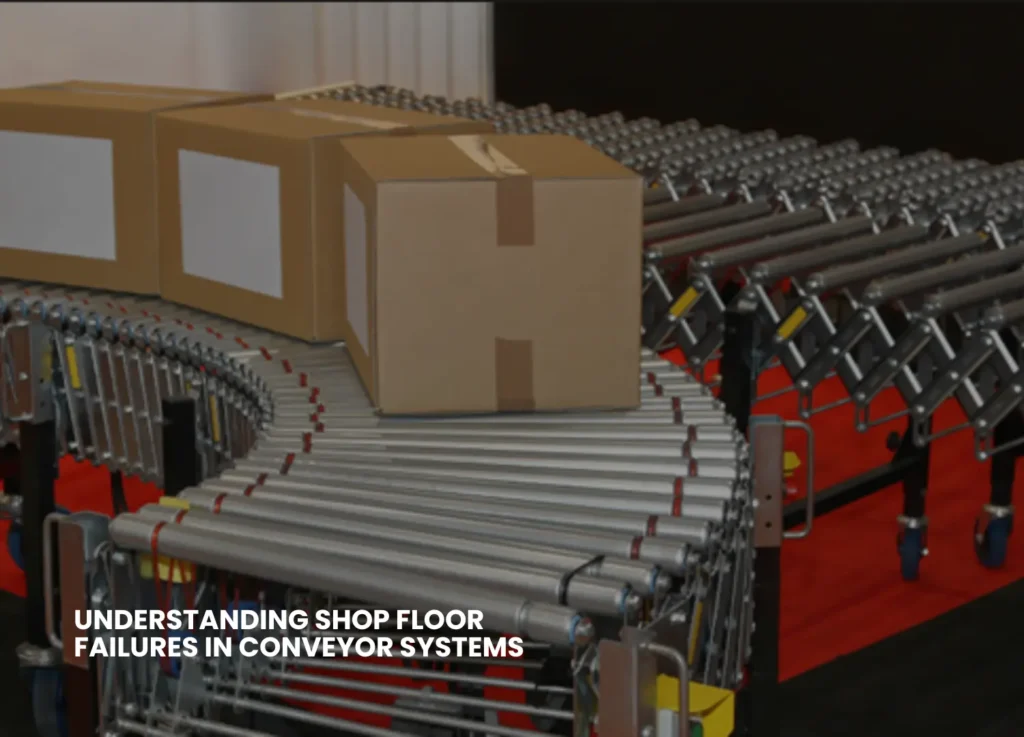
packaging boxes on a conveyor


Understanding Shop Floor Failures in Conveyor Systems 


Failures at the shop floor in the conveyor system are usually designed as limitations, but not caused by operational errors. Issues like unequal load distribution, structural tension, or misalignment gradually decrease performance and result in unpredictable downtimes. These problems can be identified in the design stage and can be avoided, that led to repeated operational problems and maintains a smooth flow of materials. 


  • Uneven load distribution causing roller and bearing damage. 
  • Frame misalignment leading to vibration and instability. 
  • Improper roller spacing causes product jamming. 
  • Premature lack of wear due to excessive mechanical stress. 
  • Trouble in integrating with other equipment. 


Role of Roller Conveyor CAD in Modern Engineering 


Roller Conveyor CAD changes traditional conveyor planning into a more accurate and data-driven process. Engineers can create detailed 3D models to understand how the system will perform before manufacturing starts. This improves accuracy and reduces design errors. 


Roller Conveyor CAD transforms the conventional method of planning a conveyor into a more precise and data-based approach. Engineers can create detailed 3D models to understand how the system will perform before manufacturing starts. This enhances precision and minimization of design errors.  


  • Detailed 3D modeling for better visualization. 
  • Improved dimensional accuracy and alignment. 
  • Timely detection of component interference. 
  • Faster design updates and optimization. 
  • Reduced installation errors on site. 


Early Detection of Design Risks 


One of the biggest benefits of CAD-based design is identifying potential problems early. Before the manufacturing process, engineers can examine the behavior of the system digitally and correct the risks. The method enhances trustworthiness and avoids the future expense of making complex changes.   


  • Load and stress analysis before fabrication.  
  • Simulation of peak operating conditions. 
  • Detection of weak structural points. 
  • Avoidance of congestion in certain areas. 
  • Less possibility of unforeseen failures. 


Improving Structural Strength and Reliability 


Conveyor system structural strength has a direct impact on long-term performance. A poorly designed structure can perform well but fail in the long run with constant operational stress. CAD assists engineers in ensuring that each component can carry the necessary load. 


  • Accurate material and thickness selection. 
  • Proper support and reinforcement placement. 
  • Reduction of frame bending and deformation. 
  • Better resistance to vibration and fatigue. 
  • Stable performance under heavy loads. 


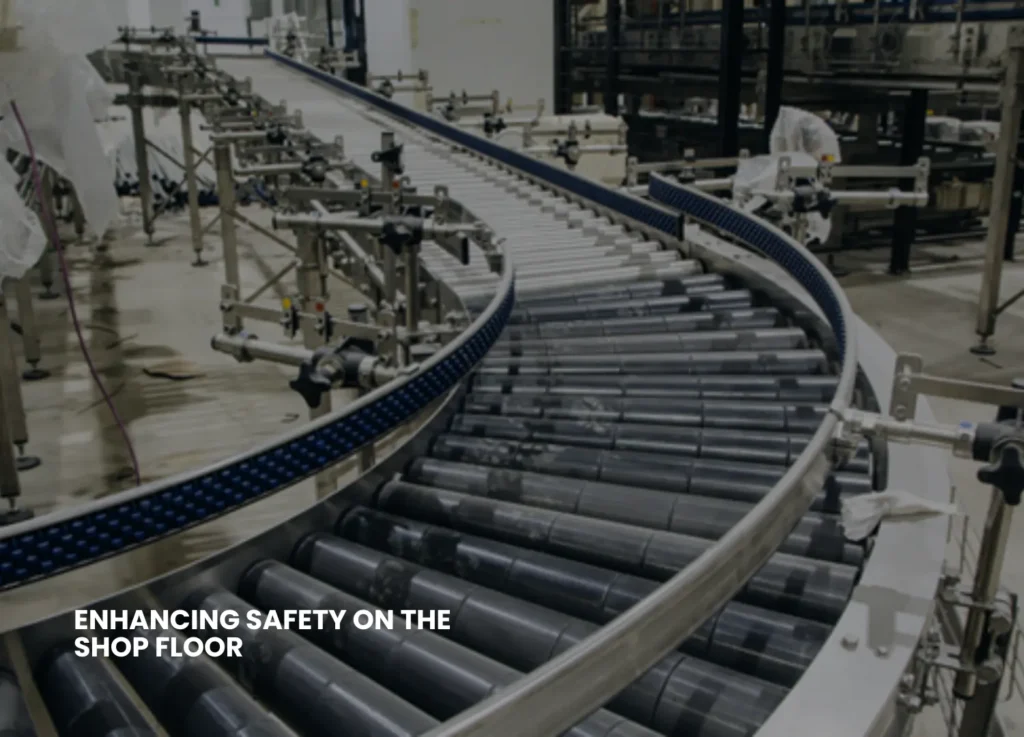
Enhancing Safety on the Shop Floor 


Safety risks often arise due to design oversights. Unprotected or unguarded conveyor systems may provide hazardous working conditions. Safety measures can be considered early on through CAD-based planning. 


  • Integration of safety guards and protection features. 
  • Proper spacing to reduce operator risk. 
  • Inspection and easy access. 
  • Reduced risk of product fall or instability. 
  • Improved compliance with safety standards. 


CAD CAM services can improve the efficiency in conveyor systems  


Improving Communication Between Design and Production Teams 


Effective communication among the engineering, fabrication, and installation teams is a key to successful project implementation. Effective Conveyor System Design offers a common visual reference that enables all stakeholders to clearly understand system requirements, reducing misinterpretation and ensuring smoother implementation across all stages. 


  • Clear technical documentation for fabrication teams. 
  • Better inter-departmental coordination. 
  • Less wastage in the production and assembly stages. 
  • Faster approval and revision processes. 
  • Better alignment between designing and execution. 


Seamless Integration with Automation Systems 


Modern manufacturing depends heavily on automation and synchronized workflows. Conveyor systems should be accurate to machines and automated equipment to ensure efficiency. CAD assists engineers in the proper planning of integration to facilitate easy operations. 


  • Proper coordination with automated machines. 
  • Easy transfer of products across machines. 
  • Elimination of production bottlenecks. 
  • Improved control of the conveyor height and speed. 
  • Improved overall workflow efficiency. 


Reducing Maintenance and Operational Costs 


Poor design planning is frequently reflected in frequent maintenance. Unnecessary stress and wear on components can be experienced in situations where the conveyors are not properly analyzed. CAD assists in maximizing performance and minimizing long-term operating costs. 


  • Balanced load distribution reduces stress on components. 
  • Longer life of rollers and bearings. 
  • Less downtime due to decreased failures. 
  • Easier troubleshooting using CAD documentation. 
  • Reduce long-term servicing costs. 


Supporting Scalable and Future-Ready Designs 


Manufacturing facilities evolve, and conveyor systems must adapt to changing production needs. CAD-Based design enables the design engineers to come up with a modular and flexible design of the conveyor systems, which can be expanded or changed without significant interruptions. This guarantees extended wearability and security of investment. 


  • Modular layouts for easy expansion. 
  • Simplified future upgrades and modifications. 
  • Flexibility in variation in production volumes. 
  • Digital models for future reference. 
  • Reduced redesign expenses in the expansion. 


Enabling Faster Project Execution and Deployment 


Time delays in conveyor projects often occur due to design corrections and unexpected site adjustments. CAD-based planning reduces uncertainty by checking the design before manufacturing to speed up the manufacturing and installation. 


  • Less redesigning during installation. 
  • Faster approval cycles. 
  • Accuracy in project planning. 
  • Reduced installation schedules. 
  • Quicker system commissioning. 


Supporting Data-Driven Decision Making 


Modern engineering decisions increasingly rely on data rather than assumptions. Roller Conveyor CAD offers measurable data on the system performance, allowing the engineers to make adequate decisions about materials, structures, and efficiency. 


  • Design improvement through performance. 
  • Proper assessment of various designs. 
  • Better cost-to-performance balance. 
  • Reduced reliance on trial-and-error methods. 
  • Better long-term system planning. 


Conclusion 


Great conveyor performance starts with engineering clarity, not post-installation fixes. Roller Conveyor CAD helps the manufacturer in making informed design decisions that align system performance with actual production demands, which is reliable as the operations scale and evolve. 


At Keyways, we combine practical engineering expertise with advanced Conveyor System Design approaches to deliver efficient and performance-driven material handling solutions. Explore our solutions at LinkedIn and see how Roller Conveyor CAD supports smarter manufacturing outcomes.

Lathe Machine: Definition, Parts, Types, Operation, Specifications, Advantages, and Applications

One of the most common and universal machine tools in the manufacturing and mechanical engineering field is a lathe machine. The lathe is known as the mother of all machine tools because it is critical in the production of raw materials to accurate and useful parts. Lathe machines have played a leading role in production engineering and industrial production since a traditional workshop up to modern CNC facilities. 

This is a complete manual that covers all information about lathe machines such as definition, working principle, parts, types, specifications, benefits, and some real-world applications. It is particularly handy among students and professionals whose major is Mechanical Engineering, Manufacturing Process and Production Engineering. 


What is a Lathe Machine? 

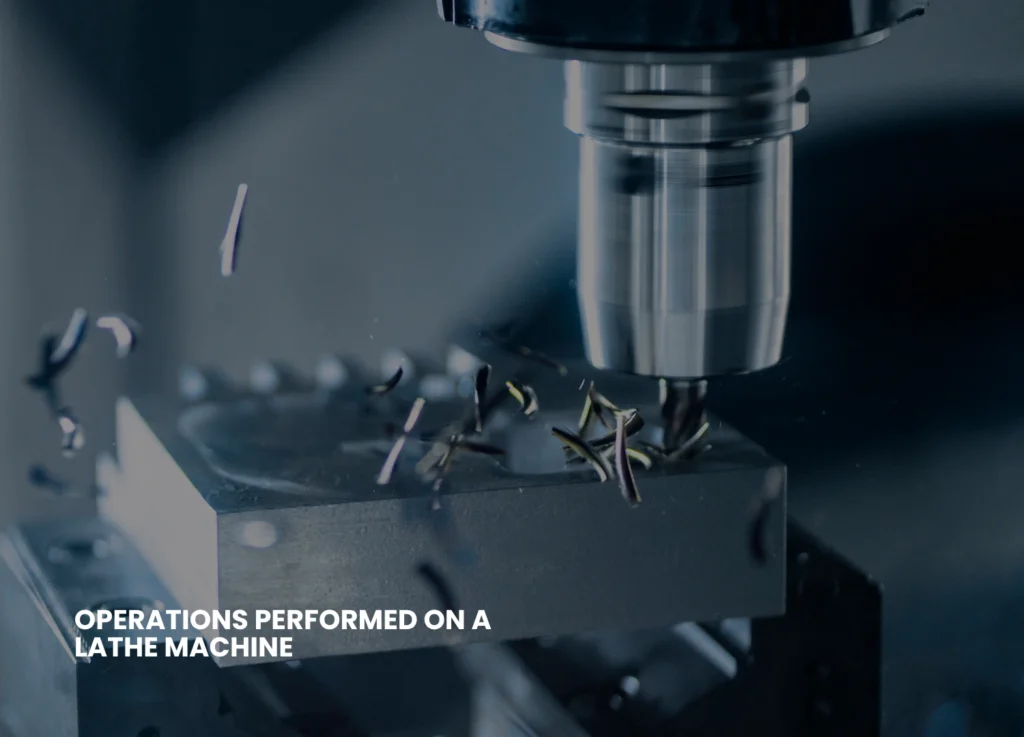
A lathe machine is a machine that is mostly employed to take away material on a rotating piece of work so as to get the required shape and size. The fundamental mechanism that works is that the work piece is rotated against a fixed cutting tool which is slowly fed into the material to carry out machining processes. 

Lathe machines find extensive application when making cylindrical, conical and symmetrical parts. Examples of these common operations on a lathe include turning, facing, drilling, threading, knurling, grooving and boring. Since lathe machines are more specific and multiple in multiplicity, the subject is fundamental in the study of Engineering Basics and Workshop Machinery. 


Main Parts of a Lathe Machine 

There are various important parts of a lathe machine that help to maintain the machine as an accurate and steady machining machine. 


  • The bed forms the hard foundation of the lathe, and is commonly composed of cast iron. It aids in the support of the other components and the correct alignment of the process of machining. 
  • The spindle, the speed control mechanism and the gear setup to move the work piece are placed at the headstock, which is the part at the left side of the bed. 
  • The tailstock that is on the right side supports the free end of the work piece and it may also carry tools like drills and reamers. 
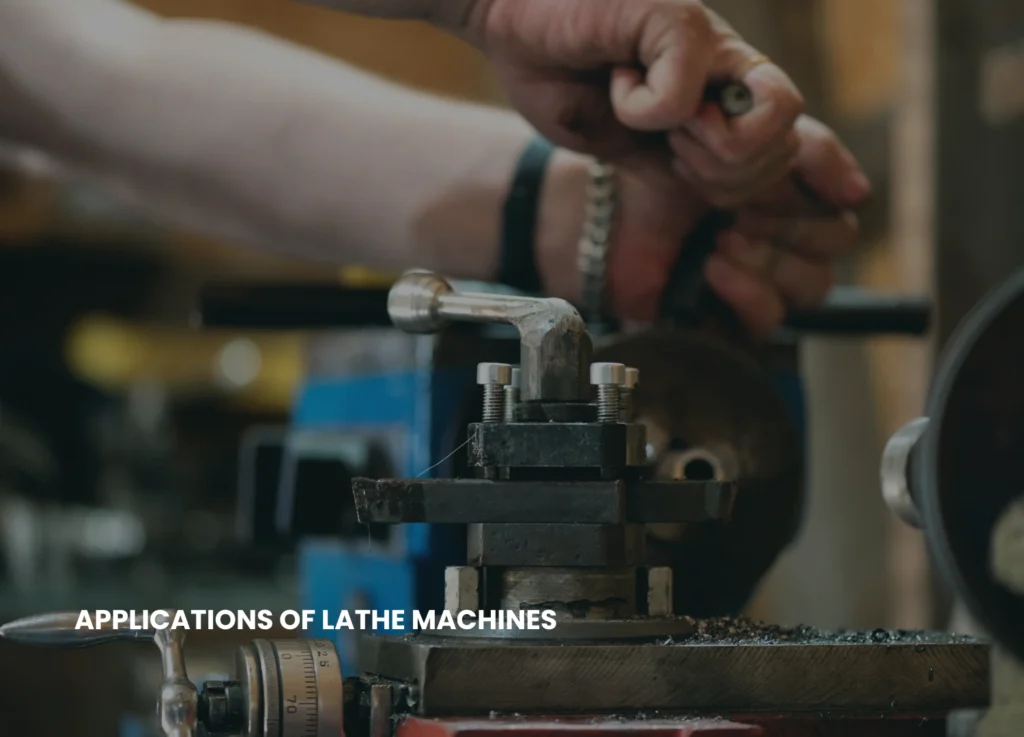
  • The carriage runs across the bed and carries the cutting tool. It consists of saddle, cross slide, compound rest and tool post which gives an opportunity to control the tool movement in the most accurate way. 
  • The feed is automatically fed and the thread cut with precision through the lead screw and feed rod. 
  • The work piece is firmly clamped with the help of the chuck. The most common ones are 3-jaw self-centring chucks as well as 4-jaw independent chucks. 
  • The apron on the front of the carriage has gears and levers which work longitudinal and cross feeds. 


LATHE MACHINE OPERATING ON A MECHANICAL PART


Common Operations Performed on a Lathe Machine 

The lathe machines can be used to carry out a very high number of machining functions, and that is why they are highly versatile within the Manufacturing Processes. 


  • Turning is applied in shrinking a workpiece in diameter. 
  • Smoothing and flattening the end-surface. 
  • Threading can form internal or external screw threads. 
  • Drilling involves the creation of holes with the help of drill bits. 
  • Knurling creates a textured surface to make it easier to hold. 
  • The finished component is separated by parting or cutting off. 
  • Boring also enlarges the holes that are already in place with a high precision. 


Types of Lathe Machines 

A variety of lathe machines is meant to suit certain production needs. 

The most used and which is applicable in general-purpose machining is the engine lathe (centre lathe). 

  • The turret lathe enables a rapid change of tools and is suitable in mass production and repetitive processes. 
  • Computer numerical control is used in the CNC lathe to provide highly accurate, automated and high volume production. Modern CNC Lathe systems and advanced manufacturing require the use of CNC lathe machines. 
  • The bench lathe is compact and small and it is mostly utilized in light-duty and educational purposes. 
  • The tool room lathe is also the accuracy work tool which is more accurate in work and also has more control of speed. 
  • The capstan lathe has been a lighter version of the turret lathe, much used in small to medium batch production. 
  • The speed lathe is simple in construction without a gearbox and is normally applied in woodturning, polishing and spinning. 


Specifications of a Lathe Machine 

In choosing a lathe machine, a number of specifications should be put into consideration in order to make sure that it fits a certain job. 

These are the swing over bed that means what is the maximum diameter of the work piece and the distance between centres and that is the maximum length of material that could be mounted. Additional details of great importance include the range of spindle speed, length of bed, the size of spindle bore and horsepower of the motor, which determines the size of machine and performance. 


Advantages of Using a Lathe Machine 

Lathe machines have a great number of benefits in the sphere of Machine Tools and manufacturing. 

They are very versatile as they can carry out several operations on one machine. Lathe machines are very precise and repeatable and this guarantees the same quality of production. The CNC lathe machines greatly save time and human error during machining due to automation. Moreover, lathe machines have got the capability of operating on a diverse selection of materials, which include metals, plastics, wood and composite. 


AN ENGINEER SETTING UP A LATHE MACHINE


Applications of Lathe Machines 

Lathe machines have a vast number of industries where they can be used. 

They produce shafts, pistons, bushings and engine parts in the automotive sector. Lathe machines are used in aerospace to make lightweight and high-precision components. Nuts and bolts, gears, and flanges are manufactured by using the metalworking and fabrication industry and lathes. They find application in the medical industry to make surgical instruments and implants. Woodworking, maintenance shops and repair shops are also common places where lathe machines are utilized. 


Final Thoughts 

The lathe machine remains one of the pillars of the modern manufacturing production combining the time-honored concepts of machining with the latest automation systems. Its capability to form materials precisely and effectively does not need to be addressed whether as a manual centre lathe in a workshop or a CNC lathe in a production line. 

Any person studying or employed in the field of Mechanical Engineering, Workshop Machinery, or Production Engineering would need to have knowledge of the lathe machines, and how to maximize the manufacturing process and how to produce high-quality components. 

Is CNC Automation Reducing Real Machining Skills?

It is true that manufacturing industry is evolving at a rate never seen before in history and CNC automation is standing at the heart of this evolution. Visit a contemporary machine shop and one will encounter high-speed CNC machines, automatic tool changers, probing machines and even robotic arms loading and unloading parts. All this technology has certainly increased productivity and precision but has also led to a serious question in the machining community; Is CNC automation taking away the real machining skills? 

This is not the question of denying the existence of technology or idealizing the past. Rather, it is a matter of becoming familiar with how rising automation is transforming the job of machinists, what sort of skills will be needed and what will be the long-term consequences of automating manufacturing skill. 


The Rise of CNC Automation in Modern Manufacturing 

The automation of CNC has increased at a high rate because of the increasing rate of industry requirements of speed, uniformity and reduction of expenses. Computerized CNCs are capable of working up to long periods and need very little supervision with the same production of parts with close tolerances. Automatic tool measurement, adaptive feed control, preset machining cycles, etc. are some of the features that have considerably diminished manual decision-making in the process of the operations. 

This business-wise makes sense. The use of automation decreases the reliance on most seasoned operators, potential human error, and yields higher production. The position of the machinist is however gradually being transformed into a system operator as machines become increasingly involved in the handling of more task 


Traditional Machining Skills: What Do We Mean? 

Prior to the widespread implementation of CNC aCNC MACHINING PROCESSutomation, machining was intensive in terms of skill and rich setting-to-do experience. Machinists also had to know the machines by feel, by listening to sounds of cutting, by touching vibrations and manually adjusting the parameters. These are the skills which had been acquired through several years of experience in manual lathes, milling machines and grinders. 
  • Conventional machining skills consisted of: 
  • Cutting speed and feed calculations were done manually. 
  • Experience-based tool selection and tool grinding. 
  • Determining machining problems through sound, feel and visual examination. 
  • Manual adjustments of setups to keep it accurate. 
  • Knowing material behaviour in cutting. 

Such skills were the basis of machining knowledge and enabled machinists to be flexible to unforeseen issues. 


How Automation Changes the Machinist’s Role 

With CNC automation, much of these are now being done by the software, sensors and pre-programmed logic. Current CNC machines have the ability to automatically choose the cutting parameters, correct tool wear, and terminate operations in case of fault detection. This has meant that there is a tendency to subject machinists to loading programs, watching screens, and responding to alarms instead of actively controlling the machining process. 

This change does not kill all the skills but it only alters the nature of the skills needed. The machinist of today must learn not only of software, machine interfaces and troubleshooting, but of manual control techniques less. This is another set of skills, but it may be acquired at the expense of having lost basic machining intuition. 


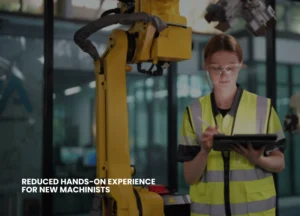
Reduced Hands-On Experience for New Machinists 

The effect that CNC automation has on the new entrants into the profession is one of the most considerable worries concerning the practice. Large numbers of new machinists begin their careers right on CNC machines and never touch a manual machine. Although they can be taught the effective use of CNC controls, they can be short of knowledge on the foundations of machining. 

  • Devoid of the practical aspect: 
  • The operators might find it difficult to detect the cause of machining issues. 
  • The breakage of the tools can be considered a software problem and not mechanical. 
  • Bad surface finish cannot be diagnosed well. 
  • The process optimization is now trial and error, and not a skill-based exercise. 

This results in a breed of operators, who have the ability to operate machines but might be unaware of the reasons behind the events that occur during cutting. 


CAM AUTOMATION MEANS LACK OF HANDS ON EXPERIENCE FOR NEW ENGINEERS


Over-Reliance on Software and Pre-set Cycles 

Excessive dependence on CAM programs and machining cycles are also another negative aspect of automation. Although CAM systems are potent and effective, their toolpaths produced are usually generic and are not likely to suit all cases. Parameters were fine-tuned by skilled machinists, depending on the state of the machine, wear of tools and variation of materials. 

  • When operators blindly believe the software output: 
  • Tools used to cut may be operated to dangerous levels. 
  • Quality of surface finish can be compromised. 
  • The life of tools can decrease considerably. 
  • Unnecessary stress may be exerted on the machines. 

The absence of solid machining expertise would allow the operators to be unconcerned with software choices and cause inefficiencies and expensive mistakes. 


Skill Dilution Vs Skill Transformation 

It should be mentioned that CNC automation does not necessarily kill skills but rather transforms them. The current machining demands both manual and computerized skills. The issue comes in when automation rather than augmenting it supplants understanding. 

  • Automation has resulted in (in most shops): 
  • Less focus on machining theory. 
  • More rapid training oriented on pressing buttons. 
  • Weak exposure to problem solving situations. 
  • Reduction in mentoring by the experienced machinists. 

This gives capability depletion and not development. 


Why Skilled Machinists Are Still Irreplaceable 

Even with the high rates of automation, professional machinists are still essential in the production. Machines can be very useful in terms of speed and consistency when it comes to applying programmed instructions but they do not have the capability of the human mind to think critically, adjust to situations that arise and be innovative in times when the normal processes do not work. When machining issues are encountered, like tool life, dimensional errors, surface defect, etc., experience and judgment of a trained machinist will prove the difference between lost production and a timely solution. 

The human knowledge is particularly needed in case of operating new or hard-to-machine materials, in which case, typical cutting parameters might not be applicable, and the necessary modifications are to be implemented depending on the real-time observations. During the production of tight tolerances in low-volume or custom machining, the skilled machinists are also required as automation is not enough to ensure precision. Vibration, chatter, and thermal distortion are some of the problems that may involve intuitive diagnosis and corrective measures that cannot be detected by sensors and software. Also with experienced machinists, they are capable of maximizing the cycle time without reducing quality by balancing speed, tool life and surface finish. Human judgment is essential in processes modification and practical decisions when making decisions in the shop floor as engineering drawings are not clear or complete. It is only when driven by informed practitioners that automation can provide the most excellent outcomes, as an effective aid and not a substitute of actual machining mastery. 


Impact on Manufacturing Quality and Innovation 

The decrease in the real machining skills can pose a severe threat to the manufacturing quality and innovation in the long term. In cases where machine shops are over-dependent on automated operations, they are restricted in their adaptation to the unusual or unexpected problems. Machining innovation has always been the domain of the expert machinists who have tried crafting ways of cutting things, changing processes according to experience and risking the operation boundaries safely to get a better result. Such human enhancements tend to increase efficiency, quality and reliability of production process. 

In case machining is fully automated, problem solving skills in the shop floor would sooner or later be eroded over time, the operators would rely on systems other than critical thinking. Automation has the possibility of slowing down process improvement since it has a predefined routine rather than promoting creative adaptations. In the long run, this may cause reliance on external software, vendors or technical support at the expense of internal expertise of a company. It is also possible that manufacturing flexibility is reduced and custom jobs, small-scale production, or complicated design alterations become difficult to deal with. The automation and human skills efficiently combined, combining technological efficiency with human skills and innovativeness form the real manufacturing excellence. 


Finding the Right Balance Between Automation and Skill 

The answer does not lie in abandoning CNC automation but in a decrease in its use coupled with training of the skills. Machine shops should make sure that automation does not eliminate machining knowledge, but should increase it. The basic training programs must be made on basics and then advanced automation can be introduced. 

Strategies to be used are: 

  • Introduction to manual machining and CNC. 
  • Justifying the rationale of parameter reduction. 
  • Promotion of the analysis of machining issues by the operators. 
  • Encouraging mentoring between the senior and the junior machinists. 
  • Automating to help, but not to lean on. 

This will make the machinists retain their professionalism instead of being machine operators. 


The Future of Machining Skills 

In the future, machining skills would keep on changing. The hybrid skill set required of the future machinist will be a combination of the traditional machining knowledge, CNC operation, software knowledge, and problem solving skill. There will be a significant role of automation, and still human expertise will be the foundation of the manufacturing. 

Instead of posing the question of whether CNC automation is eliminating real machining skills, it may be more appropriate to pose the question of: Are we educating machinists to think or are we educating them to operate? The future of manufacturing industry will be determined by the answer to that question. 


Conclusion 

Automation in CNC has definitely changed the face of machining and introduced efficiency, accuracy and productivity to a new level. Nevertheless, automation can also negatively impact the skill of the actual machining process when it takes away the meaning rather than enhancing it. It is not a loss that happens in a short time, but in a slow manner- evident in a decline in problem-solving skills, poor underlying skills and excessive dependence on software. 

The key lies in balance. The skilled machinists should be empowered by automation rather than displace them. The industry can maintain the basics of machining and the adoption of modern technology to make sure that the practical machining skills will prevail in an ever-more automated world. 

What is Friction Welding? – Definition, Working, Types, Advantages & Disadvantages

Welding is among the most crucial process in contemporary manufacturing and building, which makes it possible to produce powerful and stable parts that are utilized through industries. Although conventional approaches to welding involve melting of the metals through electric arches or flames, new technology has been developed where the metals do not melt at all. One of such innovative processes is Friction Welding which falls under the Solid State Welding and heat generation occurs as a result of mechanical friction and not by external heat sources.  

Friction welding has become well-known in the Manufacturing Engineering and Mechanical Engineering sphere as it allows to create high-quality joints with minimum flaws. It is also of great value in Advanced Manufacturing environment whereby the issue of strength, efficiency and sustainability is of great concern. Automotic Manufacturing, Aerospace Engineering, railways and defence are some of the industries with huge reliance on friction welding in order to achieve high performance expectations. 

The blog gives full insight into friction welding, its definition, principle, types, benefits, drawbacks and its use in industries. 

frictional welding in action on machinery parts

Friction Welding – Definition

The friction Welding (FW) is also a solid-state process of join in which the heat is produced through mechanical friction between two workpieces in relative motion. The interface material is softened and not melted as the frictional heat accumulates. When the appropriate amount of heat is obtained, there is a pressure applied on the axial direction, which fuses the two materials to create a powerful metallurgical bond. 

Since the base materials do not melt off, friction welding does not have to deal with some of the defects of fusion welding, including porosity, solidification cracks and extreme distortion. 

This makes it an ideal solution for producing High Strength Welds and performing Dissimilar Metal Welding, where traditional welding methods often struggle. The absence of filler material, flux, or shielding gas also makes friction welding one of the cleanest and most Energy Efficient Manufacturing processes available today. 


⚙️ How Does Friction Welding Work?

The principle of operation of friction welding relies on the transformation of mechanical energy into thermal energy by means of controlled movement and pressure. The workpiece is moved in some manner, either by rotation or by linear motion and the other is immobile. The contact between the surfaces causes friction to give heat at the interface, which renders the material soft at the interface. 

When the required temperature is reached, the relative motion will not be considered and the axial force will be applied. It is a force that binds the softened materials together pushing out surface contaminants and oxides of the joint area. The joint is then left to cool under pressure which produces a high density defect-free bond with high mechanical properties. Friction Welding is a highly reliable process that is controlled and repeatable and this feature is very crucial in the settings of Industrial Welding and mass-production. 

Friction welding uses rotational or linear motion and axial pressure to join two workpieces. Here’s a basic overview of the process:

  1. Preparation: Two clean workpieces are aligned. One is typically fixed, while the other rotates or oscillates.

  2. Friction Phase: The moving piece creates friction at the interface, generating heat.

  3. Upset Phase: Once the material is softened, relative motion stops, and axial pressure is applied to forge the bond.

  4. Cooling Phase: The newly formed joint is allowed to cool under pressure.

The result? A high-strength, metallurgically bonded joint without melting the base materials.

visual of how friction welding works

Types of Friction Welding

Friction welding is not just one process but a set of similar processes, each tailored to various materials, shapes and performance needs. These differences mean that friction welding can be applied in a very broad spectrum of Manufacturing Innovation applications. 

It is mostly performed by Rotary Friction Welding (RFW), in which one cylindrical part turns at a high speed with the other part being stationary. When enough heat is produced, the rotation is ceased and pressure is used to finalize the weld. The technique is common in Automotive Manufacturing of items like axles and shafts together with valves because of its speed and repeatability. 

Linear Friction Welding (LFW): 

It takes the place of rotary movement with a specified back and forth linear movement. The method is best applied in non-cylindrical parts and it finds widespread applications in the Aerospace Engineering field, mostly in the production of turbine blades and blisks. Linear friction welding has an outstanding joint quality and dimensional accuracy. 

Friction Stir Welding (FSW)  

It is an important innovation in Advanced Manufacturing. Rather than relocating the workpieces, a rotating tool with a profiled pin is pushed into the line of joint and followed along that line. The tool makes the materials mix mechanically so that it creates a solid-state joint. FSW has extensive application in shipbuilding, railways and aerospace structures of aluminium alloys and is considered a standard practice in Energy Efficient Manufacturing. 

Orbital Friction Welding  

In this welding, the orbital motion is controlled instead of being rotated completely, allowing the distribution of heat at the joint to be uniform. This is an industry-standard technique applied in highly critical aerospace and defense applications where joint repeatability is a significant concern. 

Inertia Friction Welding  

It is a technique which applies stored kinetic energy stored in a flywheel to create frictional heat. After the flywheel is released, the weld is finished with the help of axial pressure. The technology is well known to manufacture very strong joints and it can be regularly used in the manufacture of high-performance structural parts. 

Advantages of Friction Welding 

Friction welding has a lot of benefits while compared to many of the traditional methods of fusion welding and is more so better when it comes to high performance engineering. 

Key advantages include: 

  • Defects associated with melting are removed in solid-state process. 
  • Manufactures joints of high mechanical strength. 
  • Best in Dissimilar Metal Welding. 
  • No filler metals, flux or shielding gases needed. 
  • Ecologically positive process. 
  • Short cycle times that could be used in large scale production. 
  • Less energy usage than arc welding. 

These advantages are the reason why friction welding is being embraced in the Advanced Welding and Manufacturing Engineering settings. 

Disadvantages of Friction Welding 

Even though it has numerous advantages, there are also some drawbacks of friction welding, which should be taken into account when choosing a process. 

Major limitations include: 

  • Expensive start up and installation. 
  • Demand of special equipment. 
  • Constrained in terms of comparatively simple joint geometries. 
  • Not compatible with large or complicated assemblies. 
  • After exact surface preparation and adjustment were required. 

These constraints contribute to enabling manufacturers to decide on the suitability of friction welding to a particular Industrial Welding use. 

Applications of Friction Welding 

Friction welding is also common in any industry where strength, reliability and precision is a must. Primarily it is applied in Automotive Manufacturing in the drive shafts, steering columns and transmission parts. The Aerospace Engineering industry has to use friction welding to make turbine blades, fuel system components and structural components when failure is not a choice. 

Friction welding is applied in the railway industry to join the axles, wheels and gear shafts. It is used in the oil and gas industry in drill bits, casings and high pressure valves. Friction welding is used in electronics, which allows copper and aluminium to be connected with high reliability in heat sinks and connectors. Weapon system and armoured components are used in defense and this features the role of friction welding in High Strength Welds and Manufacturing Innovation. 

products created from frictional welding

Final Thoughts

Friction welding is a clean, efficient and reliable process of joining that is very critical in the current Advanced Manufacturing. It removes melting and minimizes energy usage, thus providing high-quality joints and promoting the sustainability agenda. Its capability to unite unlike metals in creating non-defective welds renders it essential in performance and innovation-oriented industries. 


With changing times and advancing technology, lightweight construction designs and sustainability will continue to be paramount in the industry and lightweight products even as friction welding will persist as the foundation of the Industrial Welding and Future of Manufacturing. 

How Do 3D Architectural Rendering Services Reduce Costly Mistakes Before Construction Starts?

Although the construction and real estate business is not a very risky area, a small error will cause huge financial damages, project stallings, and customer dissatisfaction. Misinterpreted drawings, design errors, material mismatches, and last-minute changes are the usual issues encountered before and during construction. It is at this point that 3D Architectural Rendering Services come in handy, ensuring that the work is done correctly before construction begins.  


architect working on an architectural rendering project


The 3D Architectural Rendering Services also enable the architects, builders, developers, and clients to diagnose issues faster, thus saving time as well as money. Today, we are going to discuss how these services can help save money on possible expensive errors and increase the overall success of the project.  


What Are 3D Architectural Rendering Services? 


The 3D Architectural Rendering Services includes design of buildings, interiors, landscapes, and structures in digital images in photorealism through the use of high-level design software. These images exhibit proper proportions, materials, light, textures, and spatial relationships. 


In comparison to old-fashioned 2D drawings or blueprints, 3D renderings enable stakeholders to better visualize the result before construction commencement, which makes the assessment of the design and decision-making much more efficient. 


Common Costly Mistakes in Construction Projects 


Before understanding the benefits of rendering, it is worthwhile to know some of the common construction errors, which may include: 


  • Misinterpretation of 2D drawings. 
  • Design inconsistencies between plans and execution. 
  • Plan and implementation design inconsistencies. 
  • Improper choice of materials. 
  • Historical contradictions of architectural and MEP systems. 
  • Multiple changes of design in the building. 


Each of these mistakes can significantly increase project costs and timelines. 


1. EliminatesDesign Misinterpretation 


One of the biggest advantages of 3D Architectural Rendering Services is the clarity they provide. The traditional drawings may also need technical skills to be interpreted that cause miscommunication among the stakeholders. 


How 3D Rendering Helps: 


  • Breaks down complicated strategies into visuals that are easy to understand. 
  • Helps architects, contractors, and clients to get a clear vision. 
  • Reduces confusion when dealing with scale, dimension, and designs. 


This level of clarity reduces the mistakes of execution on-site. 


2. IdentifiesDesign Flaws Before Construction 


Mistakes made on construction are much costlier to find than those made in planning. 3D renderings enable the review of designs in finer detail by a team and identify areas or problems at an early stage. 


Common Issues Identified Early: 


  • Inefficient layouts. 
  • Poor lighting or ventilation planning. 
  • Conflicts in structural design. 
  • Furniture and circulation issues. 


It is much cheaper to make corrections digitally than to make corrections once the construction has started. 


3. Improves Material and Finish Selection


Aesthetics as well as budget control are highly dependent on material selection. Clients are able to experience the finishes, colors, and textures in a realistic visualization before commitment. 


In this regard, the Product Rendering Service is especially valuable. With the ability to make architectural materials, fixtures, and fittings very detailed, the stakeholders can determine what each part will look like in the final construction. 


Benefits: 


  • Compare material options visually. 
  • Eliminate expensive material substitutes. 
  • Maintain design consistency. 
  • Improve client satisfaction. 


4. Reduces Change Orders and Rework


Change orders during construction are a major reason projects exceed budgets. Once work has started, even small design changes can result in wasted materials and labor. Architectural Rendering Services in 3D help to finalize the designs completed in advance by enabling the client to review and give final approval in advance.  


In the same way, Product Rendering Service helps to authenticate design elements before making or installing the product. 


Result: 


  • Fewer mid-project revisions. 
  • Better cost control. 
  • Smoother construction workflow. 


 5. Enhances Client Approval and Confidence


Clients usually find it difficult to envision the end product with the help of a set of technical drawings only. 3D renderings help to partially overcome this issue by providing a realistic preview of the completed project. 


Clients can: 


  • Visualize interiors and exteriors clearly. 
  • Understand spatial proportions. 
  • Approve designs with confidence. 
  • Request changes before construction starts. 


This ensures that there are speedy approvals and reduced disputes in the future. 


6. Detects Spatial and Functional Issues


Areas that look acceptable on paper may not be efficient in practice. 3D Visualization permits the designer to determine movement, comfort, and utility in the space.  


With Product Rendering Service and detailed modelling, the placement of furniture, fixtures, and architectural features can be tested virtually, before physical execution. 


architect working on an architectural construction project


7. Improves Coordination Between Project Teams


Project construction is associated with the participation of several professionals, and the lack of coordination between teams leads to conflicts in terms of its execution. 


3D renderings help: 


  • Layouts coordinate architectural, electrical, plumbing, and HVAC. 
  • Eliminate conflicts during construction. 
  • Enhance interdepartmental cooperation. 


This proactive approach minimizes expensive on-site corrections. 


 8. Saves Time and Money in the Long Run


Some consider rendering as an additional cost, but the truth is that rendering has significant long-term savings.  


Cost-Saving Advantages: 


  • Reduced material waste. 
  • Less rework and labor cost. 
  • Faster project completion. 
  • Lower risk of disputes. 


Money invested in 3D Architectural Rendering Services at the initial stages prevents unexpected costs in the future. 


9. Supports Better Marketing and Pre-Sales


In addition to accuracy in its design, renderings are strong marketing weapons. Developers are able to present the projects before the actual construction, which assists in getting purchase and investor commitment early. 


High-quality images create realistic expectations, minimize financial risk, and enhance the project’s credibility. 


10. Minimizes Risk and Improves Decision-Making


Minor mistakes in the building process can result in significant financial losses, time waste, and customer dissatisfaction. Poor drawings, mistakes during design, and redesigns are usual before construction begins. 


Architectural Rendering Services in 3D help detect such problems at an early stage by providing clear and realistic visualizations. This enables stakeholders to check designs properly and make assured decisions before implementation. 


Key Benefits: 


  • Early detection of design and planning errors. 
  • Less financial and construction risks. 
  • Improved decision-making before construction starts. 
  • Smoother project execution with fewer surprises. 


Conclusion 


Costly construction mistakes mostly occur due to bad visualization, communication, and modifications that appear at a later stage. 3D Architectural Rendering Service can overcome these challenges by providing clarity, accuracy, and informed decision-making at an earlier stage.  


3D rendering will result in smoother running and better outcomes of the project through the identification of design errors during the initial phases, delivering improved coordination, reducing rework, and enhancing client confidence in the enterprise. 


Keyways offers you unmatched accuracy in bringing your architectural vision to life through our advanced 3D architectural rendering services, helping you reduce costly construction mistakes before they begin. To get more information, visit our LinkedIn. 

5 Common Engineering Challenges Solved by 3D CAD Modeling Services

Engineering projects today demand high precision, efficiency, and flexibility. Areas like manufacturing, construction, automotive, and product designing are under constant pressure to minimize errors, accelerate the time frame of development, and control costs without affecting the quality. Conventional design practices can be difficult to fulfill these expectations, particularly with projects that have complicated assemblies, multifunctional teams, and regular design modifications. 


This is where 3D CAD Modeling Services play a vital role in modern engineering workflows. The engineers are now able to visualize, test, and improve designs by turning ideas into the right digital model before the start of production. Modern technology provided by such companies such as Autodesk, Dassault Systèmes, and Siemens can assist the team to point out problems at an earlier stage and work together in a more efficient manner. A professional CAD Drafting Service, along with the modeling, provides documentation and eliminates technical errors during the overall design process.  


engineers working on a cad project  


  1. Design Errors and Inaccuracies


Design errors are a common problem in engineering projects and may cause failures in production, waste of material, and redesigns. Small mistakes in dimensions, alignment, or tolerances may go unnoticed during early stages but often create serious problems later during manufacturing, assembly, or product performance if not identified and corrected early. 


How CAD solutions help overcome this challenge: 


  • Include accurate dimensions and parametric modelling to provide better accuracy. 
  • Automatic detection of component clashes and interferences. 
  • Enabling real-time updates to the entire design when changes are made. 
  • Control the tolerance and minimize errors in manual drafting. 
  • Allow the engineers to test designs prior to production. 
  • Ensure consistency between design drawings and final models 
  1. Difficulty in Visualizing Complex Designs


Engineering designs today are usually with complex geometries and detailed assemblies, which cannot be comprehended solely using conventional 2D drawings. Such inadequate visualization may lead to confusion among designers, engineers, and stakeholders, which may result in delayed approvals, revisions, and communication voids, which can slow down the entire project and decision-making process. 


How CAD solutions help overcome this challenge: 


  • Design a 3D better representation to provide clarity. 
  • Permit rotation, section view, and exploded assemblies. 
  • Help clients and non-technical stakeholders understand designs easily. 
  • Improve the design-engineering-production interaction. 
  • Supports the elaboration of visualizations for presentations and approvals. 
  • Improve decision-making by leveraging enhanced design knowledge. 
  1. High Prototyping and Development Costs


Physical prototyping requires time, materials, and test cycles, which can significantly increase development costs. Traditional methods of trial-and-error are ineffective and costly when the implementation of design modifications is frequent.  


Engineering teams often need efficient methods of testing and developing designs at early stages to minimize unwarranted costs and shorten the duration of product development in an efficient manner. 


How CAD solutions help overcome this challenge: 


  • Virtual prototyping before physical manufacturing. 
  • Allow quick design iterations without material expenses. 
  • Simulation and stress analysis of support. 
  • Minimise wastage of materials and trial production. 
  • Reduce product development times.  
  • Enhance confidence before finishing production. 
  1. Collaboration and Data Management Issues


Engineering projects require multiple teams to collaborate at various levels of design and manufacturing. In the absence of appropriate coordination and data management, outdated files, version conflicts, and a lack of communication may be experienced.  


These problems tend to cause time delays, failures, and repetitions, and it is hard to achieve efficiency and continuity throughout the project lifecycle. 


CAD solutions help overcome this challenge: 
Centralize design data for easier access and updates. 
Maintain revision history and version control. 
Facilitate work in teams in real-time. 
Enhance inter- and intra-departmental communication. 
Integrate with product lifecycle management systems. 
Support cloud-based workflows for remote collaboration.


How CAD solutions help overcome this challenge: 


  • Centralize design data for easier access and updates. 
  • Maintain revision history and version control. 
  • Facilitate work in teams in real-time. 
  • Enhance inter- and intra-departmental communication. 
  • Integrate with product lifecycle management systems. 
  • Support cloud-based workflows for remote collaboration. 


  1. Manufacturing and Assembly Challenges


Production and assembly challenges can frequently arise when the needs of the manufacturing stage are not examined fully at the design stage. Even the designs, which seem efficient on paper, may still face practical constraints during actual production or assembly.  


This may add more time to production, higher cost, and alignment or fitting problems that influence the overall quality of products and performance. 


How CAD solutions help overcome this challenge: 


  • Simulate assembly processes before production begins. 
  • Identify manufacturing limitations early in the design phase. 
  • Optimize part machining, fabrication, or molding parts. 
  • Enhance match and adjustment by tolerance analysis. 
  • Reduce the complexity of assembly and manufacturing errors. 
  • Improve the communication between the design and manufacturing teams. 

Additional Engineering Advantages of CAD-Based Design 


In addition to resolving typical problems, CAD technology has long-term operational and strategic benefits, which improve engineering efficiency. Using 3D CAD Modeling Services, the teams can enhance the design uniformity, streamline and minimise duplication of work, and maintain accuracy in projects.  


Integration with a professional CAD Drafting Service ensures precise documentation and better collaboration, helping organizations improve productivity, support future modifications, and achieve scalable, high-quality engineering outcomes.  


Key advantages include: 

Faster innovation through rapid design iterations: 


Concepts can be tested, refined, and enhanced much faster by reusing the fast design iterations, enabling engineers to shorten innovation cycles and decrease the total time taken to develop a concept. 

Automated records with CAD Drafting Service 


CAD Drafting Service has automated digital records that keep the records in an orderly manner, with easy revisiting and enhanced traceability across project life cycles. 

Less complex client-based customization 


By enabling modification to design at a luxury, CAD tools enable rapid client-driven customization that is flexible but does not enhance engineering complexity and delays. 

Improved product quality and design consistency 


Digital modeling improves the quality of products and the consistency of design because it reduces errors and ensures standard practices in engineering.  

Better risk evaluation by simulation and analysis 


High-level simulation and analysis tools help in evaluating risks early and identifying potential failures before manufacturing begins. 

Smooth integration with CNC machining and 3D printing 


CAD files have direct connections with CNC machining and 3D printing tools, which facilitate easier manufacturing and avoid manual data representation.  

Simplified maintenance and future upgrades through accurate digital records 


Precise digital records can make maintenance easier and support future upgrades by providing a reliable reference for data. 


Conclusion 


CAD solutions enable the engineering teams to reduce errors, enhance visualization, lower development costs, and facilitate collaboration. CAD technology helps to accelerate the completion of projects, enhance the quality of products, and improve production processes with accuracy in design validation and team coordination across the system of modern engineering workflows. 


Companies like Keyways support businesses by providing reliable CAD and engineering solutions that simplify complex design challenges. Our experienced team helps improve accuracy, efficiency, and project outcomes through advanced design practices. To learn more about their expertise and industry updates, connect with them on LinkedIn for further insights and collaboration opportunities. 

How A CAD Drafting Service Reduces Design Mistakes And Lowers Construction Costs

CAD drafting is changing construction projects in the sense that errors are identified at an early stage, as well as maintaining budgets. These professional services employ high-tech software to provide accurate 2D and 3D drawings based on your ideas without any guesswork basis which will cost you a lot to fix in the future.

This blog highlights the effect of outsourcing CAD drafting service in minimizing design errors as well as total construction expenses on the builder in question to complete the concerned project within time and less budget.

cad. architectural drawings. floor plans for construction

Common Design Mistakes Without CAD Drafting

Human designing or primitive software usually contributes to error that goes out of proportion. Builders are wasting time and money correcting construction issues that are realized during the later phase, such as improperly matched dimensions or the non-consideration of the pipes and beam clashes during the construction.

Major mistakes are incorrect measurements, improper scaling, and indefinite annotations. These on-site alterations are capable of increasing project costs by 10-20 percent due to rework and delays. CAD services intervene with otherwise precise tools that detect defects prior to concrete being laid down.

How Computer-Aided Drafting Reduces Design Errors

The CAD software is effective in producing perfect technical drawings. Here’s how this is done to reduce errors:

Precision To The Millimeter

CAD has exact lines and angles through the use of digital grids and snap tools. There are no longer sketchy hand drawings made; all the dimensions are exactly to spec. Such precision avoids construction mistakes such as walls that do not fit or doors that cannot fit frames.

Clash Detection Saves Rework

Automatic clash checks are one of the best options provided by CAD. It scans patterns that may contain overlaps, including electrical wiring over HVAC ducts. Repairing them is not days of demolition as before, but minutes digitally. Research indicates that this, by itself, reduces change orders by up to 30%.

Layered And Standardized Drawings

CAD services provided by professionals comply with such industry standards as ISO or ASTM. Plumbing, electrical, and structural elements are separated by layers so that they can be easily reviewed. Any change made is reflected in all the views in real time, ensuring everybody is on the same page.

CAD mistakes have reduced by 70-90 percent since automation performs repetitive duties such as scaling and labeling.

Direct Ways CAD Reduces The Cost Of Construction

The reason behind outsourcing to CAD drafting service is not only accuracy, but it is also a cost-saving proposal all the way through. Here’s the breakdown:

old man working on a cad design project


Fewer Material Wastages

Accurate drawings imply the accurate amounts of steel, concrete, or lumber. None of the over-ordering and excess cuts on-site. Optimized layouts save up to 15-25 percent of waste, which strikes directly at material budgets.

Shorter Project Timelines

CAD files are also clear and quick to approve and coordinate. There are quicker bids made by contractors with more comprehensive plans and teams that perform without having to seek clarifications all the time. The time involved in finishing projects is reduced by 20 percent, consuming less labor.

Fewer Change Orders And Delays

Surprises on site are eliminated through comprehensive CAD simulations. No further stopping of work to go and redesign things, everything has been checked out beforehand. This maintains the level of cash flow and prevents fines for late delivery.

Step-By-Step Guide: Using A CAD Drafting Service

It is easy to start and easy to win:

  1. Share Your Idea: Submit drawings, pictures, or specifications through the portal or email. None of the CAD skills are required on your part.
  2. Expert Review: AutoCAD, Revit, or SolidWorks is used by drafters to construct models. They incorporate a tolerance and annotation.
  3. 3D Visualization: Walk-throughs or renders can be used to identify problems at an early stage. Stakeholders accept virtually.
  4. Revisions And Final Files: Endless adjustments, followed by DWG, PDF, or BIM files provided in a few days.
  5. On-Site Support: Some services provide updates on the process of construction so that the changes can be introduced smoothly.

Turnaround: 24-72 hours for most jobs, at $20-50 per hour, substantially less than in-house hires or fixing
the problems.

Real-World Examples Of Savings

An example of a commercial warehouse to which CAD drafting was applied to by a mid-size builder in California. Clash detection found duct conflicts pre-build, and this saved the company a rework of 45000. A second company remodeled a workspace using CAD drawing services that reduced the materials orders by 18% due to accurate structural drawings.

CAD is used in the manufacturing of tie-ins to allow parts to fit the assemblies of components, rather than production being brought to a standstill. It is a favorite of homebuilders with custom homes – correct electrical layouts can save them the money of having to do all the wiring over again.

Advantages More Than Expenses: Improved Collaboration

CAD files are stored on the cloud to be shared in real-time. Architects, engineers, and contractors make direct comments on drawings. This collaboration minimises miscommunication, which is one of the leading causes of overruns.

BIM integration goes a step further: Full building models keep track of changes and model energy use to optimize designs to be efficient.

Selecting The Right CAD Drafting Service

Keep in consideration the following things when looking for the right CAD drawing services
➔ Niche background (residential, industrial, etc.).
➔ The compatibility of software ( Revit, AutoCAD)
➔ Quick turnaround policy and revision policy.
➔ Confidential file management and non-disclosure agreements.
➔ Portfolio of cost-saving projects.

Test with one drawing to start with – most of them have free quotes.

Future Of CAD In Construction

The AIs have now launched CAD tools that can automatically draw a picture based on voice notes or images. Site data are fed back to the drones to update them at any given moment. Small contractors are also able to enjoy the benefits of big firms as the prices decline. Error-free designs are the norm and not the luxury of CAD drafting services. They cut down on building expenses with accuracy, preemptive repairs, and efficiency, allowing you to build, not to troubleshoot. Modernize your operations and see the profits rise. Keyways offers you unparalleled accuracy in bringing your visionary ideas to life with our expert CAD services. To get more information, visit our LinkedIn.

How Can 3D Reverse Engineering Recreate Parts Without Original CAD Files

The 3D reverse engineering is a revolution for manufacturers and engineers. This process works by scanning a physical object to capture its exact shape as it is and recreate it in digital formats in case of missing CAD files or the wear out of parts. Guesswork and re-invention are eliminated, and you receive high-resolution CAD files, which can be fine-tuned and sent to the factory.

This blog describes the process of 3D reverse engineering part re-creation (without original CADs) in detail, providing an insight into the actual advantages to your part of the workflow.


engineer working on a computer for cad design service


Why You Need 3D Reverse Engineering?

Lost CAD files are very frequent. Vacant parts of old machines, out-of-supply parts, or unsaved prototypes of custom parts plunge stores into stalemates. Conventional tools, such as calipers, require days to measure, and they too give errors.

This is reversed in 3D reverse engineering, in which lasers or structured light are used to scan the actual part. It produces a digital twin within 0.05 mm or more. It is applicable to any item, including engine blocks and medical implants, and it saves time and cost, along with perfect fits.

Step-By-Step Process To Recreate Parts

It is a simple procedure and is based on professional 3D scanners and programs. It can be done in six
straightforward steps, as a proven workflow does.

Step 1: Prepare The Physical Part

Wipe the part down to clean it of dirt, grease, or paint, which can cause havoc with the scan. On shiny or dark surfaces, use a temporary spray to make them appear matte, such as AESUB scanning spray – it evaporates, and it leaves no trace. Delicate components are to be handled cautiously and placed on a turntable. This preparation takes minutes, and it guarantees purposeful data collection.

Step 2: 3D Scan The Object

A 3D scanner such as the Artec Eva or Creaform HandySCAN can be used. These types of devices project lasers or patterns onto the part and record the millions of surface points at all angles. Roll the piece or rotate the scanner around the piece to ensure it is covered completely, including holes and undercuts. The result? An XYZ point cloud file of all the details, which is raw.

Step 3: Clean And Process The Point Cloud

The scan data is imported into software such as Autodesk ReCap or FARO Scene. Either eliminate noise, outliers, or additional points on the reflection. Align several scans in case there were several passes. This step filters the data to a concrete basis, usually compressing file size by half, but still retaining high accuracy.

Step 4: Create A 3D Mesh Model

Transform the point cloud into a mesh with applications such as Geomagic Wrap or MeshLab. This shapes a polygon surface (STL file) which resembles the skin of the part. Improve the mesh and smooth out irregularities and minor holes. Your next step is a watertight digital model, which is now ready to take the next step. Keyways offers you the most reliable of all reverse engineering services.

Step 5: Build The CAD Model

This is where magic happens. Bring the mesh into CAD software such as SolidWorks, Fusion 360, or Siemens NX. Engineers follow some major features: sketch cross-sections, extrude surfaces as well, and add fillets or chamfers. Parametric modeling provides the ability to edit dimensions, tolerances, and features with ease. The resulting CAD file (STEP or IGES) can be completely edited, compared to the scan mesh.

Step 6: Check, Model, And Manufacture

Comparison of new and old scans with deviation color map – green is a perfect match, red has some adjustments to be made. Stress or fit on Ansys or SolidWorks Simulation. Export to a CNC machine, 3D print, or even mold. Test a prototype by printing it; it must be the same as the original.

Tools And Software You Need

● Scanners: Entry-level scanners such as Einscan are used in small shops; pro scanners such as ZEISS are used in high precision work.
● Software: Free ones, such as MeshLab, to work with basicsan engineer scanning the mechanical part for reverse engineering; paid such as PowerInspect, to do inspection.
● CAD Programs: Fusion 360 (cloud-based, cheap) or CATIA for intricate parts. The prices begin at $1,000 to install a basic set-up, and services provide scans at a cost of $100-500 each part.

Real-World Benefits And Examples

The reverse engineering Shops with 3D cut down the recreation time, which was previously weeks to days. A 48-hour project by one car company saw it recreate a rare gearbox component, saving it a downtime of $10,000.
Aerospace manufacturers do not redesign new turbine blades; they just modify old ones to better alloys. The medical device manufacturers recreate custom prosthetics exactly. Benefits include:
● 90% faster than manual methods
● Tolerance accuracy under 0.1 mm
● Improvements to the files can be made.
● Less scrap and rework
● Scalable to one-offs, batches.

Common Challenges And Fixes

Organic forms, such as castings, may be difficult because of free-form surfaces. Photogrammetry Solution:

Use hybrid scanning on large parts.
Freezing scans? Scan in a non-vibratory controlled environment. Software glitches? Always back up raw data. In internal features, CT scanning is recommended – it will peek inside without cutting the part.

When To Use 3D Reverse Engineering Services
Perfect for:
➔ Making outdated equipment serviceable.
➔ Special upgrades or customisations.
➔ Comparison of quality control.
➔ Competitor analysis (legally) or patent work.
➔ Field samples Rapid prototyping.
It is not the best choice in super-simple components where a caliper is enough, but it is the best for complex
geometries.

Future Trends In 3D Reverse Engineering

Artificial intelligence is making it faster – programs automatically convert meshes to CAD with 95 percent precision. Portable scanners are also used with AR to do work on-site. Cloud-based services enable members to work all over the world. When prices are falling, even hobbyists are using it, but professionals get the advantage in production. 3D reverse engineering services convert used components to new CADs with ease. Meshing, scanning, and modelling give you a replica of everything with no originals, increasing productivity and creativity. Buy a simple scanner and watch your shop change, it’s like you lost your headaches over lost files. Keyways offers you the most unparalleled proficiency in bringing innovation to prototypes and existing products through 3D reverse engineering. To know more about the business, visit our LinkedIn.

5 Costly Product Visualization Mistakes You Make Without A Product Rendering Service

Product selling today depends on the visualization of products. Bad renders will reduce the quality design into cheapness, drive away buyers, and sales. In the absence of a professional product rendering service, manufacturers and designers are guilty of making simple errors that cost them thousands in lost opportunities. The blog discusses the 5 most expensive mistakes and the ways to fix them with the help of expert rendering services as quickly as possible.

A MAN PLANNING A 3D RENDERING PROJECT FOR ENGINEERING FIRM


1. Low-Quality Or Blurry Images

Bad quality photos or simple screenshots of CAD software do not impress. Customers get to magnify online and view pixels or jagged edges, and believe that the product is of low quality.

This murder conversions – research results indicate high-res images increase sales by 30 percent. In the absence of proper lighting or textures, your renders are two-dimensional and unattractive.

Product rendering services use ray-tracing tech for photorealistic images at 8K resolution. They incorporate real-life materials such as metal shine or cloth creasing, and make components pop on websites and catalogues.

2. Incorrect Lighting And Shadows

Products are unnatural because of harsh overhead lights or the absence of shadows. Shadows bring a layer of three dimension, and DIY renders usually lack them, and the objects end up drifting like cartoons.

Customers become suspicious – no one wishes to have a machine component that looks like a toy. Poor lighting conceals the form of details such as curves or engravings, which have to be guessed.

The rendering professionals reproduce natural-like lighting: diffused studio lights, strong spotlights, or sunlight. Dynamic shadows demonstrate the interaction of products and environments so that customers can get an idea of how products can be implemented in practice.

3. Irregular Scales And Proportions

The renders in which components appear excessively large, small, or distorted confuse the audience. A gearbox can be minute compared to a bolt without the right angles of the camera.

This leads to wrong expectations and returns. Customers place orders based on visuals, after which they complain of the fit or size of the product.

The exact scaling of CAD files is used by the services with reference objects, such as hands or tools, to guide them. They provide several perspectives, like close-ups, explosions, and complete assemblies, which are always taken with correct proportions.


A PICTURE SAYING MISTAKES HELP ME LEARN


4. Lack of Context Or Lifestyle Scenes

Isolated white-background renders leave shoppers bored. No environment means no story — how does this widget fit in a factory or toolbox?

Complex products, such as the CNC fixtures, are abstract without context. Sales are reduced because buyers will not be able to visualize actual use.

Pro product design renders are lifestyle scenes: action on shop floors, interior views that are exploding, or 360 views. These visuals make people more engaged as they raise the purchase rate by 94 percent, transforming browsers into purchasers.

5. Overlooking Material Realism And Variations

Plastics with a generic grey color or shiny blobs do not sell. Authentic items are scratched, welded, or colored choices; DIY leaves out all of this, so it appears unnatural.

Clients are hesitant that the real product will not be similar. Lost variations imply lost upsell opportunities on custom finishes.

Texturing services include hyper-real anodized aluminum, rubber grip, or saw-timber. They produce variations of colors, wear levels, and configs within hours, just enough to make e-commerce dropdowns.

Why These Mistakes Hurt Your Bottom Line

Each error compounds. That makes the indistinct render irrelevant to searches. Unstable visuals increase the return rates by 20-40 percent. Poor viz causes delays in client or engineer approvals in manufacturing.

One missed sale on a $5,000 machine part? That’s real money. Bad renders over a year may deprive mid size shops of up to 50K in revenue.

Free software such as KeyShot or Blender is basic, but not pro. Time spent tweaking? Strokes per picture, taking out of design.

How Product Rendering Services Work

Outsourcing is an easy and quick process:
1. Transmit CAD files (STEP, IGES) through secure portal.
2. Summary of style: realistic, stylized, or animated.
3. Scenes are modeled by experts and made within 24-72 hours.
4. Modifications were made – change angles or lights freely.
5. Obtain PNG, OBJ, or video files to be used on the web or to be printed.

Prices? $100-500 per image, much cheaper than hiring in-house teams. Scalable for 10 renders or 100.

Actual Benefits Of Switching To Pros

A tooling company abandoned its rendition and observed web requests soar by 45 percent. A manufacturer of car parts reduced losses on returns by a quarter with precise lifestyle images.

The complexity in services: contemplations about chrome, transparency in plastics, and the motion blur on the video. It is now accelerated in AIs, which find optimal angles.

When To Call In Rendering Experts

You should consider calling rendering experts when:
➔ Launching new products
➔ Updating catalogs
➔ E-commerce makeovers
➔ Trade show visuals
➔ Client pitches or patents
Skip in case of quick sketches; however, pros shine in case of sales-critical assets.

The five mistakes are eliminated in the production of product rendering services, which feature visuals that effectively sell. Put an end to amateur mistakes in losing sales – invest in product design renders to present your designs in an ideal light. Your products have a lot to showcase.

10 Questions to Ask Before Hiring Mechanical Design Services

Hiring the right engineering partner can directly impact product quality, development speed, and long-term profitability. Whether you are coming up with a new product, upgrading an existing system or optimising manufacturing processes, it is important to carefully consider the choice of professional Mechanical Design Services. Not only will the right provider enhance product performance, material efficiency, and manufacturability. An effective engineering partner is familiar with industry standards, compliance, and advancing technology, which helps them to stay competitive and minimise expensive redesign and production risk.    


But most companies enter into partnerships without conducting proper due diligence. This usually leads to misaligned expectations, poor communication, design discrepancies, delays in production, and unexpected costs. Ignorance of technical capabilities or lack of measurement of experience in areas like prototyping, testing, or Mechanical Reverse Engineering can create long-lasting operational challenges. When choosing your engineering partner, always evaluate their expertise, technical capabilities, and project approach carefully. Here are the 10 key questions mentioned that will provide you with a competent and informed choice.   


 Mechanical Design Services. Not only will the right provider enhance product performance, material efficiency, and manufacturability 


  1. What Industry Experience Do You Have?


Experience is a significant factor in engineering. The automotive, aerospace, medical devices, industrial equipment, and consumer product industries have differing standards and regulatory requirements. Inquire about the previous projects and industries worked on, and technical issues. 


An experienced provider of Mechanical Design Services will be aware of the material selection, tolerances, safety requirements, and performance requirements specific to your sector. Request case studies or references to validate their experience. 

  1. What Design Software and Tools Do You Use?


High-level CAD and simulation tools are significant in precision engineering. Make sure that the company is operating with industry-standard software like SolidWorks, AutoCAD, CATIA, or Creo. It is possible to have 3D modelling, finite element analysis (FEA), and real-time simulations using modern tools.  


The right software facilitates proper modelling, lowers the mistakes made, and smooths the transitions during manufacturing. Compatibility with your internal systems is also important if collaboration is required.   

  1. Do You Offer Mechanical Reverse Engineering Services?


When redesigning or upgrading a product, enquire whether the company offers Mechanical Reverse Engineering. This service involves the analysis of the physical parts and the reconstruction of the detailed digital models. 


Reverse engineering is particularly helpful when the documentation of the original design is unavailable or out of date. A group of skilled people in Mechanical Reverse Engineering can optimize old products, enhance performance, and assist in creating a cost-effective redesign. 

  1. How Do You Ensure Design Accuracy and Quality Control?


Mechanical engineering requires precision. Ask about their quality assurance processes, validation methods, and review systems. 


Qualified Mechanical Design Services providers introduce systematically conducted quality inspections, reviewing, simulation testing, and verifying compliance. Their working process should include clear documentation, design validation reports and tolerance analysis. 

  1. What Is Your Approach to Cost Optimization?


Performance and cost balance good engineering. Enquire of the provider how they approach material selection, manufacturing methods, and simplify the design. 


A knowledgeable engineering partner will suggest cost-saving opportunities without reducing their quality. This can involve a decrease in the amount of waste material, a decrease in the number of parts, or an increase in efficiency in assembly. 


Performance and cost balance good engineering. Enquire of the provider how they approach material selection, manufacturing methods, and simplify the design. 
A knowledgeable engineering partner will suggest cost-saving opportunities without reducing their quality. This can involve a decrease in the amount of waste material, a decrease in the number of parts, or an increase in efficiency in assembly.  


  1. How Do You Handle Prototyping and Testing?


Before proceeding with a larger-scale production, prototyping is necessary. Learn whether they are ready in terms of rapid prototyping, 3D printing, and physical testing.  


A reliable provider of Mechanical Design Services should help in developing a prototype, testing and any necessary adjustments. Early testing reduces risks to production and unnecessary expensive redesigns in the future.  

  1. Can You Support Manufacturing and Production Integration?


Design is not the only part of the process. Enquire on whether the team works together with manufacturers to facilitate smooth production.  


Manufacturing-ready designs provide tolerances, machining, digestibility, assembly, and scalability. Due to knowledge of Design for Manufacturing (DFM) and Design for Assembly (DFA), engineering teams can significantly help in minimising production challenges. 

  1. How Do You Manage Project Timelines and Communication?


Effective communication prevents confusion and time wastage. Inquire about tools of project management, reporting systems, and turnaround times.   


Professional engineering firms provide structured timelines, milestone tracking, and regular updates. Transparent communication ensures that changes, revisions, and approvals are handled efficiently. 

  1. Do You Offer Customisation and Scalability? 


Your business needs may evolve. Select a provider that can scale services according to project complexity. 


Whether you require a small component redesign or a full product development cycle, flexible Mechanical Design Services ensure long-term collaboration. Individual solutions that are interested in your business objectives are more effective than one-size-fits-all approaches.  

  1. How Do You Protect Intellectual Property and Confidential Data?


Engineering projects often deal with confidential designs and information. Ask about confidentiality agreements, safe storage of data, and intellectual property policies.  


A reliable partner should prioritise the security of data and ownership of final designs and documentation. 

Why Mechanical Reverse Engineering Matters? 


Companies in various industries deal with old equipment or parts that have not been properly documented. Mechanical Reverse Engineering enables engineers to digitally reconstruct physical components, understand performance gaps and make improvements. By combining reverse engineering with advanced Mechanical Design Services, businesses can modernise products and extend lifecycle value. 


This approach is especially valuable when: 


  • Spare parts are no longer available. 
  • Original CAD files are missing. 
  • Product upgrades are required. 
  • Cost reduction strategies are needed. 

Conclusion  


Selecting the right engineering partner is crucial to ensuring product reliability, cost efficiency, and long-term success. Assessing knowledge, technical skills and experience in professions like Mechanical Design Services and Mechanical Reverse Engineering enables businesses to reduce the risk associated with development and enhance the overall project outcomes. Asking the right questions before hiring facilitates a smoother implementation, enhanced communication, and quality results that align with industry-specific and market requirements.      


Keyways stands out as a trusted engineering solutions provider committed to precision, innovation, and performance excellence. With a strong focus on structured design processes and client collaboration, the company delivers reliable Mechanical Design Services as per the industry requirements. To stay updated with Keyways’ latest projects and insights, connect with the company on LinkedIn