Lathe Machine: Definition, Parts, Types, Operation, Specifications, Advantages, and Applications

One of the most common and universal machine tools in the manufacturing and mechanical engineering field is a lathe machine. The lathe is known as the mother of all machine tools because it is critical in the production of raw materials to accurate and useful parts. Lathe machines have played a leading role in production engineering and industrial production since a traditional workshop up to modern CNC facilities. 

This is a complete manual that covers all information about lathe machines such as definition, working principle, parts, types, specifications, benefits, and some real-world applications. It is particularly handy among students and professionals whose major is Mechanical Engineering, Manufacturing Process and Production Engineering. 


What is a Lathe Machine? 

A lathe machine is a machine that is mostly employed to take away material on a rotating piece of work so as to get the required shape and size. The fundamental mechanism that works is that the work piece is rotated against a fixed cutting tool which is slowly fed into the material to carry out machining processes. 

Lathe machines find extensive application when making cylindrical, conical and symmetrical parts. Examples of these common operations on a lathe include turning, facing, drilling, threading, knurling, grooving and boring. Since lathe machines are more specific and multiple in multiplicity, the subject is fundamental in the study of Engineering Basics and Workshop Machinery. 


Main Parts of a Lathe Machine 

There are various important parts of a lathe machine that help to maintain the machine as an accurate and steady machining machine. 


  • The bed forms the hard foundation of the lathe, and is commonly composed of cast iron. It aids in the support of the other components and the correct alignment of the process of machining. 
  • The spindle, the speed control mechanism and the gear setup to move the work piece are placed at the headstock, which is the part at the left side of the bed. 
  • The tailstock that is on the right side supports the free end of the work piece and it may also carry tools like drills and reamers. 
  • The carriage runs across the bed and carries the cutting tool. It consists of saddle, cross slide, compound rest and tool post which gives an opportunity to control the tool movement in the most accurate way. 
  • The feed is automatically fed and the thread cut with precision through the lead screw and feed rod. 
  • The work piece is firmly clamped with the help of the chuck. The most common ones are 3-jaw self-centring chucks as well as 4-jaw independent chucks. 
  • The apron on the front of the carriage has gears and levers which work longitudinal and cross feeds. 


LATHE MACHINE OPERATING ON A MECHANICAL PART


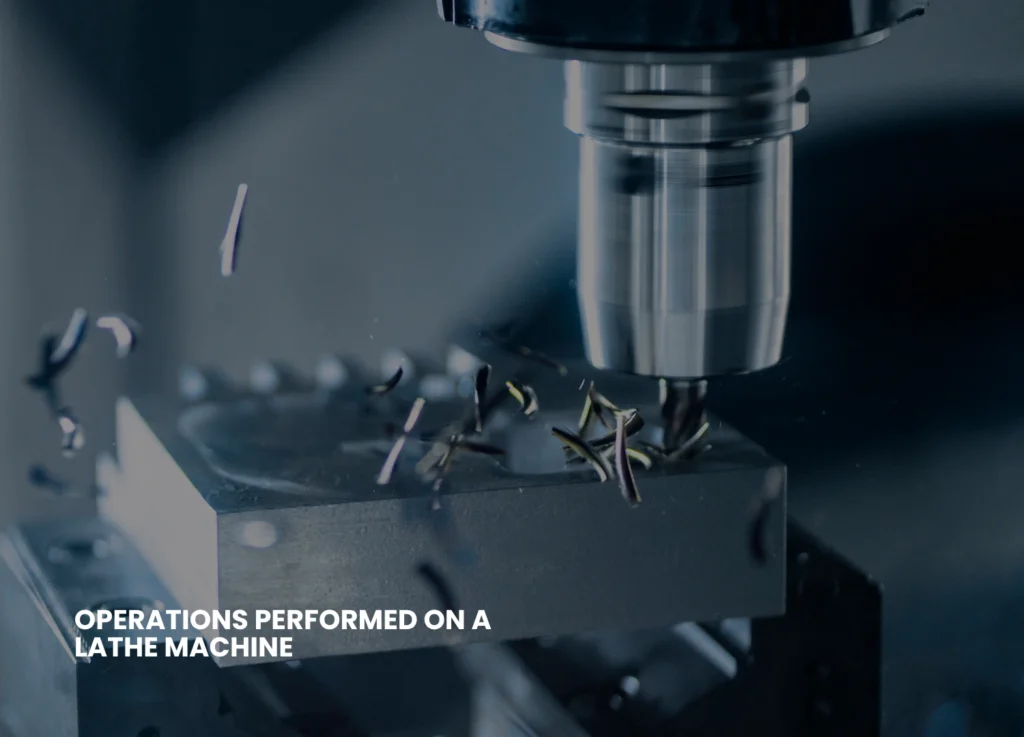
Common Operations Performed on a Lathe Machine 

The lathe machines can be used to carry out a very high number of machining functions, and that is why they are highly versatile within the Manufacturing Processes. 


  • Turning is applied in shrinking a workpiece in diameter. 
  • Smoothing and flattening the end-surface. 
  • Threading can form internal or external screw threads. 
  • Drilling involves the creation of holes with the help of drill bits. 
  • Knurling creates a textured surface to make it easier to hold. 
  • The finished component is separated by parting or cutting off. 
  • Boring also enlarges the holes that are already in place with a high precision. 


Types of Lathe Machines 

A variety of lathe machines is meant to suit certain production needs. 

The most used and which is applicable in general-purpose machining is the engine lathe (centre lathe). 

  • The turret lathe enables a rapid change of tools and is suitable in mass production and repetitive processes. 
  • Computer numerical control is used in the CNC lathe to provide highly accurate, automated and high volume production. Modern CNC Lathe systems and advanced manufacturing require the use of CNC lathe machines. 
  • The bench lathe is compact and small and it is mostly utilized in light-duty and educational purposes. 
  • The tool room lathe is also the accuracy work tool which is more accurate in work and also has more control of speed. 
  • The capstan lathe has been a lighter version of the turret lathe, much used in small to medium batch production. 
  • The speed lathe is simple in construction without a gearbox and is normally applied in woodturning, polishing and spinning. 


Specifications of a Lathe Machine 

In choosing a lathe machine, a number of specifications should be put into consideration in order to make sure that it fits a certain job. 

These are the swing over bed that means what is the maximum diameter of the work piece and the distance between centres and that is the maximum length of material that could be mounted. Additional details of great importance include the range of spindle speed, length of bed, the size of spindle bore and horsepower of the motor, which determines the size of machine and performance. 


Advantages of Using a Lathe Machine 

Lathe machines have a great number of benefits in the sphere of Machine Tools and manufacturing. 

They are very versatile as they can carry out several operations on one machine. Lathe machines are very precise and repeatable and this guarantees the same quality of production. The CNC lathe machines greatly save time and human error during machining due to automation. Moreover, lathe machines have got the capability of operating on a diverse selection of materials, which include metals, plastics, wood and composite. 


AN ENGINEER SETTING UP A LATHE MACHINE


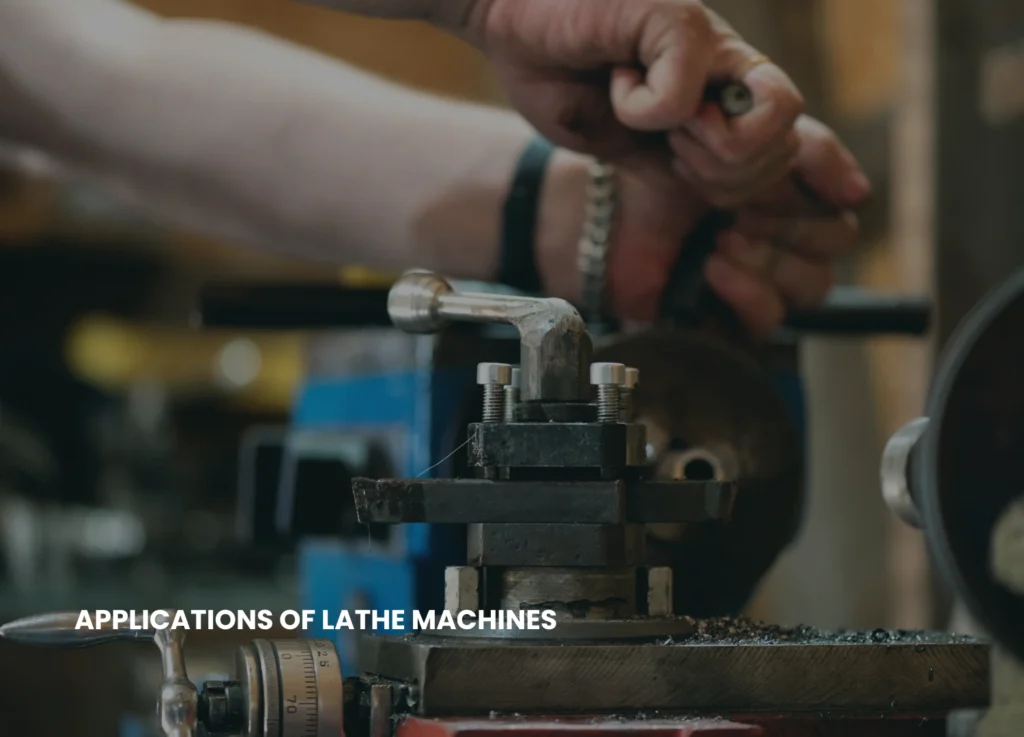
Applications of Lathe Machines 

Lathe machines have a vast number of industries where they can be used. 

They produce shafts, pistons, bushings and engine parts in the automotive sector. Lathe machines are used in aerospace to make lightweight and high-precision components. Nuts and bolts, gears, and flanges are manufactured by using the metalworking and fabrication industry and lathes. They find application in the medical industry to make surgical instruments and implants. Woodworking, maintenance shops and repair shops are also common places where lathe machines are utilized. 


Final Thoughts 

The lathe machine remains one of the pillars of the modern manufacturing production combining the time-honored concepts of machining with the latest automation systems. Its capability to form materials precisely and effectively does not need to be addressed whether as a manual centre lathe in a workshop or a CNC lathe in a production line. 

Any person studying or employed in the field of Mechanical Engineering, Workshop Machinery, or Production Engineering would need to have knowledge of the lathe machines, and how to maximize the manufacturing process and how to produce high-quality components. 

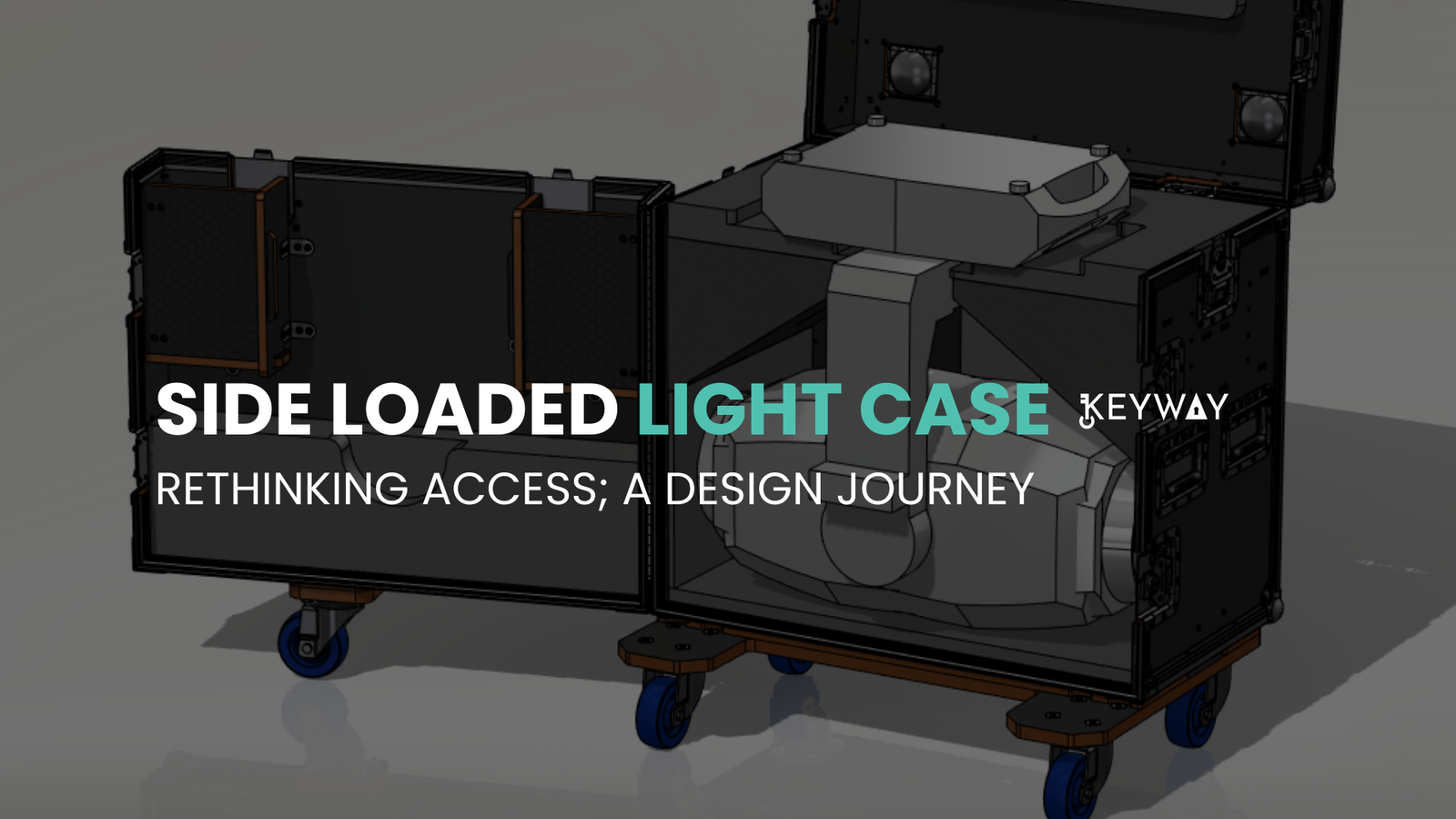
Rethinking Access: Designing a Side-Loaded Case for the Chauvet Maverick Storm 4 Profile

Flight case design is much more than just the equipment protection on transit. A professionally designed case should also boost the usability, a shorter setup duration, and safe working conditions in the professional touring or live event setting. When our team was invited to create a custom form of transport to support the Chauvet Maverick Storm 4 Profile, one of the largest and most powerful moving head fixtures in its category, it was clear right away that the creation of a standard top-loading case would be introducing several unnecessary complications. To solve these issues, it was necessary to think about a solution based on the principles of Flight Case Design and Road Case Engineering.

Maverick Storm 4 Profile is a very heavy and large piece of equipment and is usually utilized in intensive Stage Lighting like concerts, festivals, and other large-scale productions. The top-loading standard designs are mostly based on vertical lifting that is not very efficient and risky when handling such a large scale of fixtures. Instead of tailoring the workflow to the case, the current project was dedicated to tailoring the case to real-world operational requirements, which is becoming a philosophy very necessary in Live Event Production and professional Product Design.

transport case for a moving head light, front view

Input Conditions and Design Constraints

The client had a well-defined list of requirements that would determine the direction to take in the design before any modelling or prototyping was done. These ensured that the case would be feasible to touring crews, rental houses and production companies that depend on efficiency, durability and safety.

The client’s key requirements were clear:

  • The case had to fit the Maverick Storm 4 Profile with minimal footprint.

  • It needed to provide safe, repeatable loading and unloading with reduced risk of damage or injury.

  • Structural durability had to meet touring-grade expectations.

  • The overall weight and external dimensions should stay within manageable limits for transport and handling.

The design team also carried out an in-depth investigation into the actual needs of the client besides what the client had mentioned. The location of the center of gravity, ease of rigging points and the manner in which technicians interact with moving head lights are some of the factors that were critically considered during load-ins and load-outs. These will be important in Stage Lighting logistics, where physical fatigue and time pressure may enhance the risks of errors. With these considerations at the outset, the project was highly correlated with the best practices of Road Case Engineering and user-focused Product Design.

Evaluating Traditional Top-Loading Limitations

First concept development was on traditional top-loading case geometries. In Solid Works Design, it was found very quickly that there were difficulties in vertical loading of such a size of a fixture. To move the Maverick Storm 4 Profile safely in and out of the case, there would be a requirement of a lot of vertical clearance, which would raise the overall height of the case. This increased height would make packing of the truck, storage capacity and on site maneuverability (logistical issues in Live Event Production) difficult.

Ernomic risks were also brought about by top-loading. The fact that the heavy fixtures are raised up in the air, increases the chances of not using it properly, especially during the situations when there are several fixtures being deployed at the same time. In festival and touring applications typical of Chauvet Professional systems, it is of utmost importance to minimize the lifting forces that are not required to ensure safety of technicians. These results confirmed that access should be re-thought in its entirety, not optimized to make a system that is fundamentally inefficient.

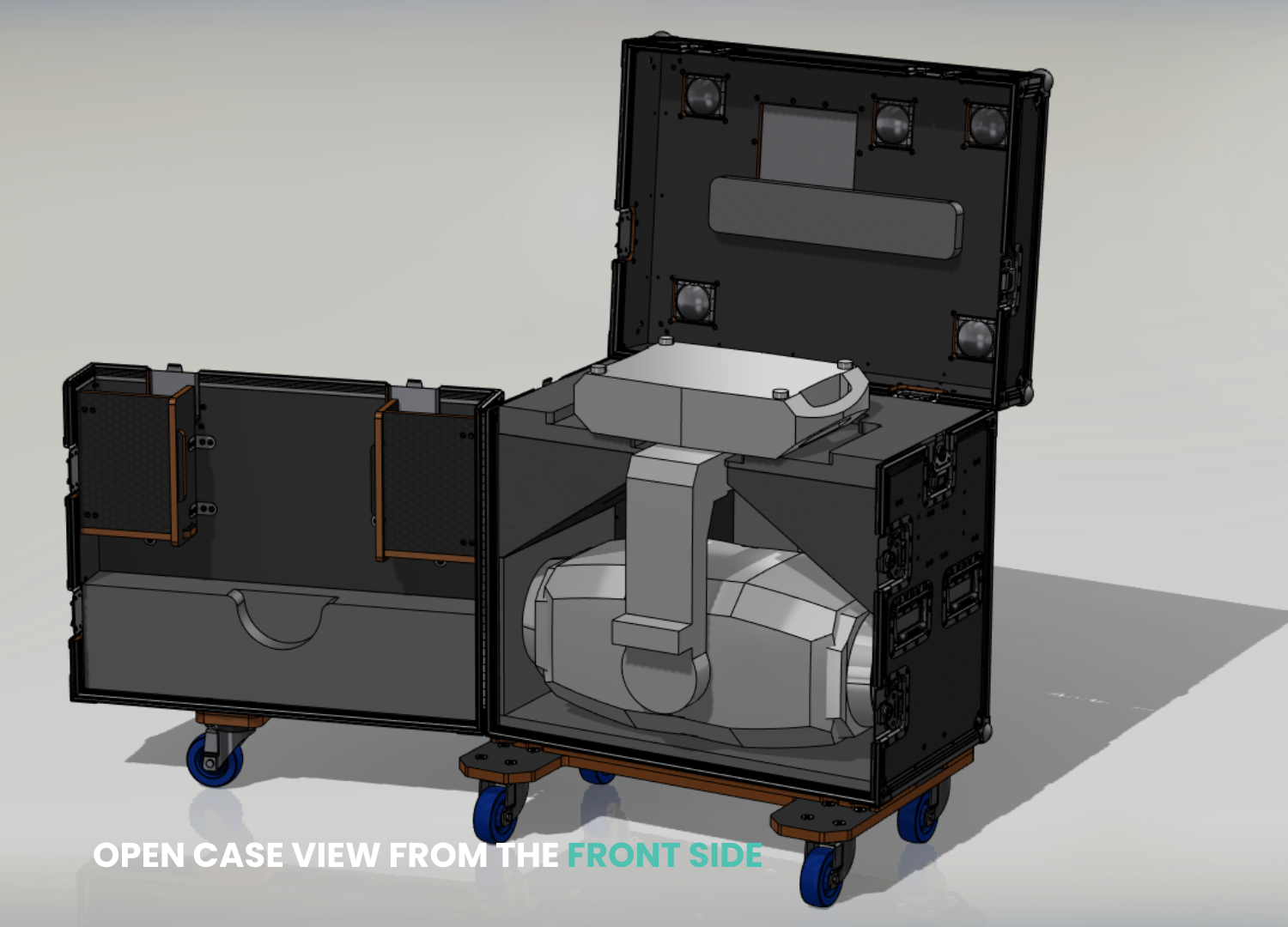
open view of a loaded flight case

Transitioning to a Side-Loaded Solution

This move to incorporate a side loaded design was a turning point in the design process. Rather than making the fixture move up and down the case was made to enable the loading and unloading of the light horizontally and this avoided the most physically demanding part of the task of handling the light. This design is close to the current Flight Case Design, which emphasizes more and more on ergonomics and efficiency of workflow.

The main characteristics of the side-loaded design will be:
 Horizontal sliding access which removes vertical lifting.
 Specially-milled runners which direct the position of the fixture.
 Padded alignment aids in the prevention of lateral movement.
 Foam supports are made to suit the frame of the furniture and weight distribution.

This was a very effective design in regard to saving handling time; it, also reduced the chances of an accidental hit or misalignment. The fact that crews can deploy fixtures in a brief time and safely is a significant operational advantage to Live Event Production crews who face tight schedules. The design in which the side is loaded also guarantees that the position of the fixture is always the same whenever the item is packed, which also adds to the idea of repeatability, which is an essential objective in professional Road Case Engineering.

Structural Considerations and Reinforcement Strategy

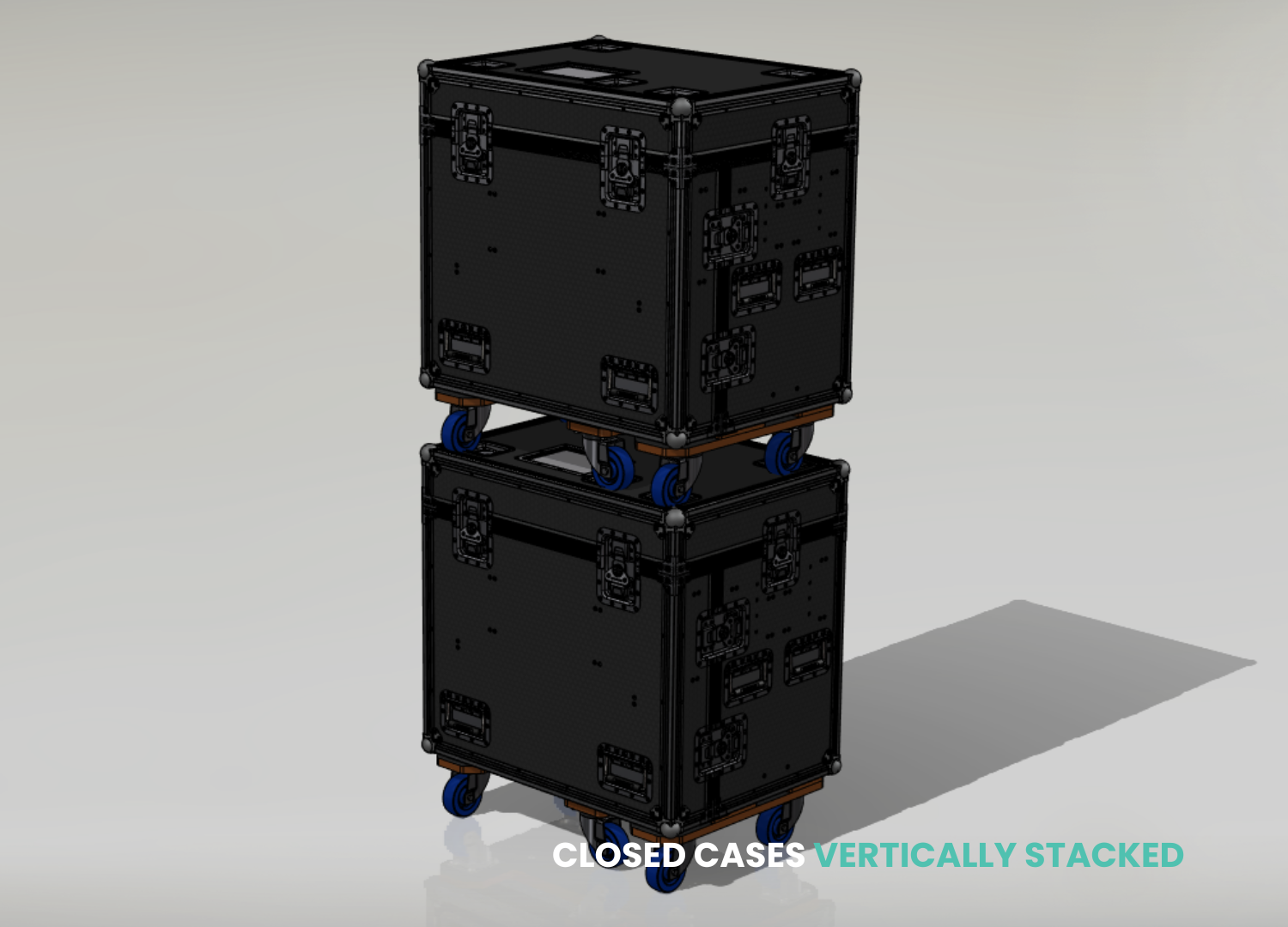
Although there are obvious ergonomic advantages of side-loaded access, it places another structural stress pattern in comparison to top-mounted lids. The large side door should withstand frequent opening periods, vibration during transportation and transfer of weights when the cases are placed atop each other. These issues demanded a proper structural planning and strengthening to face them.

Design solutions put in place structurally:
 Strengthening of internal framing by the side access door.
 Load-distribution ribs to withstand flex when transporting.
 Touring-rated heavy-duty hinges and latches.
 Very stiff edges on doors to ensure long-term alignment.

Simple solids finite element analysis (FEA) simulations were performed with SolidWorks Design in order to verify these design decisions. Under these simulations, the deflection of doors underweight was evaluated and the rigidity of the torsional type was proven in the overall frame. Other safety-related features were incorporated so that the final product would comply with ATA style standards but retain the appearance of clean lines typically found on high-end Flight Case Design.

stacked view of loaded flight cases

Practical Benefits for the Industry

Even though side-loaded have been so far restricted to niche applications, they are still not exploited in large moving head fixtures that obviously have their practical advantages. As is shownwith this project; with a revaluation of the access orientation, much can be done to increase usability without reducing the durability or protective performance a professional road case is supposed to deliver. The requirement of transport solutions that are ergonomically optimized is becoming more and more critical to the industry as the stage lighting fixtures continue to grow in size, weight, and output.

There are also practical benefits in the side-loaded case design: faster assembly and dismantling of the case in the field, less damage during the assembly process through awkward lifting and handling, and physical strain and fatigue to technicians and crew members. The design is more consistent with the real-life operational parameters of working conditions on tours, in rental warehouses, and on production floors by enabling the loading and unloading of the fixture to be achieved at a lower working height.

In the case of touring companies, rental houses and production teams that apply the Chauvet Professional fixtures, the strategy will ensure safer working processes and effective logistics. It is a constructive development of designing cases based on how equipment is being used and deployed, as opposed to just how it fits in a container. Such an attitude towards its users is the main focus of modern product design and road case engineering, which focuses on ergonomics, efficiency, and long-term durability in addition to protection.


Conclusion: Elevating Road Case Engineering Through Thoughtful Design

The given project shows that carefully considered engineering and professional CAD processes can turn an apparently straightforward issue into an innovative opportunity. The design is able to provide quantifiable advantages in safety, efficiency, and usability, by abandoning a conventional top-loading concept and adopting a side-loaded design. The ultimate case with the help of SolidWorks Design, structural analysis, and real-world workflow factors is going to raise the standards of transport solutions in the Live Event Production. After all, this side-loaded maverick Storm 4 Profile case with Chauvet marks the future of Flight Case Design. It proves that when ergonomics, logistics, and structural performance are viewed as a complex, road case engineering can become more than a protection, it can be also a part of the production process itself.


What is Friction Welding? – Definition, Working, Types, Advantages & Disadvantages

Welding is among the most crucial process in contemporary manufacturing and building, which makes it possible to produce powerful and stable parts that are utilized through industries. Although conventional approaches to welding involve melting of the metals through electric arches or flames, new technology has been developed where the metals do not melt at all. One of such innovative processes is Friction Welding which falls under the Solid State Welding and heat generation occurs as a result of mechanical friction and not by external heat sources.  

Friction welding has become well-known in the Manufacturing Engineering and Mechanical Engineering sphere as it allows to create high-quality joints with minimum flaws. It is also of great value in Advanced Manufacturing environment whereby the issue of strength, efficiency and sustainability is of great concern. Automotic Manufacturing, Aerospace Engineering, railways and defence are some of the industries with huge reliance on friction welding in order to achieve high performance expectations. 

The blog gives full insight into friction welding, its definition, principle, types, benefits, drawbacks and its use in industries. 

frictional welding in action on machinery parts

Friction Welding – Definition

The friction Welding (FW) is also a solid-state process of join in which the heat is produced through mechanical friction between two workpieces in relative motion. The interface material is softened and not melted as the frictional heat accumulates. When the appropriate amount of heat is obtained, there is a pressure applied on the axial direction, which fuses the two materials to create a powerful metallurgical bond. 

Since the base materials do not melt off, friction welding does not have to deal with some of the defects of fusion welding, including porosity, solidification cracks and extreme distortion. 

This makes it an ideal solution for producing High Strength Welds and performing Dissimilar Metal Welding, where traditional welding methods often struggle. The absence of filler material, flux, or shielding gas also makes friction welding one of the cleanest and most Energy Efficient Manufacturing processes available today. 


⚙️ How Does Friction Welding Work?

The principle of operation of friction welding relies on the transformation of mechanical energy into thermal energy by means of controlled movement and pressure. The workpiece is moved in some manner, either by rotation or by linear motion and the other is immobile. The contact between the surfaces causes friction to give heat at the interface, which renders the material soft at the interface. 

When the required temperature is reached, the relative motion will not be considered and the axial force will be applied. It is a force that binds the softened materials together pushing out surface contaminants and oxides of the joint area. The joint is then left to cool under pressure which produces a high density defect-free bond with high mechanical properties. Friction Welding is a highly reliable process that is controlled and repeatable and this feature is very crucial in the settings of Industrial Welding and mass-production. 

Friction welding uses rotational or linear motion and axial pressure to join two workpieces. Here’s a basic overview of the process:

  1. Preparation: Two clean workpieces are aligned. One is typically fixed, while the other rotates or oscillates.

  2. Friction Phase: The moving piece creates friction at the interface, generating heat.

  3. Upset Phase: Once the material is softened, relative motion stops, and axial pressure is applied to forge the bond.

  4. Cooling Phase: The newly formed joint is allowed to cool under pressure.

The result? A high-strength, metallurgically bonded joint without melting the base materials.

visual of how friction welding works

Types of Friction Welding

Friction welding is not just one process but a set of similar processes, each tailored to various materials, shapes and performance needs. These differences mean that friction welding can be applied in a very broad spectrum of Manufacturing Innovation applications. 

It is mostly performed by Rotary Friction Welding (RFW), in which one cylindrical part turns at a high speed with the other part being stationary. When enough heat is produced, the rotation is ceased and pressure is used to finalize the weld. The technique is common in Automotive Manufacturing of items like axles and shafts together with valves because of its speed and repeatability. 

Linear Friction Welding (LFW): 

It takes the place of rotary movement with a specified back and forth linear movement. The method is best applied in non-cylindrical parts and it finds widespread applications in the Aerospace Engineering field, mostly in the production of turbine blades and blisks. Linear friction welding has an outstanding joint quality and dimensional accuracy. 

Friction Stir Welding (FSW)  

It is an important innovation in Advanced Manufacturing. Rather than relocating the workpieces, a rotating tool with a profiled pin is pushed into the line of joint and followed along that line. The tool makes the materials mix mechanically so that it creates a solid-state joint. FSW has extensive application in shipbuilding, railways and aerospace structures of aluminium alloys and is considered a standard practice in Energy Efficient Manufacturing. 

Orbital Friction Welding  

In this welding, the orbital motion is controlled instead of being rotated completely, allowing the distribution of heat at the joint to be uniform. This is an industry-standard technique applied in highly critical aerospace and defense applications where joint repeatability is a significant concern. 

Inertia Friction Welding  

It is a technique which applies stored kinetic energy stored in a flywheel to create frictional heat. After the flywheel is released, the weld is finished with the help of axial pressure. The technology is well known to manufacture very strong joints and it can be regularly used in the manufacture of high-performance structural parts. 

Advantages of Friction Welding 

Friction welding has a lot of benefits while compared to many of the traditional methods of fusion welding and is more so better when it comes to high performance engineering. 

Key advantages include: 

  • Defects associated with melting are removed in solid-state process. 
  • Manufactures joints of high mechanical strength. 
  • Best in Dissimilar Metal Welding. 
  • No filler metals, flux or shielding gases needed. 
  • Ecologically positive process. 
  • Short cycle times that could be used in large scale production. 
  • Less energy usage than arc welding. 

These advantages are the reason why friction welding is being embraced in the Advanced Welding and Manufacturing Engineering settings. 

Disadvantages of Friction Welding 

Even though it has numerous advantages, there are also some drawbacks of friction welding, which should be taken into account when choosing a process. 

Major limitations include: 

  • Expensive start up and installation. 
  • Demand of special equipment. 
  • Constrained in terms of comparatively simple joint geometries. 
  • Not compatible with large or complicated assemblies. 
  • After exact surface preparation and adjustment were required. 

These constraints contribute to enabling manufacturers to decide on the suitability of friction welding to a particular Industrial Welding use. 

Applications of Friction Welding 

Friction welding is also common in any industry where strength, reliability and precision is a must. Primarily it is applied in Automotive Manufacturing in the drive shafts, steering columns and transmission parts. The Aerospace Engineering industry has to use friction welding to make turbine blades, fuel system components and structural components when failure is not a choice. 

Friction welding is applied in the railway industry to join the axles, wheels and gear shafts. It is used in the oil and gas industry in drill bits, casings and high pressure valves. Friction welding is used in electronics, which allows copper and aluminium to be connected with high reliability in heat sinks and connectors. Weapon system and armoured components are used in defense and this features the role of friction welding in High Strength Welds and Manufacturing Innovation. 

products created from frictional welding

Final Thoughts

Friction welding is a clean, efficient and reliable process of joining that is very critical in the current Advanced Manufacturing. It removes melting and minimizes energy usage, thus providing high-quality joints and promoting the sustainability agenda. Its capability to unite unlike metals in creating non-defective welds renders it essential in performance and innovation-oriented industries. 


With changing times and advancing technology, lightweight construction designs and sustainability will continue to be paramount in the industry and lightweight products even as friction welding will persist as the foundation of the Industrial Welding and Future of Manufacturing. 

How Can 3D Reverse Engineering Recreate Parts Without Original CAD Files

The 3D reverse engineering is a revolution for manufacturers and engineers. This process works by scanning a physical object to capture its exact shape as it is and recreate it in digital formats in case of missing CAD files or the wear out of parts. Guesswork and re-invention are eliminated, and you receive high-resolution CAD files, which can be fine-tuned and sent to the factory.

This blog describes the process of 3D reverse engineering part re-creation (without original CADs) in detail, providing an insight into the actual advantages to your part of the workflow.


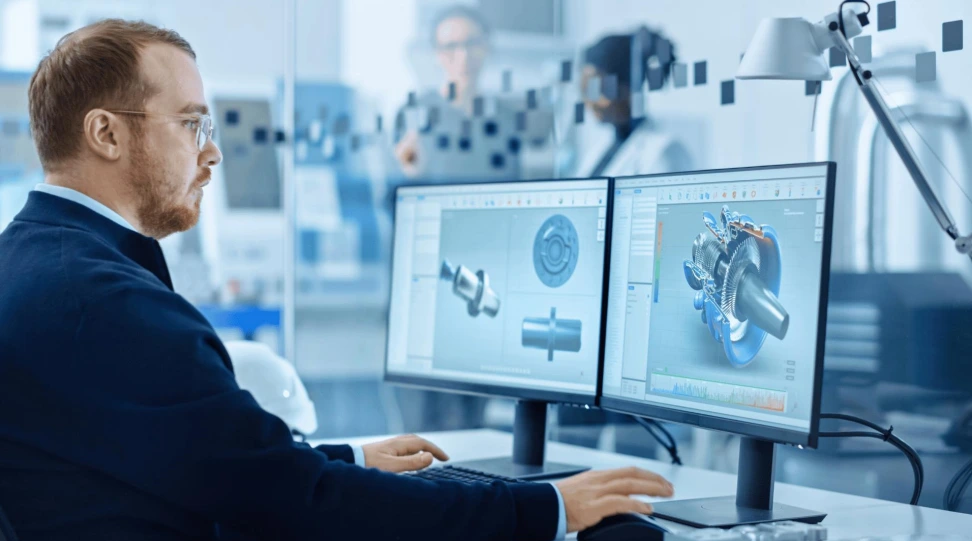
engineer working on a computer for cad design service


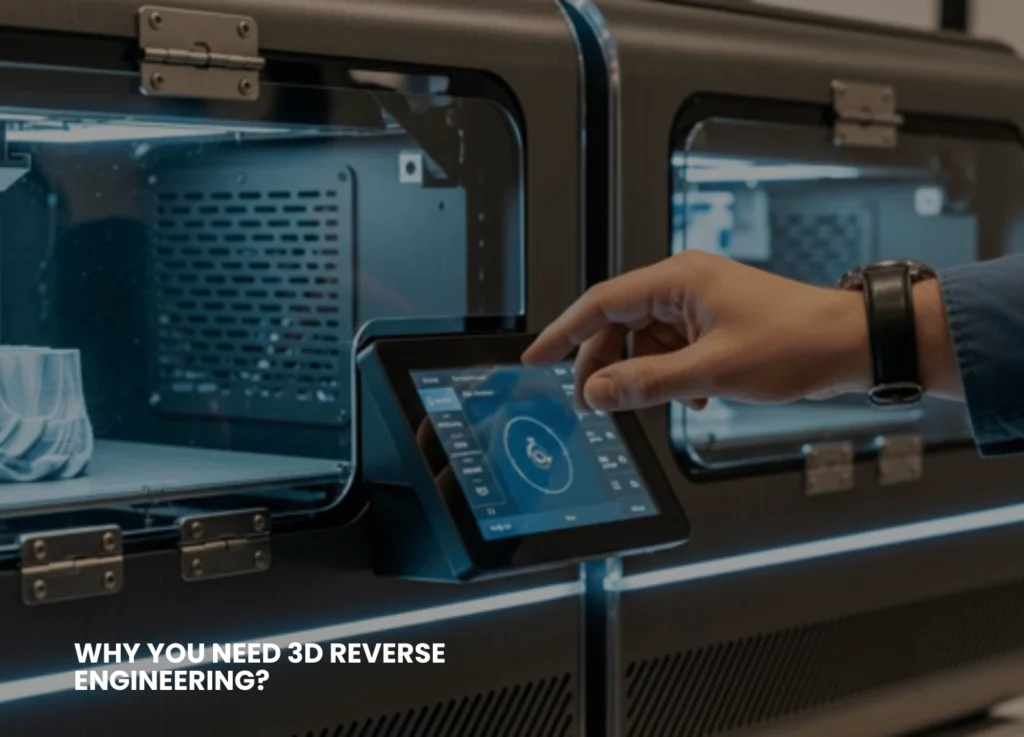
Why You Need 3D Reverse Engineering?

Lost CAD files are very frequent. Vacant parts of old machines, out-of-supply parts, or unsaved prototypes of custom parts plunge stores into stalemates. Conventional tools, such as calipers, require days to measure, and they too give errors.

This is reversed in 3D reverse engineering, in which lasers or structured light are used to scan the actual part. It produces a digital twin within 0.05 mm or more. It is applicable to any item, including engine blocks and medical implants, and it saves time and cost, along with perfect fits.

Step-By-Step Process To Recreate Parts

It is a simple procedure and is based on professional 3D scanners and programs. It can be done in six
straightforward steps, as a proven workflow does.

Step 1: Prepare The Physical Part

Wipe the part down to clean it of dirt, grease, or paint, which can cause havoc with the scan. On shiny or dark surfaces, use a temporary spray to make them appear matte, such as AESUB scanning spray – it evaporates, and it leaves no trace. Delicate components are to be handled cautiously and placed on a turntable. This preparation takes minutes, and it guarantees purposeful data collection.

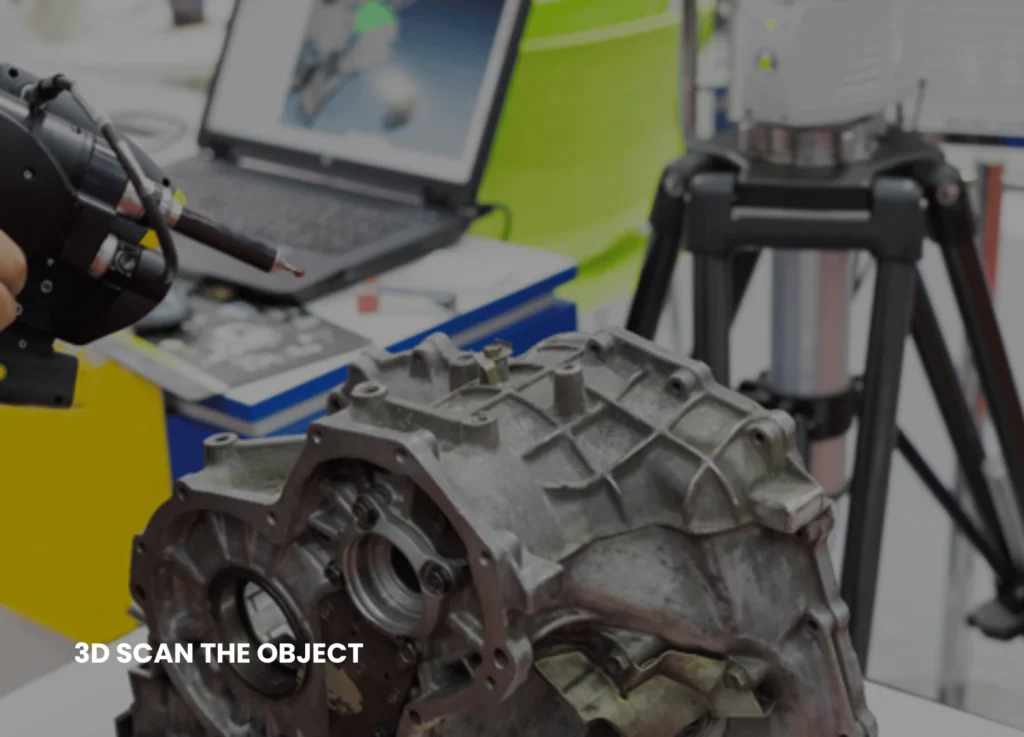
Step 2: 3D Scan The Object

A 3D scanner such as the Artec Eva or Creaform HandySCAN can be used. These types of devices project lasers or patterns onto the part and record the millions of surface points at all angles. Roll the piece or rotate the scanner around the piece to ensure it is covered completely, including holes and undercuts. The result? An XYZ point cloud file of all the details, which is raw.

Step 3: Clean And Process The Point Cloud

The scan data is imported into software such as Autodesk ReCap or FARO Scene. Either eliminate noise, outliers, or additional points on the reflection. Align several scans in case there were several passes. This step filters the data to a concrete basis, usually compressing file size by half, but still retaining high accuracy.

Step 4: Create A 3D Mesh Model

Transform the point cloud into a mesh with applications such as Geomagic Wrap or MeshLab. This shapes a polygon surface (STL file) which resembles the skin of the part. Improve the mesh and smooth out irregularities and minor holes. Your next step is a watertight digital model, which is now ready to take the next step. Keyways offers you the most reliable of all reverse engineering services.

Step 5: Build The CAD Model

This is where magic happens. Bring the mesh into CAD software such as SolidWorks, Fusion 360, or Siemens NX. Engineers follow some major features: sketch cross-sections, extrude surfaces as well, and add fillets or chamfers. Parametric modeling provides the ability to edit dimensions, tolerances, and features with ease. The resulting CAD file (STEP or IGES) can be completely edited, compared to the scan mesh.

Step 6: Check, Model, And Manufacture

Comparison of new and old scans with deviation color map – green is a perfect match, red has some adjustments to be made. Stress or fit on Ansys or SolidWorks Simulation. Export to a CNC machine, 3D print, or even mold. Test a prototype by printing it; it must be the same as the original.

Tools And Software You Need

● Scanners: Entry-level scanners such as Einscan are used in small shops; pro scanners such as ZEISS are used in high precision work.
● Software: Free ones, such as MeshLab, to work with basicsan engineer scanning the mechanical part for reverse engineering; paid such as PowerInspect, to do inspection.
● CAD Programs: Fusion 360 (cloud-based, cheap) or CATIA for intricate parts. The prices begin at $1,000 to install a basic set-up, and services provide scans at a cost of $100-500 each part.

Real-World Benefits And Examples

The reverse engineering Shops with 3D cut down the recreation time, which was previously weeks to days. A 48-hour project by one car company saw it recreate a rare gearbox component, saving it a downtime of $10,000.
Aerospace manufacturers do not redesign new turbine blades; they just modify old ones to better alloys. The medical device manufacturers recreate custom prosthetics exactly. Benefits include:
● 90% faster than manual methods
● Tolerance accuracy under 0.1 mm
● Improvements to the files can be made.
● Less scrap and rework
● Scalable to one-offs, batches.

Common Challenges And Fixes

Organic forms, such as castings, may be difficult because of free-form surfaces. Photogrammetry Solution:

Use hybrid scanning on large parts.
Freezing scans? Scan in a non-vibratory controlled environment. Software glitches? Always back up raw data. In internal features, CT scanning is recommended – it will peek inside without cutting the part.

When To Use 3D Reverse Engineering Services
Perfect for:
➔ Making outdated equipment serviceable.
➔ Special upgrades or customisations.
➔ Comparison of quality control.
➔ Competitor analysis (legally) or patent work.
➔ Field samples Rapid prototyping.
It is not the best choice in super-simple components where a caliper is enough, but it is the best for complex
geometries.

Future Trends In 3D Reverse Engineering

Artificial intelligence is making it faster – programs automatically convert meshes to CAD with 95 percent precision. Portable scanners are also used with AR to do work on-site. Cloud-based services enable members to work all over the world. When prices are falling, even hobbyists are using it, but professionals get the advantage in production. 3D reverse engineering services convert used components to new CADs with ease. Meshing, scanning, and modelling give you a replica of everything with no originals, increasing productivity and creativity. Buy a simple scanner and watch your shop change, it’s like you lost your headaches over lost files. Keyways offers you the most unparalleled proficiency in bringing innovation to prototypes and existing products through 3D reverse engineering. To know more about the business, visit our LinkedIn.

How CNC Laser Cutting Services Streamline Material Waste and Improve Manufacturing Efficiency

Modern manufacturing has evolved far beyond traditional cutting tools, hand templates, and manual layouts. CNC laser cutting has become very important today in providing precision, speed,
and material efficiency in several industries. With the adoption of high-quality CAD Services like smart CAM Automation and efficient Sheet Metal Design, manufacturers can transform digital concepts into extremely precise physical components with minimal scrap. This digital-first solution enables engineers and production teams to work more efficiently, compute materials more accurately, and see that all the steps of the fabrication process are predictable and efficient.

In an era of rising material costs, shorter production timelines and when global sustainability targets are becoming more stringent, the evolution into CNC laser cutting is not a choice anymore; it is a necessity. Digital workflows reduce errors, minimize lead times and open opportunities to make smart use of materials, all of which enhance the bottom line and environmental footprint.

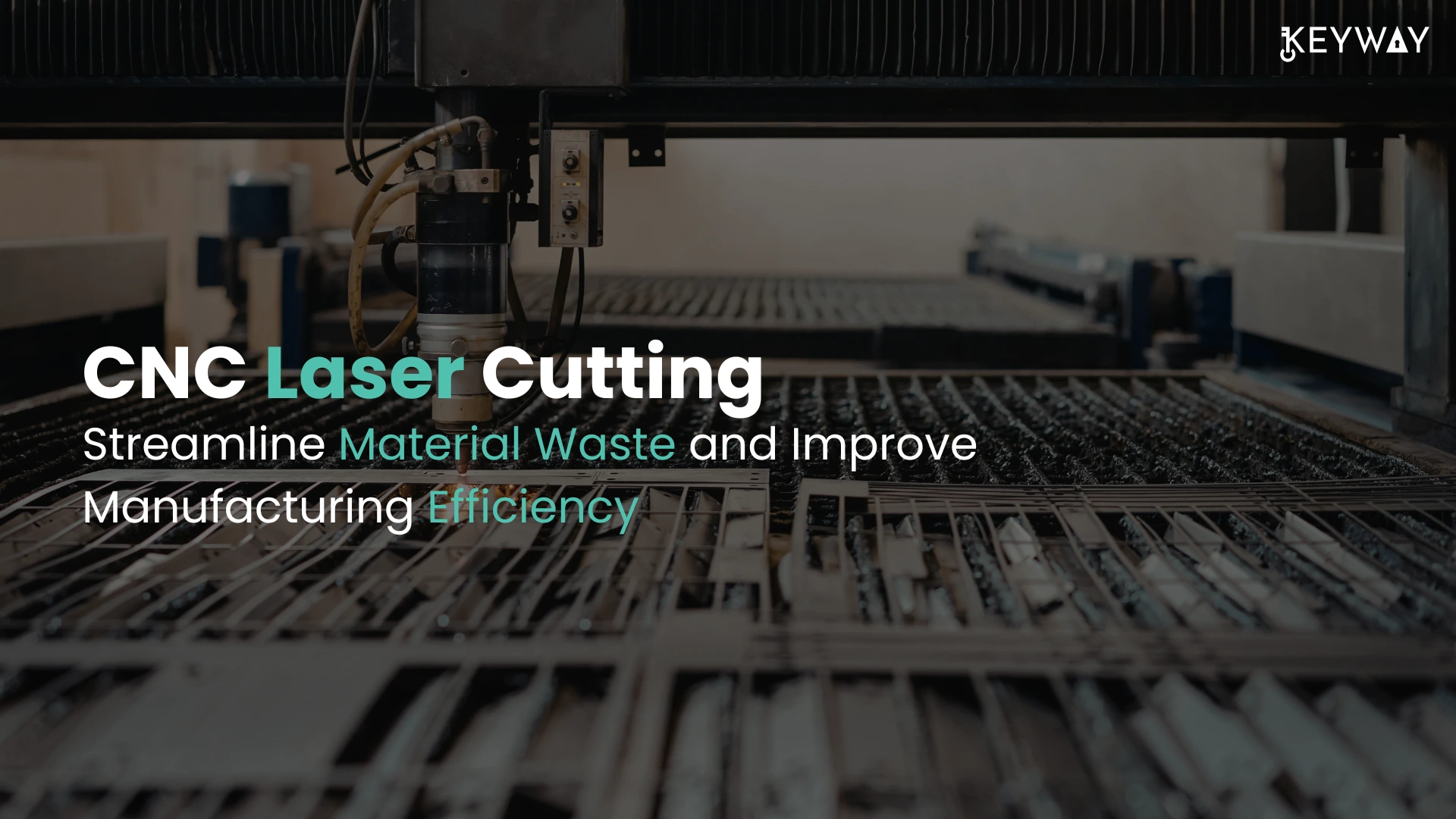
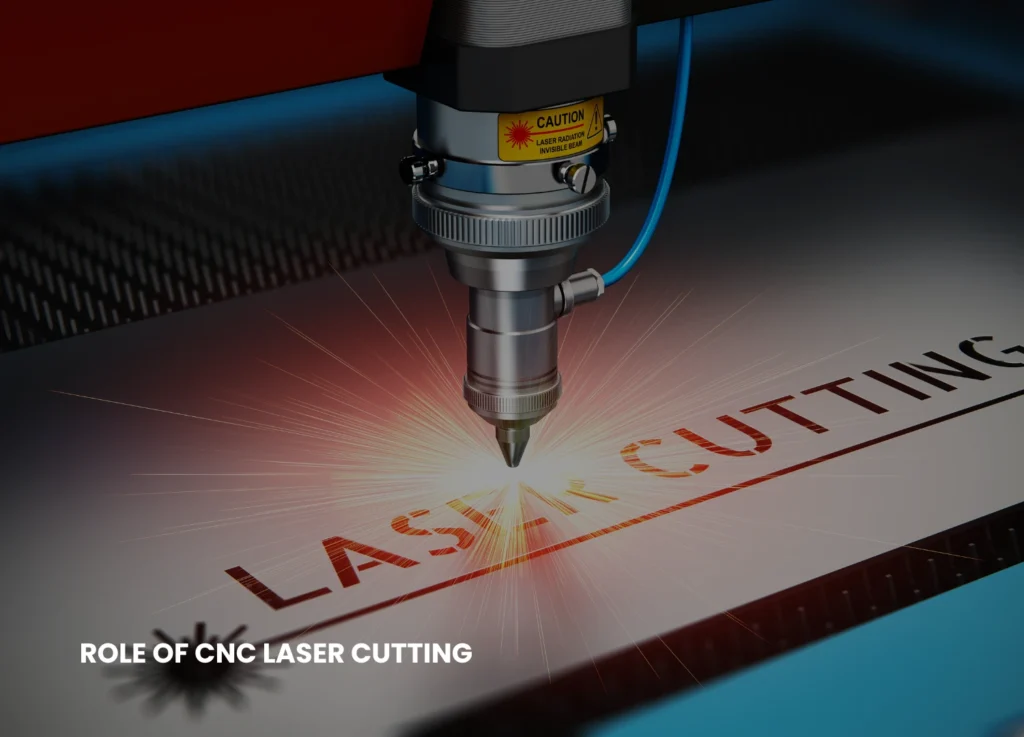
cnc laser cutting machine cutting a metal sheet engraving a text

The Role of CNC Laser Cutting in Modern Manufacturing

CNC laser cutting is a process in which a high-intensity laser beam, guided by computer-generated toolpaths, melts, burns, or vaporizes material with unparalleled precision. Every cut is made from a detailed digital file developed through CAD drawing. For more complex shapes, 3D CAD modeling provides the necessary precision. As a result, the finished parts replicate the planned design perfectly. CNC laser cutting is very accurate and removes guess-work and human error, unlike the manual or mechanical methods of cutting, which are based on templates and physical alignment.

The digital nature of the workflow allows for rapid changes and immediate testing. Engineers can simulate assemblies, verify bend allowances, detect interference between parts, and analyze material stress all before the first sheet is cut. This proactive approach not only improves accuracy but also ensures that material consumption is minimized and downstream processes, such as bending, welding, and assembly, proceed smoothly. The aerospace industries, automotive industries, architectural fabrication, and industrial machinery have adopted this accuracy as they are able to produce faster, reduce scrap rates, and produce better quality components.

How CNC Laser Cutting Works — A Streamlined Digital Workflow

The CNC laser-cutting process starts with elaborate digital design, which must be proven before a physical material is touched. CAD drawings are generated by design engineers in-house. This
phase can also be outsourced by procuring CAD drawing services from professional engineers.

These digital models can be used as one source of truth so that teams can identify errors at an early stage, test component fit, and simulate behaviors of the material during and after cutting. When the design is complete, CAM software translates these models into accurate machine code, calculating cutting sequences, toolpaths, pierce points, and feed rates. The algorithms used are nesting algorithms to maximize the use of sheets, so that there is little waste and that only small remnants are left and can be re-used in other jobs. The close connection between CAM and CAD
makes sure that this machine reads the design in the same way it was to be read.

The sheets are positioned on the laser bed during production and aligned. The laser is directed through the programmed paths by the CNC system with assist gases being used to provide clean burr free edges. Bevel cuts, engravings, and intricate patterns on curved surfaces can also be done using multi-axis machines. Once cut, parts go directly to the bending, welding or finishing process with little or no manual intervention necessary. The outcome is a quicker, cleaner, and foreseeable production with less waste of materials.

Key steps in the workflow include:

  1. Digital modeling and validation using CAD tools to define dimensions and tolerances
    accurately.
  2. CAM processing and nesting to optimize material usage and cutting sequences.
  3. Laser cutting operation with precise alignment and assist gas control.
  4. Finishing and assembly, allowing parts to proceed directly to downstream operations.

CNC Laser Cutting + Sheet-Metal Design = Dramatically Less Waste

Materials are often the largest expense in sheet metal fabrication. Waste is easily built when the cuts are not precise, or the nesting process is not very efficient. Using a CNC laser cutting with a considerate Sheet Metal Design, manufacturers will be able to make the maximum out of sheet usage, minimize offcuts, and enhance the efficiency of the whole production process.

Accurate CAD models allow engineers to calculate exact material requirements, avoiding spending too much and minimizing scrap. The high-end nesting process facilitated by CAM Automation is used to place parts as close as possible to each other on the sheet to take advantage of the available space. Design for manufacturability (DFM) principles (e.g. consideration of bend reliefs, standard sheet sizes, and kerf allowance) lead to further reductions in waste and components that are easy to assemble. Parametric CAD libraries enable repeat use of design, eliminating trial and error processes which can result in scrap.

By thoughtfully integrating these steps, manufacturers can achieve consistent material efficiency across multiple production runs, minimizing both cost and environmental impact.

Cutting Errors and Rework — How Digital Precision Eliminates Them

One of the costliest aspects of manufacturing is rework. Misplaced holes, wrong tolerances or parts badly nesting sometimes necessitate a complete scrap or redrawing of sheets, which adds to labor and material overheads. The CNC laser cutting eliminates these errors by validating them digitally with precision.

The simulation of components by 3D CAD modeling enables engineers to identify interference problems during design. They also check details of dimensions and layout by using CAD drawings to make sure that the allowances in bends are correct, and all holes are where they should be. This minimizes the chances of having bad parts on the production floor.

Reduced errors translate to reduced emergency orders of materials, reduced wasted workforce, and production schedules. Finally, digital accuracy means that every sheet cut is devoted to the final product instead of being discarded because of mistakes that could be avoided.

Improving Collaboration

CNC laser cutting improves teamwork between the design, engineering, operating, and procurement departments. Due to the fact that all people work with the same CAD and CAM documents, the possibility of miscommunication has significantly decreased. The version control of files and their sharing on clouds enables the updates to be spread immediately across the departments so that all groups of people have access to the latest design and nesting data.

Transparency is also increased through centralized CAD repositories, standardized naming conventions and shared nesting templates. Procurement teams are able to order sheets by the precise material needs, production teams are able to make cuts without ambiguity and engineers can keep on updating designs without affecting any of the jobs being processed. This combined workflow decreases the waste due to duplicated parts or outdated sheets, or wrong cuts.

Speed, Scalability, and Automated Production

CNC laser cutting allows manufacturers to expand through quick prototyping on to mass production. Digital design data can undergo changes in real time and Automated CAM software converts the change into new toolpaths without stopping the production. Fiber lasers are fast to cut thin sheets, whereas the more powerful systems can cut thick metal effectively.

Automation facilitates scheduled manufacturing, remnant tracking and optimal nest reuse. Laser-cut components are passed reliably back to bending, welding, and finishing facilities, which facilitate lean, prefabricated processes to reduce handling and enhance throughput. Speed, repeatability and automation of CNC laser cutting make it appropriate to new manufacturing environments that require speed, repetitive cycles and automation.

Benefits of automation and scalability include:

  1. Rapid updates to design files and CAM programs for flexible production.
  2. Optimized nesting and remnant tracking to reduce scrap and waste.
  3. Efficient integration with bending, welding, and finishing processes.
  4. High-speed production without sacrificing accuracy or quality.

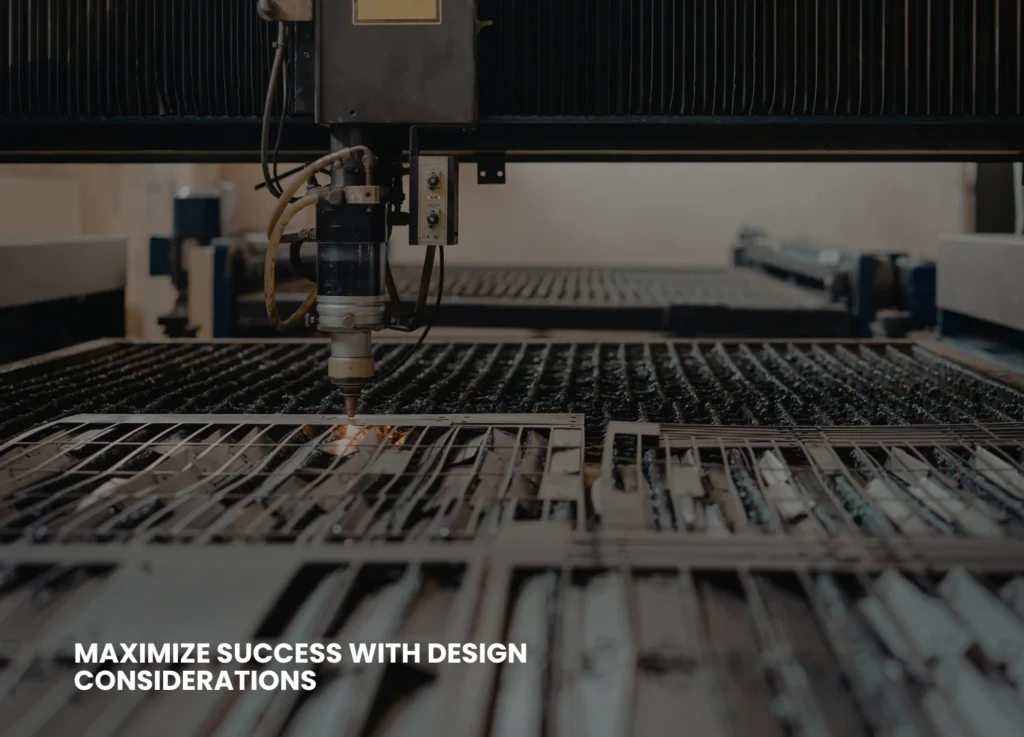
Design Considerations to Maximize Success

In order to maximize the advantages of CNC laser cutting, designers are advised to take into account the thickness of the material in relation to laser power, the allowance in kerf of assembling
parts, and the correct size of the hole and feature in order to eliminate distortion. The nesting strategy also plays a crucial role: combining parts on the basis of thickness and material is easy to produce, and the changeover of sheet is minimized. Reusable remnants can also be tracked and fed back into subsequent nesting calculations to even further optimize the use of materials.

When these design considerations are combined with drawing services, automation, and design services, engineers can achieve minimal material waste, consistent quality and high productivity.

Integrating CNC Laser Cutting with Broader Digital Manufacturing

The effectiveness of CNC laser cutting is enhanced when combined with other digital tools. Precise models created through CAD drawing and 3D CAD modeling pass directly into CAM Automation
to create optimized nests, minimize cycle time and scrap.

Advanced integration involves Artificial Intelligence-based nesting, automated reuse of remnants, and closed-loop quality. Linking digital design, machine control and material tracking, the manufacturers develop a wholly interconnected workflow that eradicates inefficiencies and minimizes costs and enhances predictability through the lifecycle of production.

Future Trends

The future of CNC laser cutting will be a capability that takes advantage of AI, robotics, and cloud- based collaboration to enhance precision and waste reduction. Future technologies involve self-
Adjusting sensors to adjust cutting parameters on-the-fly, hybrid machines which cut and weld simultaneously and predictive maintenance tools which reduce downtime. Remote CAD/CAM collaboration will enable working groups located in different regions of the country and AI-powered nesting schemes will constantly streamline the use of materials according to past
production data.

Manufacturers that embrace such innovations will have an edge, having improved quality, increased production rate and reduced environmental impact.

Conclusion

CNC laser cutting, when combined with disciplined CAD workflows, CAM Automation and thoughtful sheet-metal design, transforms manufacturing into a highly efficient, low-waste
process. Digital perfection removes errors, speeds up manufacturing and will guarantee predictable material usage. Companies often have their own employees to deal with such works but in modern world, the trend is shifting. Many now hire CAD Drawing Services, CAM Automation through cloud software, Sheet Metal Design Services and even 3D CAD Modelling Services through freelancers online. This saves them office space and allows them to work with the best talent from all over the world.

Companies that embrace such technologies would realize increased throughput, reduced scrap, and uniform quality that would place them in a vantage position to succeed in the current competitive manufacturing environment that is being driven by sustainability principles.

Why Do Standard Cases Break So Easily—And How Custom Road Cases Offer A Long-Term Fix

The reason behind the easy breakage of standard cases is that they are typically constructed with poor quality materials, bad hardware, and a one-size-fits-all design that is not suitable to match the specifications of the items the case holds. On the other hand, custom road cases provide customized protection, durability, and a long-lasting remedy to transporting valuable equipment without problems. That’s why custom road cases offer you a long-term fixation. This blog guides you on everything you need to know about the subject matter, highlighting the importance, and clearing all your doubts.


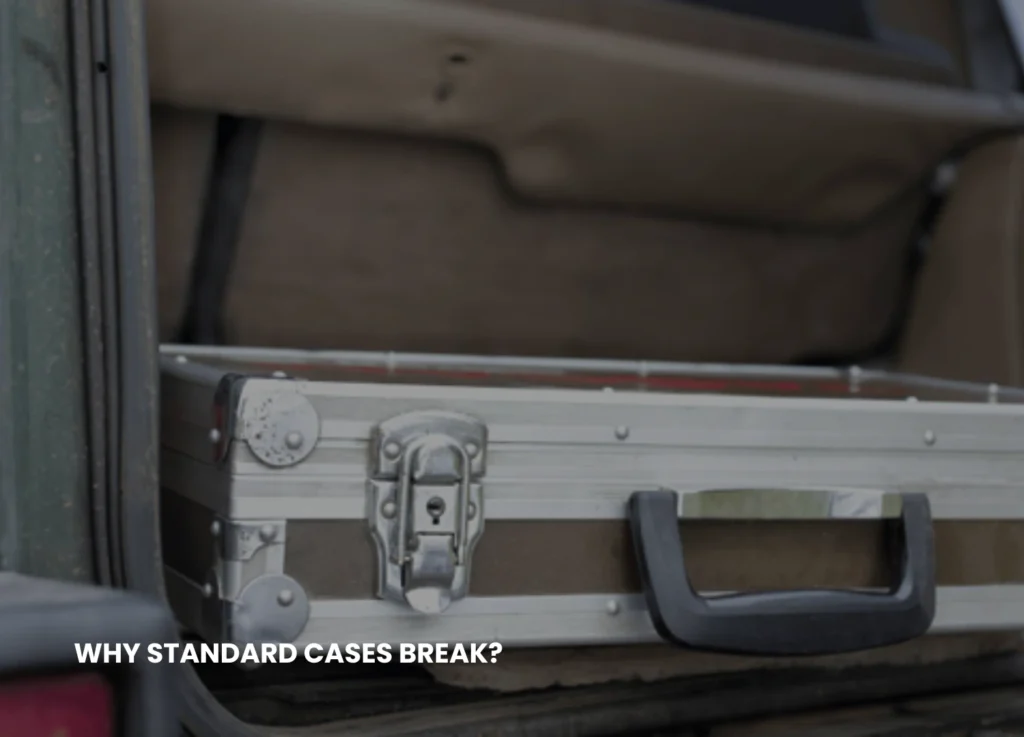
standard road case / suitcase for carrying clothes

Why Standard Cases Break?

Standard cases are very much in the market and may appear to be cheap at first sight, but the design and the material they are made of can hardly withstand the effects of traveling, changing loads, and hardship. Common issues include:
● Poorly made or thin panels that crack readily when pressured or struck upon.
● Flimsy latches and other hardware that loosen, break, or cease their operation after multiple uses.
● Inappropriate inside foam of inadequate custom padding, with the resultant contents shift or
damage.
● Inadequate moisture and thermal impermeability which is able to ruin materials and adhesives over
time.

As an example, plastic cases that have been molded can exclude rain, yet are not robust enough to endure the multiple shocks of transportation. Numerous generic cases with plywood or carpet-covered surfaces offer a minimal amount of shock protection and do not enclose their equipment completely, particularly fragile electronics or instruments.

The Real Price Of The Standard Cases

Although each time a broken latch is replaced or a panel, which was broken, is fixed appears to be a minor issue, cumulative costs are added to the mounts. Normal cases require regular maintenance or simply replacement because of:
➔ Bruises, cracks, or crushing damage from strikes, drops, or moving cargo.
➔ Poor seals or improper foam deteriorating with time result in water damage.
➔ Poor fit and internal movement result in lost or damaged cargo, particularly during long and rough
trips.

Every incident translates to downtime, repair expenses, or even costly replacements of what is contained in the case, not only the case itself.

How Custom Road Cases Provide A Long-Term Fix

When it comes to custom road cases, they are designed to withstand the distinct demands of being transported repeatedly without damaging their contents, regardless of the situation. They have the greatest advantages as follows:

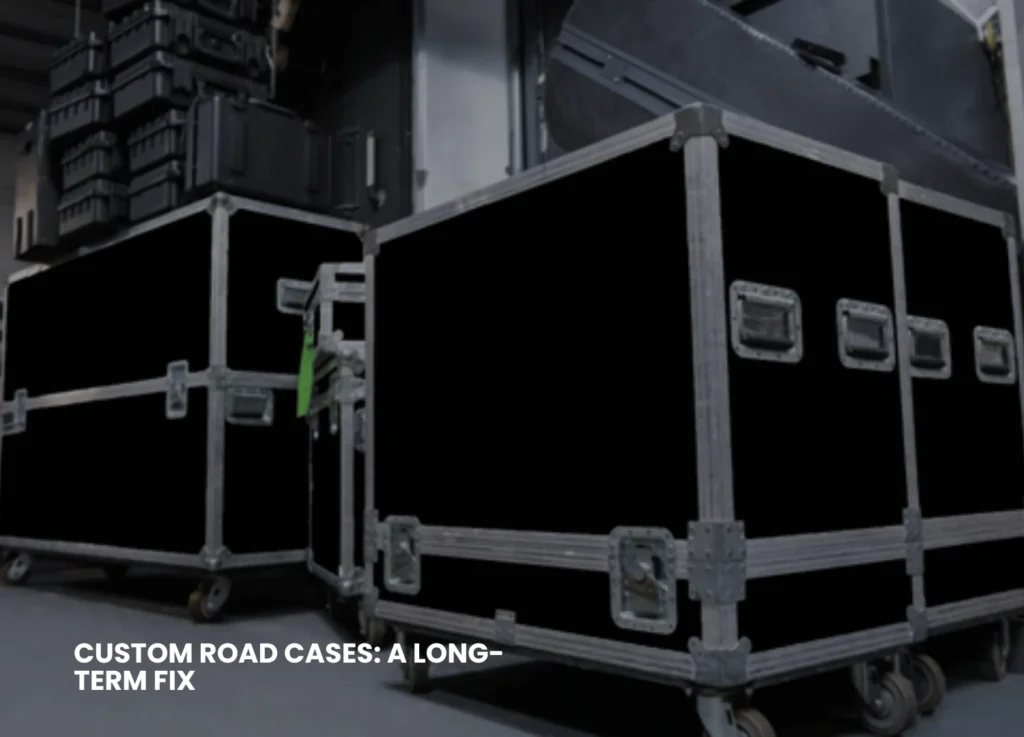
stacked custom road cases in a road case warehouse

Tailored Fit And Protection

Your unique equipment is made into a road case design. The engineers choose the appropriate materials and foam, cut to the exact shape of your gear, and fit tightly and snugly. This decreases the internal motion and shock, and damages to delicate objects are minimized.

Superior Materials And Construction

Custom road cases are usually designed with very strong and multi-layered construction, such as ABS plastic laminate on top of good-quality plywood with reinforced aluminum edges, steel corners, and sunk in handles that cannot be easily snapped off. These plastics resist load and stacking without deformation or collapse, which is much longer lasting than typical molded or carpet cases.

Rugged Hardware And Smart Characteristics

The latches, casters, and handles are of high quality, desired not only because of cost but also due to their durability. Cases may have waterproof seals, reinforced hinges, lockable parts, and even extreme temperature climate-proof linings.

Long-Term And Low Cost Of Maintenance

Custom cases are more economical in the long run because they are more cost-effective, despite being more expensive initially. You will be making fewer replacements, and your equipment will be safer, which means fewer replacements and lower cost.

Why Is A Custom Solution Worth Investing In?

Custom road case design is a good idea in case you are shipping, transporting, or sightseeing with valuable equipment. They are ideal for:
● Artists moving musical instruments and electronics to performances.
● Firms that transport lighting, audio equipment, and displays.
● Industrial or scientific equipment that cannot be afforded to be lost or spoiled during transportation.

The cases can be customized in terms of size, weight, and even style so that protection does not always come at the cost of usability or convenience.

Conclusion

Standard cases are simple to break since they seldom obey the facts of rough, constant journeys and frequently trim corners on vital elements and materials. This is resolved by custom road cases, which provide high-quality construction, a tailor-made interior, and high-quality hardware, which eventually safeguards your gear and your investment. Although an initial expense may be greater, bespoke solutions are long-lasting and reliable for any entity that can guarantee that their equipment will be delivered safely each time. Keyways offers you comprehensive design and manufacturing data generation solutions, supported by years of experience and knowledge. To know more about our services, visit LinkedIn.

How to Reduce Manufacturing Costs Using An Advanced Nesting Service

One of the main concerns of any business that wants to compete in the competitive modern market is to reduce its manufacturing costs. This can be best attained by adopting a sophisticated nesting service in your manufacturing procedure. This blog post discusses the functionality of such a complex nesting technology, why it results in high cost savings, and how both big and small manufacturers can benefit by opting for this move.

What Is An Advanced Nesting Service?

Advanced nesting service is a kind of software system that provides an optimal effort to the layout of parts that will be cut out of the raw materials metal, wood, glass, or fabric. Nesting software can automatically find the most efficient arrangement of parts, as compared to arranging them manually, which is slow and prone to error. The nesting service assists manufacturers by creating a strict parts inventory to save on materials and reduce waste, and increase throughput.


a robot demonstrating advance technological working environment


Optimizing The Materials Usage

The enhanced usage of materials is among the main advantages of high-tech nesting. All of the wastage is an unwanted expense, and the less effectively you can utilize your raw material means the less money you will save. Nesting software follows complex algorithms in order to make sure the parts are organized in a manner that results in minimal scraps. This may mean a few percentage points of material savings to many manufacturers – even 5-10%.

Cost-saving in materials directly affects the profitability, particularly when there is a fluctuation in the raw material prices. In the long run, a constant increase in the yield rate implies that the amount of waste is reduced to recycling or the landfill, and the amount of money allocated to purchasing materials necessary to create the same volume of work gets smaller.

Increased And Quicker Production

Nesting software also enhances speed and uniformity of production, besides material saving. Manual part layout may consume hours, particularly in complicated projects. Through nesting software, this task is automated, and manual layout is not required, as it does not lead to human error. This allows firms to manufacture more parts within a shorter period of time, and the time taken to satisfy a customer decreases as well.

By complex automation, employees will be able to concentrate on more valuable activities, as opposed to wasting time on manual layout planning, which is time-consuming. Not only does this shift create productivity, but it can also reduce labor expenses, as manual work will be minimized in terms of time spent on it.

Scrap And Waste Disposal Costs Reduction

All manufacturing processes are concerned with scrap, yet excess scrap is expensive. In the case of advanced nesting, waste is greatly reused not only due to smaller packing of parts but also due to the ability of the software to reuse the previous scrap remnants in upcoming tasks. This ultimately causes a decrease in the cost of raw materials as well as the cost of disposing of or recycling waste products.

The more sophisticated nesting services like CAMworks Nesting can even be linked to the inventory management system to trace and re-use the remaining pieces, which leads to an even better efficiency and saves the necessity to buy new raw materials.

Higher Throughput And Productivity Of Machines

This can also be enhanced by a powerful nesting service to enhance overall equipment effectiveness (OEE), which can be achieved by making sure that machines dedicate more time to cutting and less time waiting until layouts have been prepared. Indicatively, machine time has been cut by more than 10% due to increased nesting and motion optimization by some companies. Increased throughput not only enhances productivity but also enhances the capacity of the manufacturer to deliver on time and receive more orders.


demonstration of high powered computer system. computer chips powering supercomputers


Lower Labor And Setup Costs

The state-of-the-art software ensures that the entire nesting process is automated, and this saves labor and hours that the company would have employed highly skilled people to arrange the parts manually. This makes labor costs less and enables competent engineers and machine operators to concentrate on other production priorities. Moreover, setup times are decreased as workers do not have to interrupt as much to restart machines, which results in further cost reduction, as well as the number of necessary stop and reset operations of machines is reduced, thus saving more money.

Faultless Interconnection With The Production Systems

The Solidworks Cam Service software is modern and is aimed at working with CAD, CAM, and ERP systems in place. Regardless of what equipment is used: plasma cutters, lasers, routers, or others, the appropriate nesting software can automatically supply design files and material data, and the production process becomes more efficient, and the risk of error caused by manual data input is minimized. This integration is important to manufacturers who have several machines or intricate workflows, to enable every part of the production process to flow smoothly. It is possible to schedule orders in a more precise way and identify and solve production bottlenecks much faster.

Multi-Order And Remnant Nesting To Get Even More Savings

The next level is advanced nesting services, which provide such features as multi-order nesting – parts of multiple work orders are nested together into one nest – and remnant nesting, which recycles unused materials effectively. These characteristics result in further savings as the utilization of materials used on every task is maximized, as opposed to each order being treated as a different case, as was before.

Real Life Savings Example

Take the example of a metal fabrication shop that used to analyze all the parts manually. Once they had switched to an advanced nesting service, their scrap rate decreased by 7 percent, and their machine set up times became almost 15 percent less; and half the labor spent on layout was realized. All this saved money equated to a considerable decrease in the total cost of manufacturing quality products.

Getting Started With Advanced Nesting:
These are the action steps to initiate cost reduction in the manufacturing cost:

➔ Examine your present degree of waste and handwork in the apportionment of parts.
➔ Establish nesting solutions that are associated with your existing machine(s) and software.
➔ Conduct pilot projects on which to compare on savings of material and the improvement of the process.
➔ The nesting service can be established as part of your routine workflows by training your team.

Conclusion

One of the quickest and simplest means of reducing the costs of manufacturing is implementing an advanced nesting service. With the material waste reduction, labor and setup reduction, and maximum machine efficiency, nesting solutions are worth their money, even in the small and mid-sized shops. Advanced nesting technology is an effective means of creating a leaner competitive operation in the market where even a one percent variance of savings can count. Keyways offers you advanced nesting service to help ease your manufacturing process by cutting costs. For more information on services, visit our LinkedIn.

How CAD Design Services Reduce Material Waste And Improve Construction Efficiency

Construction has gone way past manual designs and blueprints nowadays. The CAD design services are essential in the fast-paced modern world, leading to accuracy, material savings, and a smooth-running project. Using the CAD tools at the design and planning phases, architects, engineers, and construction managers have a clearer understanding of projects, identify the mistakes at an earlier stage, and are able to utilize the resources most efficiently. The shift not only becomes efficient but also contributes to the reduction of material waste, which is one of the most burning problems of modern construction.

man working on a computer using CAD software. a man providing cad automation services


The Role of CAD in Construction

CAD design services involve the use of specialized software to design accurate digital representations and drawings of buildings, infrastructure, and mechanical components. They are much more than just the simple drawings; experts can simulate everything about a project, and actually do not have to touch the physical part of a project before starting to work on it. The CAD files are characterized by high degrees of accuracy, scalability, and compatibility with other digital construction procedures, such as Building Information Modeling (BIM) and 3D printing.

Since such designs are digital, changes can be easily implemented. Before spending a single dollar in procurement or labor, engineers can revise layouts, test structural integrity, analyze materials, and estimate quantities. Besides making the project more efficient, such proactive planning will help avoid unnecessary purchases and rework.

The Relationship Between CAD Design And Material Efficiency

Project costs usually constitute a large percentage of construction materials (as much as 50 percent). Poor planning or inefficient design may result in waste of materials and cost overrun, and environmental degradation. CAD design services are directly related to these problems.
Here’s how:
Proper Quantity Estimation: CAD software determines an exact volume of materials used, i.e., steel, concrete, or wiring, required in a project. This minimizes over-ordering and excess stock.

Streamlined Designs: CAD systems are used in formulating the best spatial layouts so that the materials can be cut and trimmed to fit each other.
Error Detection: Minimal mistakes in the plan or measuring may result in significant waste on-site. The accuracy of CAD design services and the validation it provides minimizes human error that contributes to such errors.
Reusability of Designs: A CAD model can be reused or modified to use later after it has been created. This enables the companies to standardize the components and conserve resources in repetitive designs.

These are the key areas that CAD pays attention to and thereby limits unnecessary consumption and encourages sustainable building.

Eliminating Rework With Digital Precision

One of the largest contributors to construction projects’ inefficiencies and wastes is reworking projects. In cases where initial plans are inaccurate or incomplete, the construction teams are usually required to tear down and restructure parts, which is a waste of materials and labor hours. By giving a clear and detailed background at the very inception, CAD design eliminates these problems.

Virtual walkthroughs and 3D modeling enable the stakeholders of the project to discover issues or conflicts in the design. This problem-solving approach at an early stage reduces wastage as well as ensures that the project schedule is not delayed.


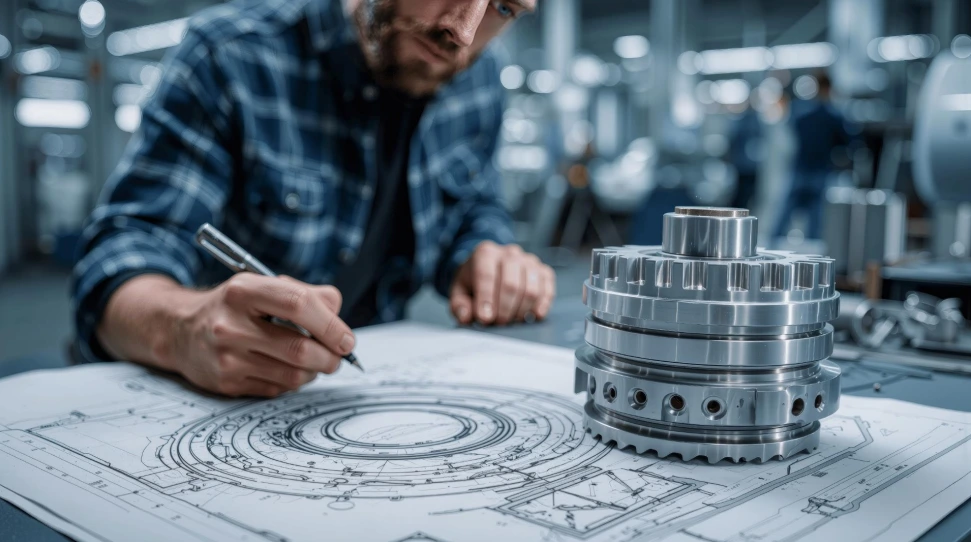
a man creating engineering drawing for mechanical parts


Improving Inter-Team Cooperation

Some of the various disciplines that are involved in construction include architects, engineers, surveyors, and contractors. Lack of proper communication between these parties may result in mistakes and redundancy. CAD design services facilitate a harmonious collaboration with digital sharing and up-to-date information.

CAD files may be shared in real time as opposed to using paper blueprints or various fixed documents. They all work on the same copy of the design, and the likelihood of confusion is minimized. Other CAD drafting services systems are cloud-based, which means that a team can access, edit, and review files regardless of their locations. This interlinked workflow makes sure that the coordination of changes is good and the purchased materials are according to the latest approved drawings.

Increasing The Speed & Construction Efficiency

Time saved in construction would turn out to be money saved. CAD simplifies a number of phases in the project lifecycle:

Rapid Designing: Templates and automated tools make it possible to take a lot less time to draft.
Simulation and Testing: CAD would enable design testing in a virtual environment with different real-life conditions without incurring delays due to material or structure problems that would be realized late into the construction.
Prefabrication Support: CAD data may be directly transferred to fabrication machines or modular structure plants, as standardized components are created very fast and in highly precise amounts. Such developments reduce the time required for a project and still guarantee high quality and safety. Fewer material problems and high speeds would lead to lower cost and a lower environmental footprint.

Supporting Sustainability Goals

The present-day constructions have to be eco-friendly and not maximize growth. Waste in materials not only adds to the cost but also adds to the pollution and landfill. The design of CAD is also vital in ensuring that the goals of sustainability are met by promoting the maximization of resources. Through modeling the energy performance of buildings, the engineers will be able to select designs that are efficient and consume less energy. Moreover, CAD assists in accurate cutting and assembly, and therefore, minimal waste is generated. CAD-based data is being used by many construction companies to address green building standards like LEED (Leadership in Energy and Environmental Design).

Integrating CAD With Other Digital Technologies

Combined with the other digital technologies of construction, the real potential of CAD can be even higher:
Building Information Modeling (BIM): BIM is a combination of 3D CAD artistic arrangement with the scheduling, costing, and maintenance information that forms an intelligent system developed over the lifecycle of a building.
Augmented & Virtual Reality (AR/VR): CAD data can be represented in a 3D immersive environment to make decisions and provide presentations to clients.
AI & Machine Learning: Predictive algorithms are able to analyze CAD data in order to propose material-saving designs or enhance safety. Combining CAD with such innovations, companies are going to be able to attain greater heights of accuracy, efficiency, and sustainability.

Future Trends In CAD Construction

The CAD design services will emerge as one of the major facilitators of the advancement as the construction industry proceeds to digital transformation. Even smarter systems will be introduced in the future with better automation, real-time collaboration, and connection with IoT sensors to track onsite performance. The eco-friendly buildings, cost control, and quality assurance will help the companies that fully utilize the workflows based on CAD to outperform their competitors in the long run. The minimization of material waste and the increased efficiency are no longer a dream; it is a goal that technology can create. Keyway specializes in optimizing your design ecosystem, ensuring seamless organization and accessibility of your design assets. To know more about the business, visit our LinkedIn.