
Complete Guide to CAD Design Services to Improve Modern Manufacturing Efficiency

Efficient product development, accurate and quick manufacturing relies on modern manufacturing. From the creation of a new product to the enhancement of an existing one, businesses need to have the right digital designs to ensure successful manufacturing. Clear engineering drawings and detailed 3D models help to minimize production errors, enhance communication, and accelerate the overall development process. This is why CAD Design Services are an important role in today’s engineering and manufacturing.

Companies also use 3D CAD Modeling Services today to make detailed digital models before production. These models enable engineers to experiment with designs, refine them, and discover problems early in the design process. Consequently, manufacturers can save time, reduce costs, and confidently manufacture products of high quality.

What Are CAD Design Services?

These engineering services refers to the process of creating precise computer-aided design (CAD) drawings and 3D models. They provide services to engineers, designers and manufacturers to create products ready for production and minimize manual drafting and design mistakes.

CAD technology enables a company to design, modify and assess the product designs prior to manufacturing.

These services include:

  • Product design
  • Mechanical components
  • Assembly drawings
  • Manufacturing documentation
  • Engineering drawings
  • Prototype development
  • Design modifications
  • Production planning

Why CAD Design is Important?

Production projects need to be planned in detail before they are manufactured. Even small design errors can lead to higher costs, production delays, and product quality issues.

Professional design solutions help businesses:

Improve Design Accuracy

Digital drawings eliminate errors and offer accuracy for manufacturing.

Reduce Production Errors

High-quality engineering drawings enable manufacturers to make products accurately the first time.

Speed Up Product Development

Engineers can easily make changes to the design without having to draw something new.

Improve Team Collaboration

All designers, engineers and production teams can access the same digital files, enhancing communication across the entire production.

How CAD Design Services Improve Manufacturing Efficiency?

Accurate Product Designs are essential for successful manufacturing. These services can assists businesses in developing production-ready models, enhancing efficiency in all manufacturing processes.

Faster Product Development

Digital designs are easier to edit and update, which means that engineers can finish their work faster.

Better Manufacturing Planning

Engineering drawings are used to ensure that manufacturing processes are planned effectively.

Easier Design Changes

Digital files can be updated rapidly when changes need to be made, without the need to re-draw the entire product.

Improved Product Quality

Effective models minimise manufacturing mistakes and enhance the quality of the manufactured goods.

Lower Manufacturing Costs

Precision design minimises waste of raw materials, production delays and costly rework.

Role of 3D CAD Modeling Services

Realistic digital models are used in modern engineering as a tool for production prior to the manufacturing process. These services enable businesses to generate precise and detailed product models, enhancing visualization, design accuracy, and manufacturing planning.

Engineers use these digital models to improve the performance of the product before production begins, and to check dimensions.

These services are commonly used for: 

  • Product visualization
  • Mechanical assemblies
  • Manufacturing simulations
  • Prototype development
  • Engineering analysis
  • Design validation
  • Production support
  • Technical documentation
  • Benefits of 3D CAD Modeling Services

Professional 3D CAD Modeling Services provide many advantages throughout product development.

Key benefits include:

Better Product Visualization

The engineers and customers can get a clear idea on how the product will appear before production.

Improved Design Accuracy

In-depth digital modelling aids in the identification of design problems at an early stage and minimises manufacturing errors.

Faster Design Reviews

Design reviews, modifications and approval can be done more efficiently by teams.

Better Manufacturing Documentation

Quality control and production planning are simplified by accurate CAD files and drawings.

Reduced Development Costs

Identify design problems early to prevent costly manufacturing changes.

Industries That Use CAD Design

CAD technology is utilized in many fields that require precision and efficiency. Here are some of the industries that benefit from CAD solutions:

Automotive Industry

Vehicle parts, assemblies and production drawings are produced by manufacturers.

Aerospace Industry

CAD models are essential for aircraft manufacturers in complex engineering projects.

Industrial Equipment Manufacturing

CAD is a tool used by industrial machine manufacturers to enhance product performance and production efficiency.

Consumer Product Manufacturing

Manufacturers make exact designs of products before their mass manufacturing.

Medical Equipment Manufacturing

CAD is utilized by medical device firms in creating accurate parts and manufacturing records.

Best Practices for Better CAD Design

Proven design practices can help businesses achieve better results.

Start with Clear Requirements

Having project goals in mind is useful for developing precise product designs from the start.

Use Standard Design Guidelines

Adhering to engineering standards enhances quality and facilitates manufacturing.

Review Designs Regularly

Periodic design reviews allow problems to be identified prior to production.

Maintain Accurate Documentation

Smooth communication between teams is facilitated by complete engineering drawings.

Work with Experienced Engineers

Reliable designs are developed by professional engineering teams that enhances the efficiency of the production.

Choosing the Right CAD Design Partner

Choosing the right engineering firm is crucial to a successful product development. An experienced engineering partner can help businesses with their product development, manufacturing, and product quality to make it better, easier, and faster.

Check for a provider that:

  • Proficiency in CAD design skills
  • Expertise in various sectors.
  • High level 3D modelling features
  • Quality-focused engineering processes
  • Understanding of international standards
  • Reliable technical support

Conclusion

Digital designs and effective engineering processes are essential to modern manufacturing. They enable businesses to make accurate drawings, enhance product quality, minimize manufacturing mistakes, and streamline production. Together they help companies to create reliable products faster, with greater productivity and lower overall product development expenses.

Keyways offers Engineering and CAD products to the Product Development and Manufacturing sector. Connect with Keyways on LinkedIn to explore their latest engineering insights, CAD expertise, and innovative design solutions.
How CAD Design Services Reduce Material Waste And Improve Construction Efficiency

Construction has gone way past manual designs and blueprints nowadays. The CAD design services are essential in the fast-paced modern world, leading to accuracy, material savings, and a smooth-running project. Using the CAD tools at the design and planning phases, architects, engineers, and construction managers have a clearer understanding of projects, identify the mistakes at an earlier stage, and are able to utilize the resources most efficiently. The shift not only becomes efficient but also contributes to the reduction of material waste, which is one of the most burning problems of modern construction.

The Role of CAD in Construction

CAD Design Services involve the use of specialized software to design accurate digital representations and drawings of buildings, infrastructure, and mechanical components. They are much more than just the simple drawings; experts can simulate everything about a project, and actually do not have to touch the physical part of a project before starting to work on it. The CAD files are characterized by high degrees of accuracy, scalability, and compatibility with other digital construction procedures, such as Building Information Modeling (BIM) and 3D printing.

Since such designs are digital, changes can be easily implemented. Before spending a single dollar in procurement or labor, engineers can revise layouts, test structural integrity, analyze materials, and estimate quantities. Besides making the project more efficient, such proactive planning will help avoid unnecessary purchases and rework.

The Relationship Between CAD Design And Material Efficiency

Project costs usually constitute a large percentage of construction materials (as much as 50 percent). Poor planning or inefficient design may result in waste of materials and cost overrun, and environmental degradation. CAD design services are directly related to these problems.
Here’s how:
● Proper Quantity Estimation: CAD software determines an exact volume of materials used, i.e., steel, concrete, or wiring, required in a project. This minimizes over-ordering and excess stock.

● Streamlined Designs: CAD systems are used in formulating the best spatial layouts so that the materials can be cut and trimmed to fit each other.
● Error Detection: Minimal mistakes in the plan or measuring may result in significant waste on-site. The accuracy of CAD design services and the validation it provides minimizes human error that contributes to such errors.
● Reusability of Designs: A CAD model can be reused or modified to use later after it has been created. This enables the companies to standardize the components and conserve resources in repetitive designs.

These are the key areas that CAD pays attention to and thereby limits unnecessary consumption and encourages sustainable building.

Eliminating Rework With Digital Precision

One of the largest contributors to construction projects’ inefficiencies and wastes is reworking projects. In cases where initial plans are inaccurate or incomplete, the construction teams are usually required to tear down and restructure parts, which is a waste of materials and labor hours. By giving a clear and detailed background at the very inception, CAD design eliminates these problems.

Virtual walkthroughs and 3D modeling enable the stakeholders of the project to discover issues or conflicts in the design. This problem-solving approach at an early stage reduces wastage as well as ensures that the project schedule is not delayed.


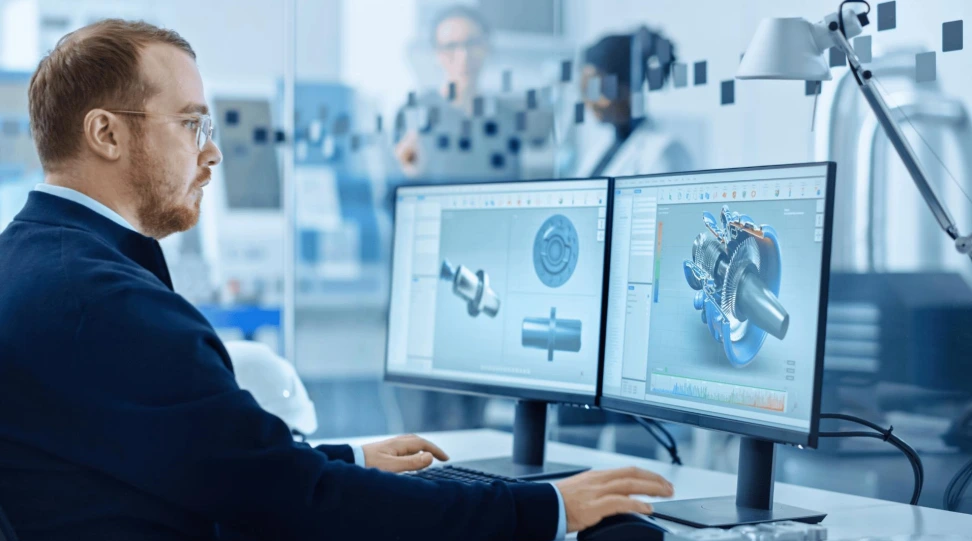
a man creating engineering drawing for mechanical parts


Improving Inter-Team Cooperation

Some of the various disciplines that are involved in construction include architects, engineers, surveyors, and contractors. Lack of proper communication between these parties may result in mistakes and redundancy. CAD design services facilitate a harmonious collaboration with digital sharing and up-to-date information.

CAD files may be shared in real time as opposed to using paper blueprints or various fixed documents. They all work on the same copy of the design, and the likelihood of confusion is minimized. Other CAD Drafting Services systems are cloud-based, which means that a team can access, edit, and review files regardless of their locations. This interlinked workflow makes sure that the coordination of changes is good and the purchased materials are according to the latest approved drawings.

Increasing The Speed & Construction Efficiency

Time saved in construction would turn out to be money saved. CAD simplifies a number of phases in the project lifecycle:

● Rapid Designing: Templates and automated tools make it possible to take a lot less time to draft.
● Simulation and Testing: CAD would enable design testing in a virtual environment with different real-life conditions without incurring delays due to material or structure problems that would be realized late into the construction.
● Prefabrication Support: CAD data may be directly transferred to fabrication machines or modular structure plants, as standardized components are created very fast and in highly precise amounts. Such developments reduce the time required for a project and still guarantee high quality and safety. Fewer material problems and high speeds would lead to lower cost and a lower environmental footprint.

Supporting Sustainability Goals

The present-day constructions have to be eco-friendly and not maximize growth. Waste in materials not only adds to the cost but also adds to the pollution and landfill. The design of CAD is also vital in ensuring that the goals of sustainability are met by promoting the maximization of resources. Through modeling the energy performance of buildings, the engineers will be able to select designs that are efficient and consume less energy. Moreover, CAD assists in accurate cutting and assembly, and therefore, minimal waste is generated. CAD-based data is being used by many construction companies to address green building standards like LEED (Leadership in Energy and Environmental Design).

Integrating CAD With Other Digital Technologies

Combined with the other digital technologies of construction, the real potential of CAD can be even higher:
● Building Information Modeling (BIM): BIM is a combination of 3D CAD artistic arrangement with the scheduling, costing, and maintenance information that forms an intelligent system developed over the lifecycle of a building.
● Augmented & Virtual Reality (AR/VR): CAD data can be represented in a 3D immersive environment to make decisions and provide presentations to clients.
● AI & Machine Learning: Predictive algorithms are able to analyze CAD data in order to propose material-saving designs or enhance safety. Combining CAD with such innovations, companies are going to be able to attain greater heights of accuracy, efficiency, and sustainability.

Future Trends In CAD Construction

The CAD Design Services will emerge as one of the major facilitators of the advancement as the construction industry proceeds to digital transformation. Even smarter systems will be introduced in the future with better automation, real-time collaboration, and connection with IoT sensors to track onsite performance. The eco-friendly buildings, cost control, and quality assurance will help the companies that fully utilize the workflows based on CAD to outperform their competitors in the long run. The minimization of material waste and the increased efficiency are no longer a dream; it is a goal that technology can create. Keyway specializes in optimizing your design ecosystem, ensuring seamless organization and accessibility of your design assets. To know more about the business, visit our LinkedIn.