
Top 10 Issues Fixed Instantly With A Remote CAM Service (Plus How It Works)

Remote CAM services are altering the ballgame for manufacturers. You need not fret over having to figure out the intricate programming code or deal with downtime; you can outsource your CAM (Computer-Aided Manufacturing) tasks to professionals who can remotely connect to your systems. They solve problems quickly in minutes, and your production is not fiddled with.

A PERSON TYPING ON A LAPTOP WITH SMILEYS AND 5 STAR REVIEWS

The blog goes deep into the top 10 most prevalent manufacturing issues that are addressed by a Remote CAM Service immediately, and provides a straightforward explanation of how the service can be used.

Top 10 Issues Fixed Instantly With A Remote CAM Service

Manufacturers are faced with continuous CAM issues that hamper production and waste time. Remote CAM services have secure remote access that will be used to tweak your software, optimise toolpaths and get machines online again.

The 10 most important problems they address immediately are as follows:

Crashed Computer-Aided Software Or Frozen Programs

In case you are doing an important job, and your CAM software suddenly goes dead. The remote expert will log in, reboot processes, delete errors, and be able to restore your setup in less than 10 minutes; you do not need to restart your whole system and waste hours of work.

Incorrect Toolpaths Causing Collisions

Some toolpaths are in error, which may cause machine crashes or scraped parts. The service emulates and fixes paths in real-time and cuts safely and efficiently, which perfectly match your CAD drawing.

Long Machining Times Slowing Production

The programming is inefficient, so the jobs are forever. Professionals remotely optimise the speeds, feeds and paths which reduce the cycle times by 20-50% without you even lifting a finger.

Poor Surface Finish On Parts

Smart appearances or chatter marks destroy quality. Distantly altered finishing plans, stepovers and tool selection provide a smooth finish on the subsequent run.

Error Codes And Machine Alarms

A regular alarm cuts off your CNC machines. The service deciphers errors, modifies parameters, and erases them remotely to have you back in a matter of moments.

Set Up Errors For New Jobs

Job changes cause the misalignment of the offsets or the fixturing. Setups are verified and programmed through remote access by experts, and hours of trial and error are saved on the shop floor.

Incompatible Post-Processors

The output of your CAM does not correspond with the controller of your machine. One of the quick remote fixes is a code that creates the correct code that avoids running tests and compatibility nightmares.

Spindles Or Tools Overheating

Poor parameters lead to the quick wearing of tools. Adjustments are made to the chiploads and coolant settings instantly in case of damage and to increase the life of the tool.

High-Volume Runs Infrastructure

Your team is overburdened with programming numerous similar parts. Automates programs, scales production without requiring personnel, and provides batches of remote services.

Emergency Rush Jobs With Tight Deadlines

A huge order is at the last minute. Professionals create entire CAM programs based on your CAD files in a single night or even in the same day and make stress a success.
The reason behind these fixes is that remote CAM providers are well versed with the popular software such as Mastercam, Fusion 360 or SolidCAM. They enter your system without any problem, they change, and they also test simulations before you execute anything.

Remote CAM Service Wins In The Real World

Firms that apply such services enjoy huge profits. After repairing tools paths remotely, one of the shops saved 40 per cent of the downtime. A second reduced the time spent on custom parts from days to hours. It has such benefits as reduced scrap rates, satisfied customers, and increased machine uptimes without recruiting additional programmers.

The Step-By-Step Guide To How Remote CAM Service Works

Wondering how it is all going on, and no one ever came to your factory? Remote CAM service is easy, safe and expeditious. The process follows the following steps:
Remote CAM service

Step 1: Quick Connection Setup

You put a secure remote access tool such as TeamViewer, AnyDesk or a VPN on your CAM workstation. Upload your CADs and machine information through a portal or email. Hardware-independent, so no changes to hardware are required.

Step 2: Expert Diagnosis

The technician of your service provider links (with your authorisation) and examines the problem. They monitor toolpaths, simulations and machine data in real-time, reporting problematic issues such as bad feeds or geometry errors.

Step 3: Real-Time Resolutions & Optimisation

They remotely reprogram toolpaths, make virtual simulations, and make changes to settings using your CAM software. Modifications are instantly transferred into your machine controller. They use the high-speed plans or the multi-axis movements in complex jobs.

Step 4: Testing And Handover

The specialist is doing all this through a dry run simulation. You receive updated files, a report of what changes have occurred and hints on how to prevent future problems. The production just continues immediately – usually when you are still on the call.

Step 5: Ongoing Support

A significant number of services are available on a 24/7 basis, have monthly retention, or are available as pay-per-fix. Monitor performance using dashboards, which are displayed in terms of uptime and efficiency improvements.
Security is first in the priority list: End-to-end encryption, two-factor authentication, and recordings of the sessions are used. Your information remains on your machines – only the experts see and make changes at all.

Why Choose Remote CAM Over In-House Or On-Site Help?

Traditional fixes imply waiting to have a specialist come to the organisation, which costs thousands of dollars in travel and time lost. Remote service provides 24/7 service around the globe, at a fraction of the cost (usually, it is $100-300/hour). It suits well in small stores that do not need a full-time professional programmer or big companies that may require an overflow programmer.
Also, it is scalable: Deal with a single one-off repair or complete production code. Most providers did not need any long-term contracts.

The Future Of Remote CAM Services

Remote CAM is developing in an Industry 4.0 environment. AI-driven optimisations, cloud-based CAM in support of real-time scaling and integration with IoT sensors to provide predictive fixes, are to be expected. The manufacturers who will remain afloat will depend on these services to maintain quality at low costs. Remote CAM services resolve your biggest manufacturing headaches in real-time, increasing efficiency and profits. They are the ingenious solution to contemporary shops, be it in the form of crashed software or hurried work. Ready to try it? A reliable provider like Keyways can be contacted today, and your production will take off. To know more about the services provided, visit our LinkedIn.

Real-Life Manufacturing Production Management Strategies For Faster Production Flow

Faster production flow means getting products out the door quicker without extra costs or errors. By reducing waste and accelerating each step, practical techniques like lean manufacturing, bottleneck fixes, and smart layouts make factories run more smoothly. These proven methods come from factories worldwide and can boost output by 20-30% in months.

This blog shares some of the real-life manufacturing production management strategies for faster production flow to speed up the process, giving you high returns.


testing engineers quality testing the products after production

Assess Your Current Flow

First of all, map your whole production line to identify the slow points. Factories such as Panasonic’s start with an opportunity assessment, in which they check workflows, space utilisation, inventory levels, and what workers do. This exposes underwrite delays, such as additional steps or congested space, that hinder the flow of materials.

This plain map was used in one auto parts plant, and it saved 15 per cent of unnecessary moves, which liberated floor space and time. Record times and routes of workers each day so that you have a clear image of that before any changes.

Determine And Correct Bottlenecks

The bottlenecks will be the workplaces where something slows down. Typical ones are old machines, manual handling or poor scheduling- correct them by monitoring real-time throughput and delays. An example of a food packaging plant that identified a filler machine as its critical path is represented by a bottleneck. They introduced a second unit and re-trained employees, and reduced the wait times by 25. Use root cause analysis: ask “why” five times to dig deep, then test small fixes.


Implement The Lean Principles Of Manufacturing

Lean eliminates wastes such as overproduction, waiting or stocking, and value is maintained. The charting tools, such as Value Stream Mapping (VSM), are used to display the entire process with the identification of non-value steps to eliminate. You can get a reliable manufacturing operations management service at Keyways.

Real-world example: Just-in-Time (JIT) in a textile mill meant that it should only order fabric when it needed it, reducing inventory expenses by 40 per cent and accelerating flow. Combine it with 5S (sort, set, shine, standardise, sustain) to have tidy workstations which avoid mistakes.
● Map value streams weekly
● Educate train teams (motion, defects, overprocessing).
● Quick win team workshops that are short in duration (Kaizen).


Streamline Facility Planning And Material Flow

Bad layouts can result in additional walking or forklift movements, which are fatal to speed. Redesign in a U-shape or straight line to ensure that materials flow through the shortest paths with minimum movements.

An electronics assembler sorted lines into cells – grouping similar machines – that reduced transportation time by 30 per cent. The solution includes adding modular carts or conveyors to facilitate the smooth movement and applying inventory-related protocols (such as Kanban cards) to request to indicate reorders without overstock.


Boost Equipment And Workforce Efficiency

There needs to be synchronisation between machines and people. Prevent the maintenance to stop failures, and monitor the Overall Equipment Effectiveness (OEE) to achieve 85 per cent uptime. Cross-training workers in a metal fab shop allows the workers to change roles where there are peaks, and therefore, idle time is cut by 20 per cent. Simple robots or sensors can automate monotonous processes and leave personnel to supervise them.


Create Scheduling Data and Software

The tools, such as Manufacturing Execution Systems (MES), provide real-time flow visibility. Balance loads by setting production schedules and not guessing them, by the basis on real demand. One of the furniture manufacturers switched to cloud software to track in real-time and reduced lead-time to 5-10 days. Measure important indicators: cycle, yield, and on-time delivery- modify weekly.


Implement Six Sigma For Quality Flow

Six Sigma makes use of DMAIC (Define, Measure, Analyse, Improve, Control) to reduce defects that slow down rework. It goes hand in hand with lean in order to produce high-quality and consistent output.
Plants that used it to improve beverage filling lines cut variation by 18 per cent and improved the speed offlow by half with less rejection. Grow green belts within the organisation.

an engineer testing the production facility under management rules

Modular Testing And Scaling

Introduction of changes in small stages to prevent havoc. Test line, measure results, then expand. A plastics factory had experimented with lean on one cell and in one cell had increased speed by 22% then extended the rollout to factory-wide, doubling the output. Control using dashboards and employee feedback.

Train And Involve Your Team

Individuals are the motivation behind the flow; train them to do something new and engage them for further improvement. Issues are shared during daily huddles. The continuous improvement teams that worked in one assembly plant resolved 50+ problems each year, increasing flow by 35 per cent. Promote ideas to continue the momentum. These plans combine to achieve sustainable profits. A builder of machinery, a combination of layout optimisation, lean, and data tools paid off with real-life performance in less than a year, demonstrating that real results of lean pay off in the short term.

Final Thoughts

Implementing effective manufacturing production management strategies is essential for achieving faster production flow and improved efficiency. By assessing current workflows, identifying and correcting bottlenecks, and adopting lean principles, manufacturers can significantly enhance their operational performance. Additionally, streamlining facility layouts, boosting equipment and workforce efficiency, and leveraging advanced software for real-time scheduling can lead to substantial gains.

Emphasising quality through Six Sigma and modular testing ensures that changes are impactful and sustainable. Ultimately, engaging and training employees fosters a culture of continuous improvement, which propels productivity and positions a company for long-term success. Embracing these strategies will not only streamline processes but also pave the way for higher returns on investment in manufacturing.

Keyways offers you services that transform your production process for maximum efficiency. To learn more about the business, visit our LinkedIn.

How CAM Automation Outsourcing Cuts Product Design Time by 50%

Businesses are reducing the time of product design by half through the outsourcing of Computer Aided Manufacturing (CAM) automation. Companies that use CAM automation by engaging special firms for CAM automation outsourcing services not only shorten their product development cycles but also have a cutting edge advantage in the competitive markets.

This blog offers you an in depth account of how CAM automation outsourcing can bring about this transformation, in a language that can be understood by common people and with illustrations that are easy to follow.

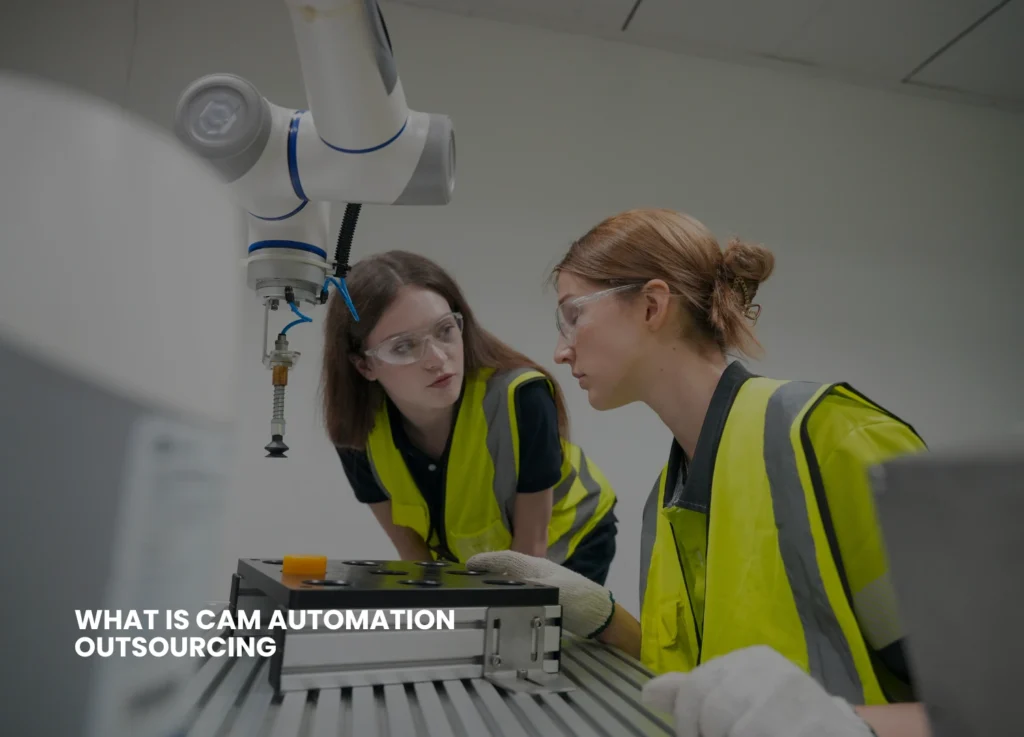
Engineers using CAM software to automate manufacturing processes in an outsourced setup

What Is CAM Automation Outsourcing?

Computer Aided Manufacturing (CAM) refers to software applications that control machine tools and automate manufacturing processes. When companies choose to outsource CAM automation, they often partner with a professional engineering firm or freelance engineers. These experts handle tasks such as tool path programming, design verification, and production optimization. This collaboration enables in house teams to focus on innovation and market expansion rather than getting bogged down in technical activities.

The Bottleneck: In House Design of the Products

Traditionally, product design is a long, cyclic process that requires:

● Programming machinery manually.
● Several experimentation and error cycles.

● Close coordination between design and manufacturing departments.

In-house teams are usually constrained by such factors as:

● Outdated equipment
● Lack of specialized skills

● Limit on the use of resources to scale fast.

Such problems delay progress, raise expenses, and could miss the opportunity in the market.

A team of professionals working on laptops and discussing CAM automation strategies in an office setting, representing why companies outsource CAM automation for efficiency and expertise.

Why Companies Outsource CAM Automation?

Outsourcing CAM automation is the close collaboration with specialized service providers who do not deal with any other services but develop, optimize, and maintain automated CAM workflows. These professionals integrate domain expertise and the latest technologies to simplify the process of manufacturing preparation.

The most common reasons why companies opt to outsource are:

● Speed and Scalability: Outside teams will be able to adjust to the evolving workload and deadlines quickly.

● Cross-Industry Experience: CAM professionals who are outsourced usually possess cross-industry knowledge and also know several software packages, including Mastercam, Siemens NX, or Autodesk Fusion 360.
● Cost efficiency: Companies do not need to pay full-time specialists, but pay only at the time when services are necessary to save money on their labor.

● Strengthen Your Core Business: With the outsourcing of technical and routine CAM activities, in-house engineers will be able to concentrate on more important company matters, such as innovation and product development, rather than programming optimization.

The direct impact of these advantages is that the design process is accelerated and more reliable in terms of production outcomes.


Correlation Between CAM Outsourcing And Design Time Reduction

An average product design process consists of a number of stages that are interrelated. They include: concept development, 3D modeling, prototyping, testing, and final manufacturing setup. Any postponement in solving CAM programs can cause disruptions to the whole process. Some companies also offer remote CAM service.Outsourcing of CAM automation prevents most of these bottlenecks by:


Highspeed Data Conversion And Automation Of Toolpaths

The CAD models can be rapidly translated to machining paths through rule-based automation of outsourced CAM engineers. However, once templates are configured, it is possible to program large batches of similar parts in a few minutes rather than hours.
To take an illustration, a tooling manufacturing company that used to spend an entire day coding a

multitude of parts can now program 80 percent of the operation with standardized CAM templates coding it in less than 2-3 hours.


Concurrent Engineering And Design

When CAM is outsourced, design engineers are able to proceed simultaneously on subsequent product designs. During the process of model refinement, the internal team engages its external CAM team to check manufacturability and generate toolpaths with the newest versions of the model. This parallel workflow has a significant reduction in the design-to-manufacture handoff.

Reduced Trial-And-Error

Internal teams can use up hours that are spent optimizing machining parameters through expensive iterations. Off-the-shelf libraries of machine configurations, cutting tools, and materials are used by outsourced CAM experts. Their experience enables them to do away with repetitive simulation cycles, and this saves time and machine resources.

Better Data Reusability

The CAM outsourcing partners have organized databases of machining templates, toolpaths that have been tested, and knowledgeable databases. These can be reused in other projects once made; not only will it remove repetitive programming effort, but it will accelerate the ramp-up of similar components.

Measurement Of The Time Savings

The reduction of time is related to the complexity of parts, industry, and the maturity of workflow, but research and case studies indicate that the average programming and design preparation time has been reduced by 40-50 percent. Keyway offers you reliable CAM automation outsourcing services, thereby easing your process of product manufacturing.
Consider this example:
● Pre-Outsource: The engineers could take 8 hours to code a precision part, do verification, and coordinate design changes.
● Post Outsourcing: Workflow templates and workflow optimization reduced the overall time to 4 hours or less, half of the previous time.

➔ Multiply dozens or hundreds of parts per month, and this efficiency will result in enormous financial and productivity savings.

Long-Term Strategic Benefits Of CAM Automation Outsourcing

In addition to speed, CAM automation outsourcing has a number of long-term benefits that contribute to the performance of product development further.
● Quality Stability: With auto templates, there is uniformity in the generation of toolpaths and also reduced human error.
● Continuous Improvement: CAM partners update automation scripts on an ongoing basis, as per the new machining strategies and best practices.
● Increased Flexibility: It could be a production scaling, a change with new materials, or the implementation of new machines; outsourced CAM processes are flexible.
● Quick Market Response: It provides the shortest product design cycle, so quicker market entry, which is vital in businesses such as aerospace, automotive, and consumer electronics.

These benefits not only allow the companies to reduce time but also to create a data-driven design ecosystem that is sustainable.

Illustration of a graph using symbols to represent the strategic benefits of CAM automation outsourcing, such as cost savings, efficiency, and scalability.

Outsourcing CAM Automation: How to do it Effectively

One should go about CAM outsourcing in a deliberate manner in order to get the highest returns on the

investment.

● Evaluate Internal Processes-Find out CAM processes that are repetitive or time-consuming and are automatable.
● Select A Trusted Partner-Find a service provider who has experience in your industry, with whom you can work with and whose software instruments are compatible.
● Standardize Data Format-Provide a smooth flow of information between the design, engineering, and manufacturing departments by aligning the CAD/CAM data standards.
● Begin with Pilot Projects-Use a small project as the first automation and measure the outcome, and then increase the scale of the workflow when the workflow becomes effective.

● Stay Collaborative-Have a free flow between the house engineers and the outsourced teams to ensure the learning and integration on an ongoing basis.

With the correct management, CAM automation outsourcing will not be a solo operation but instead a joint continuation of your engineering

The Future of CAM Automation

With the further evolution of AI-based design and digital manufacturing, the outsourcing of CAM automation is bound to be even more effective. New technologies, such as machine learning, digital twins, and cloud collaboration, are making it possible to have entire design-to-production pipelines. With predictive machining techniques coupled with intelligent automation, organizations can realize even quicker, more accurate as well and more economical product development periods. It is those manufacturers who will be setting the standards within the industry in the future since they are the ones who are adopting this change.

Final Thoughts

To manufacturers who would want to remain competitive, outsourcing CAM automation is not an option but a requirement. Not only does it reduce product design time by up to 50 percent, but it also improves overall quality, scalability, and operational agility. Outsourcing increases the level of efficiency by integrating specialized knowledge, standardized automation, and continuous improvement that will enable the creation of a smarter and quicker path to production-making efficiency your primary competitive edge. Keyway streamlines your production process for unparalleled efficiency and quality by offering precision-driven manufacturing solutions. For more information on our business, visit our LinkedIn.