


Shop floor failures rarely begin with loud breakdowns; they usually start with small design mistakes that go unnoticed until production is affected. In today’s manufacturing world, conveyor systems are operated for 24 hours under high loads and high schedules, and there is hardly any room for mistakes. Any minor error in distributing loads, alignment, or planning of a structure may create downtime, safety hazards, and costly repairs. With the automation and increased productivity of industries, precise and dependable conveyor planning is more necessary than ever.
Roller Conveyor CAD has a significant role in avoiding such failures by assisting engineers to visualize, analyse, and prove conveyor systems prior to their production or installation. CAD enables more planning, the ability to identify risks in early stages, and easier integration of the system, rather than relying on guesses or trial-and-error. Early identification of potential design problems enables vendors to develop conveyor systems that are safe, efficient, and reliable in actual shop floors.
Understanding Shop Floor Failures in Conveyor Systems
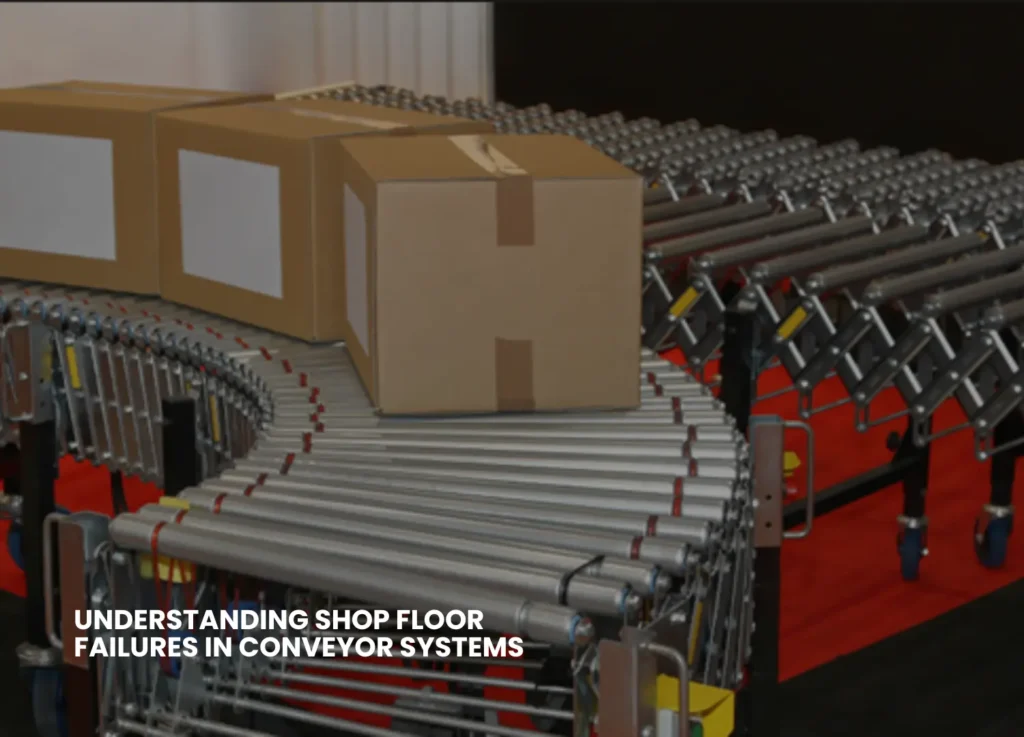
Failures at the shop floor in the conveyor system are usually designed as limitations, but not caused by operational errors. Issues like unequal load distribution, structural tension, or misalignment gradually decrease performance and result in unpredictable downtimes. These problems can be identified in the design stage and can be avoided, that led to repeated operational problems and maintains a smooth flow of materials.
- Uneven load distribution causing roller and bearing damage.
- Frame misalignment leading to vibration and instability.
- Improper roller spacing causes product jamming.
- Premature lack of wear due to excessive mechanical stress.
- Trouble in integrating with other equipment.
Role of Roller Conveyor CAD in Modern Engineering
Roller Conveyor CAD changes traditional conveyor planning into a more accurate and data-driven process. Engineers can create detailed 3D models to understand how the system will perform before manufacturing starts. This improves accuracy and reduces design errors.
Roller Conveyor CAD transforms the conventional method of planning a conveyor into a more precise and data-based approach. Engineers can create detailed 3D models to understand how the system will perform before manufacturing starts. This enhances precision and minimization of design errors.
- Detailed 3D modeling for better visualization.
- Improved dimensional accuracy and alignment.
- Timely detection of component interference.
- Faster design updates and optimization.
- Reduced installation errors on site.
Early Detection of Design Risks
One of the biggest benefits of CAD-based design is identifying potential problems early. Before the manufacturing process, engineers can examine the behavior of the system digitally and correct the risks. The method enhances trustworthiness and avoids the future expense of making complex changes.
- Load and stress analysis before fabrication.
- Simulation of peak operating conditions.
- Detection of weak structural points.
- Avoidance of congestion in certain areas.
- Less possibility of unforeseen failures.
Improving Structural Strength and Reliability
Conveyor system structural strength has a direct impact on long-term performance. A poorly designed structure can perform well but fail in the long run with constant operational stress. CAD assists engineers in ensuring that each component can carry the necessary load.
- Accurate material and thickness selection.
- Proper support and reinforcement placement.
- Reduction of frame bending and deformation.
- Better resistance to vibration and fatigue.
- Stable performance under heavy loads.
Enhancing Safety on the Shop Floor
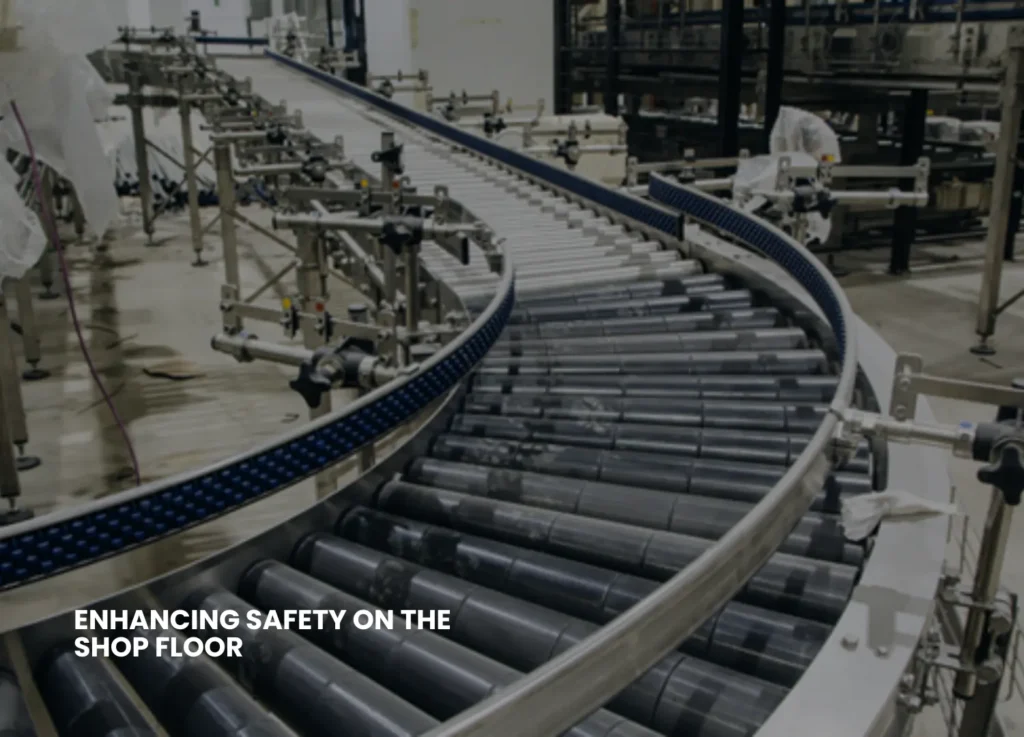
Safety risks often arise due to design oversights. Unprotected or unguarded conveyor systems may provide hazardous working conditions. Safety measures can be considered early on through CAD-based planning.
- Integration of safety guards and protection features.
- Proper spacing to reduce operator risk.
- Inspection and easy access.
- Reduced risk of product fall or instability.
- Improved compliance with safety standards.
Improving Communication Between Design and Production Teams
Effective communication among the engineering, fabrication, and installation teams is a key to successful project implementation. Effective Conveyor System Design offers a common visual reference that enables all stakeholders to clearly understand system requirements, reducing misinterpretation and ensuring smoother implementation across all stages.
- Clear technical documentation for fabrication teams.
- Better inter-departmental coordination.
- Less wastage in the production and assembly stages.
- Faster approval and revision processes.
- Better alignment between designing and execution.
Seamless Integration with Automation Systems
Modern manufacturing depends heavily on automation and synchronized workflows. Conveyor systems should be accurate to machines and automated equipment to ensure efficiency. CAD assists engineers in the proper planning of integration to facilitate easy operations.
- Proper coordination with automated machines.
- Easy transfer of products across machines.
- Elimination of production bottlenecks.
- Improved control of the conveyor height and speed.
- Improved overall workflow efficiency.
Reducing Maintenance and Operational Costs
Poor design planning is frequently reflected in frequent maintenance. Unnecessary stress and wear on components can be experienced in situations where the conveyors are not properly analyzed. CAD assists in maximizing performance and minimizing long-term operating costs.
- Balanced load distribution reduces stress on components.
- Longer life of rollers and bearings.
- Less downtime due to decreased failures.
- Easier troubleshooting using CAD documentation.
- Reduce long-term servicing costs.
Supporting Scalable and Future-Ready Designs
Manufacturing facilities evolve, and conveyor systems must adapt to changing production needs. CAD-Based design enables the design engineers to come up with a modular and flexible design of the conveyor systems, which can be expanded or changed without significant interruptions. This guarantees extended wearability and security of investment.
- Modular layouts for easy expansion.
- Simplified future upgrades and modifications.
- Flexibility in variation in production volumes.
- Digital models for future reference.
- Reduced redesign expenses in the expansion.
Enabling Faster Project Execution and Deployment
Time delays in conveyor projects often occur due to design corrections and unexpected site adjustments. CAD-based planning reduces uncertainty by checking the design before manufacturing to speed up the manufacturing and installation.
- Less redesigning during installation.
- Faster approval cycles.
- Accuracy in project planning.
- Reduced installation schedules.
- Quicker system commissioning.
Supporting Data-Driven Decision Making
Modern engineering decisions increasingly rely on data rather than assumptions. Roller Conveyor CAD offers measurable data on the system performance, allowing the engineers to make adequate decisions about materials, structures, and efficiency.
- Design improvement through performance.
- Proper assessment of various designs.
- Better cost-to-performance balance.
- Reduced reliance on trial-and-error methods.
- Better long-term system planning.
Conclusion
Great conveyor performance starts with engineering clarity, not post-installation fixes. Roller Conveyor CAD helps the manufacturer in making informed design decisions that align system performance with actual production demands, which is reliable as the operations scale and evolve.
At Keyways, we combine practical engineering expertise with advanced Conveyor System Design approaches to deliver efficient and performance-driven material handling solutions. Explore our solutions at LinkedIn and see how Roller Conveyor CAD supports smarter manufacturing outcomes.