


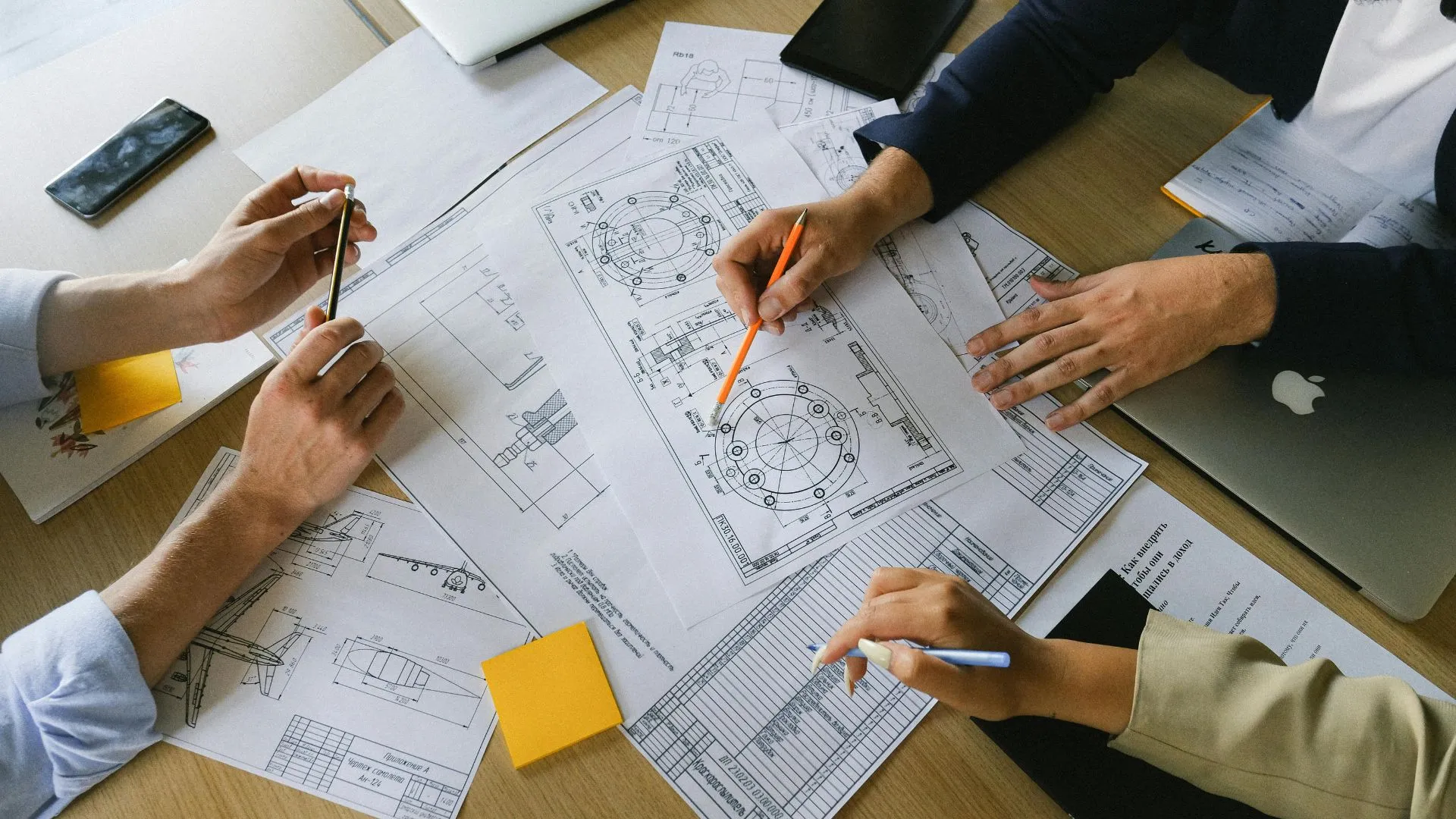
In the modern manufacturing industry, precision, clarity, and adequate documentation are vital to effective production. All manufactured parts, machine components, or structural components must be produced according to accurate specifications. Solidworks Drafting comes in very handy here. It helps engineers convert complex design concepts into clear and detailed manufacturing drawings that guide the production process.
Manufacturing drawings are the key tool of communication between designers, engineers, machinists, and production teams. Failure to have clear and accurate drawings may result in errors, delays, and high costs of production. By using advanced CAD tools like SolidWorks, engineers can create professional and standardized drawings that ensure manufacturing teams understand every design requirement.
What is SolidWorks Drafting?
Solidworks Drafting is the process of creating detailed technical drawings from 3D models using SolidWorks software. It enables engineers and designers to produce precise manufacturing drawings that comprise dimensions, annotations, and views required for fabricating, machining, and assembling.
Features:
- Automatic generation of 2D drawings from 3D models.
- Multiple view creation, such as front, top, side, and isometric.
- Precise dimensioning and geometric tolerances.
- Section, detail, and exploded views of complex parts.
- Note, symbol, and specifications annotation tools.
- Bill of Materials (BOM) integration for assemblies.
- Simple updates when the original 3D model is modified.
- Support for 2D Drafting in Solidworks for manufacturing documentation.
Importance of Manufacturing Drawings
A manufacturing drawing is an essential document used to communicate how a product or a component is to be manufactured. They include all technical details needed in fabrication, machining, and assembly. Clear drawings enable engineers, machinists, and production teams to operate on the same specification and interpret the design intent with accuracy.
- Defines precise measurements for components: Determines the limited sizes of parts to ensure that the parts are produced to exact sizes and that they are properly assembled when assembled.
- Controls guide machinists and production teams: Gives clear directions on machining, materials, and production needs.
- Reduces errors caused by unclear directions: Clear sizes and marks reduce confusion, saving both time and money.
- Maintains consistency in the manufacturing processes: Standardized drawings ensure uniform production across different teams, locations, and batches.
Converting 3D Models into Production Drawings
Most modern products are first designed as 3D models using CAD software. However, detailed 2D drawings are usually used by manufacturing teams in production. This software allows breaking down complex 3D models into simple and structured drawings that can be readily understood by manufacturing teams.
- Automatically generates drawing views from 3D models: Generates more than one drawing view directly based on the 3D model, which saves time and preserves the accuracy of the design.
- Creates orthographic, isometric, and sectional views: Provides various perspectives to help engineers and manufacturers to understand the component design.
- Shows internal and external features of components: Section and detail views reveal internal hidden structures with more clarity in manufacturing.
- Supports detailed documentation: Allows creation of professional drawings with dimensions, annotations, and manufacturing specifications.
Accurate Dimensioning and Tolerances
Accuracy in manufacturing is essential as a small measurement error can alter the functionality of a product. Engineers can use drafting tools to specify specific dimensions and tolerances to ensure that the components are manufactured within acceptable limits.
- Adds precise measurements for each design feature: All the parts of a component, including holes, edges, and surfaces, can be measured and specified in the drawing.
- Defines tolerance limits for manufacturing accuracy: Tolerances are the acceptable ranges in dimensions that ensure parts function properly despite minor manufacturing variations.
- Specifies hole sizes, spacing, and geometry: Technical drawings contain precise specifications of holes, slots, and geometrical features, which are essential during machining processes.
- Ensures proper fit between assembled components: Accurate dimensioning also makes sure that the parts align properly and work together smoothly when assembled.
Improved Communication Between Teams
Production of goods and services often requires the cooperation of a number of departments, such as design, engineering, production, and quality control. Clear technical drawings help ensure that everyone involved understands the product requirements.
- Provides clear instructions for production teams by showing how each component should be manufactured.
- Reduces misunderstandings in manufacturing workflows through standardized symbols and annotations.
- Helps engineers clearly communicate design intent and technical specifications.
- Improves coordination between departments through the use of the same documentation.
Faster Design Changes and Updates
In product development, alterations are often made in design. Effective drafting software enables engineers to make timely updates in drawings as long as there are changes in the initial design model.
- It automatically updates drawings as the 3D model is updated, ensuring documentation is maintained.
- Removes manual modification of the technical document after design changes.
- Help teams quickly access and share the latest design version with production.
- Enhances productivity in engineering by reducing repetitive documentation.
Supporting Assembly and Fabrication
Manufacturing drawings are used to produce not only individual parts but also a collection of parts into a final part. Drafting tools are used to indicate how components fit together during assembly.
- Prepares an assembly drawing that shows how different parts of a product fit together.
- Uses exploded views to clearly display how parts fit and connect together.
- Offers visual assembly instructions to assist workers in assembling components properly.
- Supports clear and detailed 2D assembly documentation.
Enhancing Quality Control and Inspection
Quality control ensures that manufactured parts are designed to fulfill specifications and industry requirements. Detailed technical drawings provide inspectors with the reference information required to make accurate measurements and verify.
- Offers measurement standards that inspectors can use to check manufactured parts with reference to design standards.
- Establishes tolerable ranges to check whether components meet manufacturing limits.
- Helps observe the quality and accuracy of products by providing clear technical documentation.
- Supports in adhering to industry and engineering standards.
Benefits for Manufacturing Companies
It also assists manufacturing companies to make more gains by simplifying the production process through the use of advanced drafting tools which enable the company to minimize errors and enhance productivity. Accurate documentation plays a key role in maintaining quality and operational efficiency.
- Facilitates design documentation by enabling faster and more precise drawing.
- Eliminates manufacturing errors and rework using clear and accurate technical drawings.
- Increases cooperation among engineering groups sharing and standardized documents.
- Saves time and lowers production costs by streamlining drafting and manufacturing workflows.
Conclusion
Turning engineering designs into manufacturable products requires clear and accurate technical drawings. Detailed drafting helps create precise documentation that guides manufacturing teams and ensures every component is produced according to design specifications.
At Keyways, we provide reliable engineering drafting solutions that help businesses improve design clarity and streamline manufacturing documentation. Connect with us on LinkedIn to learn more about how we support engineering and production teams.