5 Common Engineering Challenges Solved by 3D CAD Modeling Services

Engineering projects today demand high precision, efficiency, and flexibility. Areas like manufacturing, construction, automotive, and product designing are under constant pressure to minimize errors, accelerate the time frame of development, and control costs without affecting the quality. Conventional design practices can be difficult to fulfill these expectations, particularly with projects that have complicated assemblies, multifunctional teams, and regular design modifications. 


This is where 3D CAD Modeling Services play a vital role in modern engineering workflows. The engineers are now able to visualize, test, and improve designs by turning ideas into the right digital model before the start of production. Modern technology provided by such companies such as Autodesk, Dassault Systèmes, and Siemens can assist the team to point out problems at an earlier stage and work together in a more efficient manner. A professional CAD Drafting Service, along with the modeling, provides documentation and eliminates technical errors during the overall design process.  
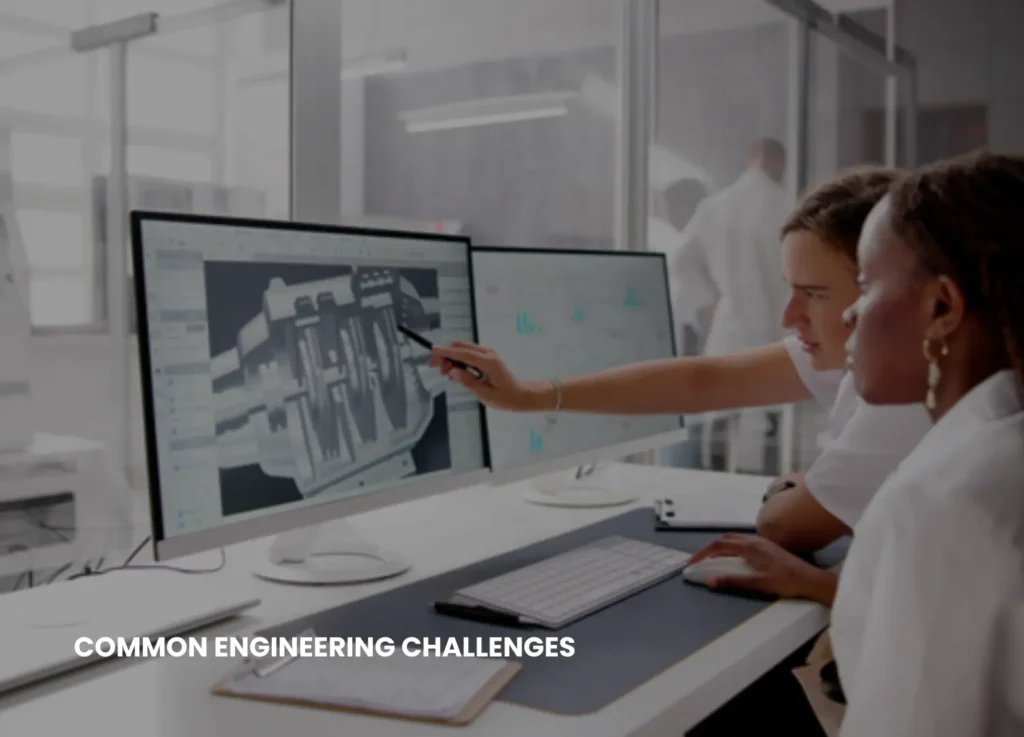
 

engineers working on a cad project  


  1. Design Errors and Inaccuracies


Design errors are a common problem in engineering projects and may cause failures in production, waste of material, and redesigns. Small mistakes in dimensions, alignment, or tolerances may go unnoticed during early stages but often create serious problems later during manufacturing, assembly, or product performance if not identified and corrected early. 


How CAD solutions help overcome this challenge: 


  • Include accurate dimensions and parametric modelling to provide better accuracy. 
  • Automatic detection of component clashes and interferences. 
  • Enabling real-time updates to the entire design when changes are made. 
  • Control the tolerance and minimize errors in manual drafting. 
  • Allow the engineers to test designs prior to production. 
  • Ensure consistency between design drawings and final models 
  1. Difficulty in Visualizing Complex Designs


Engineering designs today are usually with complex geometries and detailed assemblies, which cannot be comprehended solely using conventional 2D drawings. Such inadequate visualization may lead to confusion among designers, engineers, and stakeholders, which may result in delayed approvals, revisions, and communication voids, which can slow down the entire project and decision-making process. 


How CAD solutions help overcome this challenge: 


  • Design a 3D better representation to provide clarity. 
  • Permit rotation, section view, and exploded assemblies. 
  • Help clients and non-technical stakeholders understand designs easily. 
  • Improve the design-engineering-production interaction. 
  • Supports the elaboration of visualizations for presentations and approvals. 
  • Improve decision-making by leveraging enhanced design knowledge. 
  1. High Prototyping and Development Costs


Physical prototyping requires time, materials, and test cycles, which can significantly increase development costs. Traditional methods of trial-and-error are ineffective and costly when the implementation of design modifications is frequent.  


Engineering teams often need efficient methods of testing and developing designs at early stages to minimize unwarranted costs and shorten the duration of product development in an efficient manner. 


How CAD solutions help overcome this challenge: 


  • Virtual prototyping before physical manufacturing. 
  • Allow quick design iterations without material expenses. 
  • Simulation and stress analysis of support. 
  • Minimise wastage of materials and trial production. 
  • Reduce product development times.  
  • Enhance confidence before finishing production. 
  1. Collaboration and Data Management Issues


Engineering projects require multiple teams to collaborate at various levels of design and manufacturing. In the absence of appropriate coordination and data management, outdated files, version conflicts, and a lack of communication may be experienced.  


These problems tend to cause time delays, failures, and repetitions, and it is hard to achieve efficiency and continuity throughout the project lifecycle. 

 

CAD solutions help overcome this challenge: 
Centralize design data for easier access and updates. 
Maintain revision history and version control. 
Facilitate work in teams in real-time. 
Enhance inter- and intra-departmental communication. 
Integrate with product lifecycle management systems. 
Support cloud-based workflows for remote collaboration.


How CAD solutions help overcome this challenge: 


  • Centralize design data for easier access and updates. 
  • Maintain revision history and version control. 
  • Facilitate work in teams in real-time. 
  • Enhance inter- and intra-departmental communication. 
  • Integrate with product lifecycle management systems. 
  • Support cloud-based workflows for remote collaboration. 


  1. Manufacturing and Assembly Challenges


Production and assembly challenges can frequently arise when the needs of the manufacturing stage are not examined fully at the design stage. Even the designs, which seem efficient on paper, may still face practical constraints during actual production or assembly.  


This may add more time to production, higher cost, and alignment or fitting problems that influence the overall quality of products and performance. 


How CAD solutions help overcome this challenge: 


  • Simulate assembly processes before production begins. 
  • Identify manufacturing limitations early in the design phase. 
  • Optimize part machining, fabrication, or molding parts. 
  • Enhance match and adjustment by tolerance analysis. 
  • Reduce the complexity of assembly and manufacturing errors. 
  • Improve the communication between the design and manufacturing teams. 

Additional Engineering Advantages of CAD-Based Design 


In addition to resolving typical problems, CAD technology has long-term operational and strategic benefits, which improve engineering efficiency. Using 3D CAD Modeling Services, the teams can enhance the design uniformity, streamline and minimise duplication of work, and maintain accuracy in projects.  


Integration with a professional CAD Drafting Service ensures precise documentation and better collaboration, helping organizations improve productivity, support future modifications, and achieve scalable, high-quality engineering outcomes.  


Key advantages include: 

Faster innovation through rapid design iterations: 


Concepts can be tested, refined, and enhanced much faster by reusing the fast design iterations, enabling engineers to shorten innovation cycles and decrease the total time taken to develop a concept. 

Automated records with CAD Drafting Service 


CAD Drafting Service has automated digital records that keep the records in an orderly manner, with easy revisiting and enhanced traceability across project life cycles. 

Less complex client-based customization 


By enabling modification to design at a luxury, CAD tools enable rapid client-driven customization that is flexible but does not enhance engineering complexity and delays. 

Improved product quality and design consistency 


Digital modeling improves the quality of products and the consistency of design because it reduces errors and ensures standard practices in engineering.  

Better risk evaluation by simulation and analysis 


High-level simulation and analysis tools help in evaluating risks early and identifying potential failures before manufacturing begins. 

Smooth integration with CNC machining and 3D printing 


CAD files have direct connections with CNC machining and 3D printing tools, which facilitate easier manufacturing and avoid manual data representation.  

Simplified maintenance and future upgrades through accurate digital records 


Precise digital records can make maintenance easier and support future upgrades by providing a reliable reference for data. 


Conclusion 


CAD solutions enable the engineering teams to reduce errors, enhance visualization, lower development costs, and facilitate collaboration. CAD technology helps to accelerate the completion of projects, enhance the quality of products, and improve production processes with accuracy in design validation and team coordination across the system of modern engineering workflows. 


Companies like Keyways support businesses by providing reliable CAD and engineering solutions that simplify complex design challenges. Our experienced team helps improve accuracy, efficiency, and project outcomes through advanced design practices. To learn more about their expertise and industry updates, connect with them on LinkedIn for further insights and collaboration opportunities. 

How CAM Automation Outsourcing Cuts Product Design Time by 50%

Businesses are reducing the time of product design by half through the outsourcing of Computer Aided Manufacturing (CAM) automation. Companies that use CAM automation by engaging special firms for CAM automation outsourcing services not only shorten their product development cycles but also have a cutting edge advantage in the competitive markets.

This blog offers you an in depth account of how CAM automation outsourcing can bring about this transformation, in a language that can be understood by common people and with illustrations that are easy to follow.

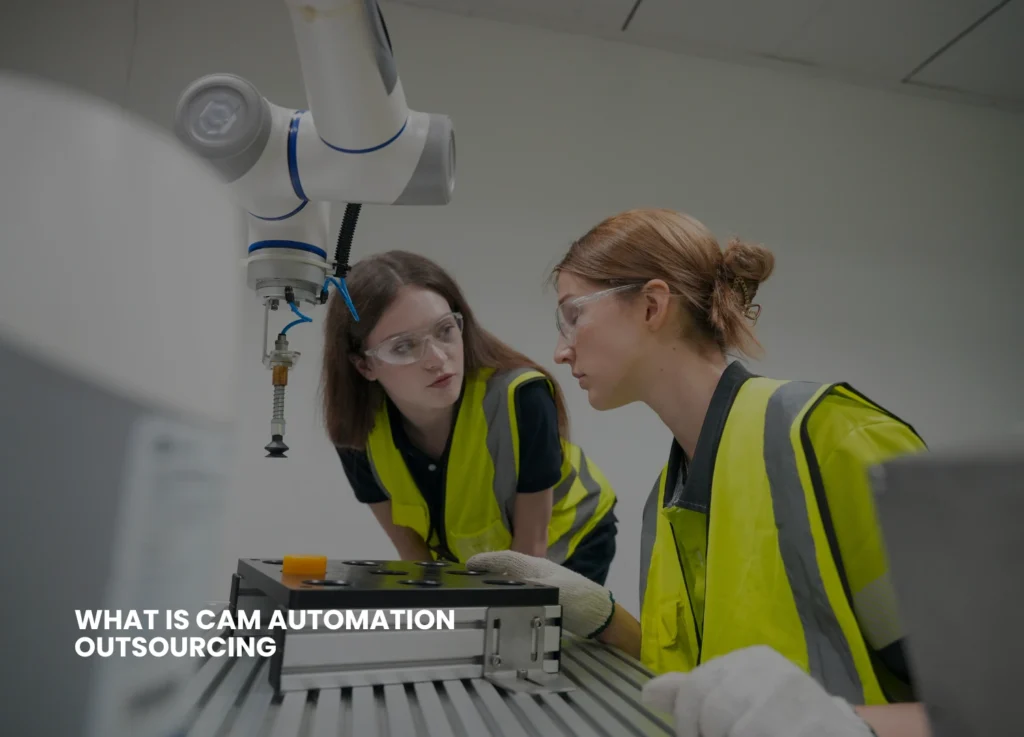
Engineers using CAM software to automate manufacturing processes in an outsourced setup

What Is CAM Automation Outsourcing?

Computer Aided Manufacturing (CAM) refers to software applications that control machine tools and automate manufacturing processes. When companies choose to outsource CAM automation, they often partner with a professional engineering firm or freelance engineers. These experts handle tasks such as tool path programming, design verification, and production optimization. This collaboration enables in house teams to focus on innovation and market expansion rather than getting bogged down in technical activities.

The Bottleneck: In House Design of the Products

Traditionally, product design is a long, cyclic process that requires:

● Programming machinery manually.
● Several experimentation and error cycles.

● Close coordination between design and manufacturing departments.

In-house teams are usually constrained by such factors as:

● Outdated equipment
● Lack of specialized skills

● Limit on the use of resources to scale fast.

Such problems delay progress, raise expenses, and could miss the opportunity in the market.

A team of professionals working on laptops and discussing CAM automation strategies in an office setting, representing why companies outsource CAM automation for efficiency and expertise.

Why Companies Outsource CAM Automation?

Outsourcing CAM automation is the close collaboration with specialized service providers who do not deal with any other services but develop, optimize, and maintain automated CAM workflows. These professionals integrate domain expertise and the latest technologies to simplify the process of manufacturing preparation.

The most common reasons why companies opt to outsource are:

● Speed and Scalability: Outside teams will be able to adjust to the evolving workload and deadlines quickly.

● Cross-Industry Experience: CAM professionals who are outsourced usually possess cross-industry knowledge and also know several software packages, including Mastercam, Siemens NX, or Autodesk Fusion 360.
● Cost efficiency: Companies do not need to pay full-time specialists, but pay only at the time when services are necessary to save money on their labor.

● Strengthen Your Core Business: With the outsourcing of technical and routine CAM activities, in-house engineers will be able to concentrate on more important company matters, such as innovation and product development, rather than programming optimization.

The direct impact of these advantages is that the design process is accelerated and more reliable in terms of production outcomes.


Correlation Between CAM Outsourcing And Design Time Reduction

An average product design process consists of a number of stages that are interrelated. They include: concept development, 3D modeling, prototyping, testing, and final manufacturing setup. Any postponement in solving CAM programs can cause disruptions to the whole process. Some companies also offer remote CAM service.Outsourcing of CAM automation prevents most of these bottlenecks by:


Highspeed Data Conversion And Automation Of Toolpaths

The CAD models can be rapidly translated to machining paths through rule-based automation of outsourced CAM engineers. However, once templates are configured, it is possible to program large batches of similar parts in a few minutes rather than hours.
To take an illustration, a tooling manufacturing company that used to spend an entire day coding a

multitude of parts can now program 80 percent of the operation with standardized CAM templates coding it in less than 2-3 hours.


Concurrent Engineering And Design

When CAM is outsourced, design engineers are able to proceed simultaneously on subsequent product designs. During the process of model refinement, the internal team engages its external CAM team to check manufacturability and generate toolpaths with the newest versions of the model. This parallel workflow has a significant reduction in the design-to-manufacture handoff.

Reduced Trial-And-Error

Internal teams can use up hours that are spent optimizing machining parameters through expensive iterations. Off-the-shelf libraries of machine configurations, cutting tools, and materials are used by outsourced CAM experts. Their experience enables them to do away with repetitive simulation cycles, and this saves time and machine resources.

Better Data Reusability

The CAM outsourcing partners have organized databases of machining templates, toolpaths that have been tested, and knowledgeable databases. These can be reused in other projects once made; not only will it remove repetitive programming effort, but it will accelerate the ramp-up of similar components.

Measurement Of The Time Savings

The reduction of time is related to the complexity of parts, industry, and the maturity of workflow, but research and case studies indicate that the average programming and design preparation time has been reduced by 40-50 percent. Keyway offers you reliable CAM automation outsourcing services, thereby easing your process of product manufacturing.
Consider this example:
● Pre-Outsource: The engineers could take 8 hours to code a precision part, do verification, and coordinate design changes.
● Post Outsourcing: Workflow templates and workflow optimization reduced the overall time to 4 hours or less, half of the previous time.

➔ Multiply dozens or hundreds of parts per month, and this efficiency will result in enormous financial and productivity savings.

Long-Term Strategic Benefits Of CAM Automation Outsourcing

In addition to speed, CAM automation outsourcing has a number of long-term benefits that contribute to the performance of product development further.
● Quality Stability: With auto templates, there is uniformity in the generation of toolpaths and also reduced human error.
● Continuous Improvement: CAM partners update automation scripts on an ongoing basis, as per the new machining strategies and best practices.
● Increased Flexibility: It could be a production scaling, a change with new materials, or the implementation of new machines; outsourced CAM processes are flexible.
● Quick Market Response: It provides the shortest product design cycle, so quicker market entry, which is vital in businesses such as aerospace, automotive, and consumer electronics.

These benefits not only allow the companies to reduce time but also to create a data-driven design ecosystem that is sustainable.

Illustration of a graph using symbols to represent the strategic benefits of CAM automation outsourcing, such as cost savings, efficiency, and scalability.

Outsourcing CAM Automation: How to do it Effectively

One should go about CAM outsourcing in a deliberate manner in order to get the highest returns on the

investment.

● Evaluate Internal Processes-Find out CAM processes that are repetitive or time-consuming and are automatable.
● Select A Trusted Partner-Find a service provider who has experience in your industry, with whom you can work with and whose software instruments are compatible.
● Standardize Data Format-Provide a smooth flow of information between the design, engineering, and manufacturing departments by aligning the CAD/CAM data standards.
● Begin with Pilot Projects-Use a small project as the first automation and measure the outcome, and then increase the scale of the workflow when the workflow becomes effective.

● Stay Collaborative-Have a free flow between the house engineers and the outsourced teams to ensure the learning and integration on an ongoing basis.

With the correct management, CAM automation outsourcing will not be a solo operation but instead a joint continuation of your engineering

The Future of CAM Automation

With the further evolution of AI-based design and digital manufacturing, the outsourcing of CAM automation is bound to be even more effective. New technologies, such as machine learning, digital twins, and cloud collaboration, are making it possible to have entire design-to-production pipelines. With predictive machining techniques coupled with intelligent automation, organizations can realize even quicker, more accurate as well and more economical product development periods. It is those manufacturers who will be setting the standards within the industry in the future since they are the ones who are adopting this change.

Final Thoughts

To manufacturers who would want to remain competitive, outsourcing CAM automation is not an option but a requirement. Not only does it reduce product design time by up to 50 percent, but it also improves overall quality, scalability, and operational agility. Outsourcing increases the level of efficiency by integrating specialized knowledge, standardized automation, and continuous improvement that will enable the creation of a smarter and quicker path to production-making efficiency your primary competitive edge. Keyway streamlines your production process for unparalleled efficiency and quality by offering precision-driven manufacturing solutions. For more information on our business, visit our LinkedIn.