


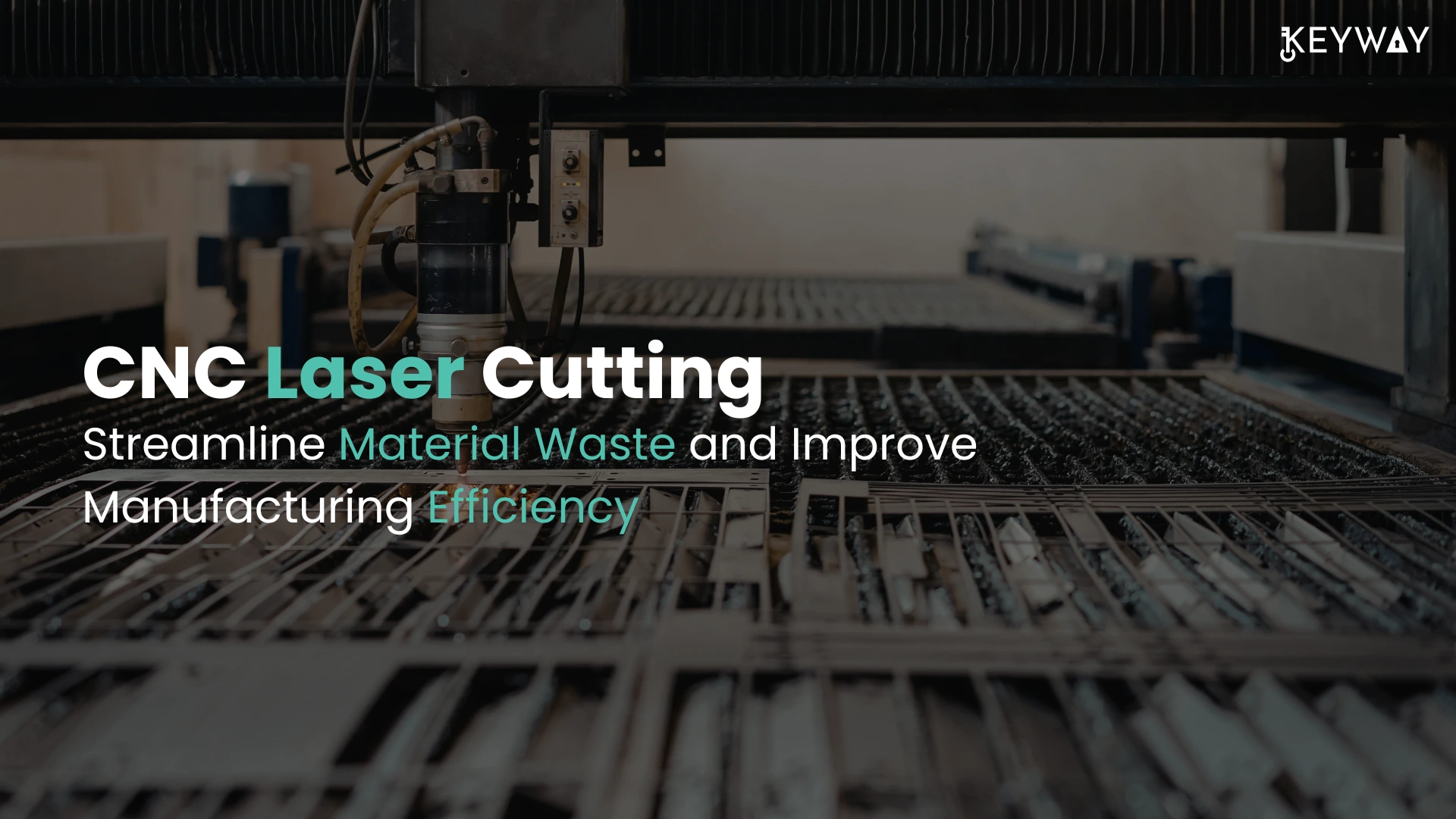
Modern manufacturing has evolved far beyond traditional cutting tools, hand templates, and manual layouts. CNC laser cutting has become very important today in providing precision, speed,
and material efficiency in several industries. With the adoption of high-quality CAD Services like smart CAM Automation and efficient Sheet Metal Design, manufacturers can transform digital concepts into extremely precise physical components with minimal scrap. This digital-first solution enables engineers and production teams to work more efficiently, compute materials more accurately, and see that all the steps of the fabrication process are predictable and efficient.
In an era of rising material costs, shorter production timelines and when global sustainability targets are becoming more stringent, the evolution into CNC laser cutting is not a choice anymore; it is a necessity. Digital workflows reduce errors, minimize lead times and open opportunities to make smart use of materials, all of which enhance the bottom line and environmental footprint.
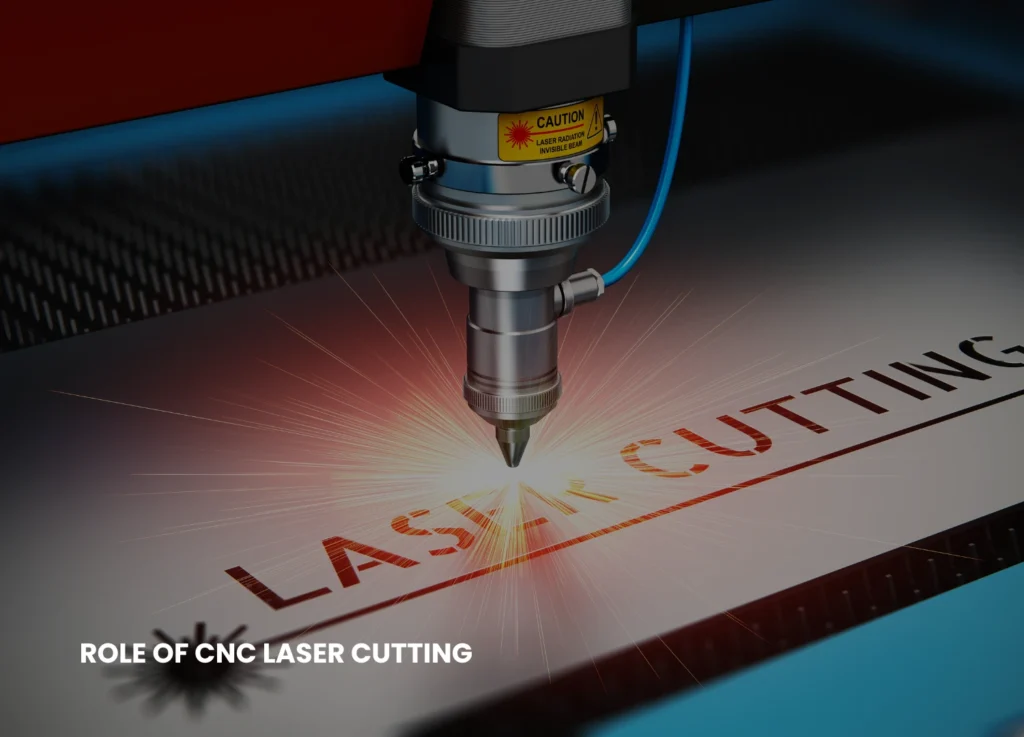
The Role of CNC Laser Cutting in Modern Manufacturing
CNC laser cutting is a process in which a high-intensity laser beam, guided by computer-generated toolpaths, melts, burns, or vaporizes material with unparalleled precision. Every cut is made from a detailed digital file developed through CAD drawing. For more complex shapes, 3D CAD modeling provides the necessary precision. As a result, the finished parts replicate the planned design perfectly. CNC laser cutting is very accurate and removes guess-work and human error, unlike the manual or mechanical methods of cutting, which are based on templates and physical alignment.
The digital nature of the workflow allows for rapid changes and immediate testing. Engineers can simulate assemblies, verify bend allowances, detect interference between parts, and analyze material stress all before the first sheet is cut. This proactive approach not only improves accuracy but also ensures that material consumption is minimized and downstream processes, such as bending, welding, and assembly, proceed smoothly. The aerospace industries, automotive industries, architectural fabrication, and industrial machinery have adopted this accuracy as they are able to produce faster, reduce scrap rates, and produce better quality components.
How CNC Laser Cutting Works — A Streamlined Digital Workflow
The CNC laser-cutting process starts with elaborate digital design, which must be proven before a physical material is touched. CAD drawings are generated by design engineers in-house. This
phase can also be outsourced by procuring CAD drawing services from professional engineers.
These digital models can be used as one source of truth so that teams can identify errors at an early stage, test component fit, and simulate behaviors of the material during and after cutting. When the design is complete, CAM software translates these models into accurate machine code, calculating cutting sequences, toolpaths, pierce points, and feed rates. The algorithms used are nesting algorithms to maximize the use of sheets, so that there is little waste and that only small remnants are left and can be re-used in other jobs. The close connection between CAM and CAD
makes sure that this machine reads the design in the same way it was to be read.
The sheets are positioned on the laser bed during production and aligned. The laser is directed through the programmed paths by the CNC system with assist gases being used to provide clean burr free edges. Bevel cuts, engravings, and intricate patterns on curved surfaces can also be done using multi-axis machines. Once cut, parts go directly to the bending, welding or finishing process with little or no manual intervention necessary. The outcome is a quicker, cleaner, and foreseeable production with less waste of materials.
Key steps in the workflow include:
- Digital modeling and validation using CAD tools to define dimensions and tolerances
accurately. - CAM processing and nesting to optimize material usage and cutting sequences.
- Laser cutting operation with precise alignment and assist gas control.
- Finishing and assembly, allowing parts to proceed directly to downstream operations.
CNC Laser Cutting + Sheet-Metal Design = Dramatically Less Waste
Materials are often the largest expense in sheet metal fabrication. Waste is easily built when the cuts are not precise, or the nesting process is not very efficient. Using a CNC laser cutting with a considerate Sheet Metal Design, manufacturers will be able to make the maximum out of sheet usage, minimize offcuts, and enhance the efficiency of the whole production process.
Accurate CAD models allow engineers to calculate exact material requirements, avoiding spending too much and minimizing scrap. The high-end nesting process facilitated by CAM Automation is used to place parts as close as possible to each other on the sheet to take advantage of the available space. Design for manufacturability (DFM) principles (e.g. consideration of bend reliefs, standard sheet sizes, and kerf allowance) lead to further reductions in waste and components that are easy to assemble. Parametric CAD libraries enable repeat use of design, eliminating trial and error processes which can result in scrap.
By thoughtfully integrating these steps, manufacturers can achieve consistent material efficiency across multiple production runs, minimizing both cost and environmental impact.
Cutting Errors and Rework — How Digital Precision Eliminates Them
One of the costliest aspects of manufacturing is rework. Misplaced holes, wrong tolerances or parts badly nesting sometimes necessitate a complete scrap or redrawing of sheets, which adds to labor and material overheads. The CNC laser cutting eliminates these errors by validating them digitally with precision.
The simulation of components by 3D CAD modeling enables engineers to identify interference problems during design. They also check details of dimensions and layout by using CAD drawings to make sure that the allowances in bends are correct, and all holes are where they should be. This minimizes the chances of having bad parts on the production floor.
Reduced errors translate to reduced emergency orders of materials, reduced wasted workforce, and production schedules. Finally, digital accuracy means that every sheet cut is devoted to the final product instead of being discarded because of mistakes that could be avoided.
Improving Collaboration
CNC laser cutting improves teamwork between the design, engineering, operating, and procurement departments. Due to the fact that all people work with the same CAD and CAM documents, the possibility of miscommunication has significantly decreased. The version control of files and their sharing on clouds enables the updates to be spread immediately across the departments so that all groups of people have access to the latest design and nesting data.
Transparency is also increased through centralized CAD repositories, standardized naming conventions and shared nesting templates. Procurement teams are able to order sheets by the precise material needs, production teams are able to make cuts without ambiguity and engineers can keep on updating designs without affecting any of the jobs being processed. This combined workflow decreases the waste due to duplicated parts or outdated sheets, or wrong cuts.
Speed, Scalability, and Automated Production
CNC laser cutting allows manufacturers to expand through quick prototyping on to mass production. Digital design data can undergo changes in real time and Automated CAM software converts the change into new toolpaths without stopping the production. Fiber lasers are fast to cut thin sheets, whereas the more powerful systems can cut thick metal effectively.
Automation facilitates scheduled manufacturing, remnant tracking and optimal nest reuse. Laser-cut components are passed reliably back to bending, welding, and finishing facilities, which facilitate lean, prefabricated processes to reduce handling and enhance throughput. Speed, repeatability and automation of CNC laser cutting make it appropriate to new manufacturing environments that require speed, repetitive cycles and automation.
Benefits of automation and scalability include:
- Rapid updates to design files and CAM programs for flexible production.
- Optimized nesting and remnant tracking to reduce scrap and waste.
- Efficient integration with bending, welding, and finishing processes.
- High-speed production without sacrificing accuracy or quality.
Design Considerations to Maximize Success
In order to maximize the advantages of CNC laser cutting, designers are advised to take into account the thickness of the material in relation to laser power, the allowance in kerf of assembling
parts, and the correct size of the hole and feature in order to eliminate distortion. The nesting strategy also plays a crucial role: combining parts on the basis of thickness and material is easy to produce, and the changeover of sheet is minimized. Reusable remnants can also be tracked and fed back into subsequent nesting calculations to even further optimize the use of materials.
When these design considerations are combined with drawing services, automation, and design services, engineers can achieve minimal material waste, consistent quality and high productivity.
Integrating CNC Laser Cutting with Broader Digital Manufacturing
The effectiveness of CNC laser cutting is enhanced when combined with other digital tools. Precise models created through CAD drawing and 3D CAD modeling pass directly into CAM Automation
to create optimized nests, minimize cycle time and scrap.
Advanced integration involves Artificial Intelligence-based nesting, automated reuse of remnants, and closed-loop quality. Linking digital design, machine control and material tracking, the manufacturers develop a wholly interconnected workflow that eradicates inefficiencies and minimizes costs and enhances predictability through the lifecycle of production.
Future Trends
The future of CNC laser cutting will be a capability that takes advantage of AI, robotics, and cloud- based collaboration to enhance precision and waste reduction. Future technologies involve self-
Adjusting sensors to adjust cutting parameters on-the-fly, hybrid machines which cut and weld simultaneously and predictive maintenance tools which reduce downtime. Remote CAD/CAM collaboration will enable working groups located in different regions of the country and AI-powered nesting schemes will constantly streamline the use of materials according to past
production data.
Manufacturers that embrace such innovations will have an edge, having improved quality, increased production rate and reduced environmental impact.
Conclusion
CNC laser cutting, when combined with disciplined CAD workflows, CAM Automation and thoughtful sheet-metal design, transforms manufacturing into a highly efficient, low-waste
process. Digital perfection removes errors, speeds up manufacturing and will guarantee predictable material usage. Companies often have their own employees to deal with such works but in modern world, the trend is shifting. Many now hire CAD Drawing Services, CAM Automation through cloud software, Sheet Metal Design Services and even 3D CAD Modelling Services through freelancers online. This saves them office space and allows them to work with the best talent from all over the world.
Companies that embrace such technologies would realize increased throughput, reduced scrap, and uniform quality that would place them in a vantage position to succeed in the current competitive manufacturing environment that is being driven by sustainability principles.